




Unmanned vehicles transporting supplies, autonomous platforms capable of moving in high-risk areas, and robotic systems designed to reduce soldiers' exposure to battlefield threats. This is not a futuristic scenario, but a reality that the Italian Army is concretely experimenting with at the Monte Romano Range, where one of the most important national campaigns dedicated to Robotics and Autonomous Systems (RAS) has concluded.
After four weeks of activities, the Army Evaluation and Innovation Command (COMVIE) completed a significant phase of verification and evaluation of the robotic and autonomous systems employed within the concept of distributed logistics, with particular attention to the so-called “last mile”, namely the transfer of materials, ammunition, and supplies to the most exposed areas close to the contact line.
The experimentation campaign, initiated by the Army as early as 2022, arises from the need to understand how new technologies can support maneuver units in modern operational scenarios, characterized by high intensity and an increasing presence of unmanned systems. Through a series of realistic “operational vignettes,” the military was able to verify the effectiveness and efficiency of the tested systems, particularly evaluating their ability to transfer some of the most dangerous activities to machines, thus helping to safeguard personnel deployed on the ground.
The recent developments in the international landscape have highlighted how the protection of logistical lines represents one of the most delicate aspects of military operations. In this context, ground robotics is playing an increasingly important role, offering new possibilities to ensure operational continuity even in the most complex and contested environments.
Men, Technology, and Industry on the Same Team
The RAS 2026 campaign stood out not only for the technological level of the platforms used but also for the organizational complexity of the entire activity. Numerous entities of the Armed Forces, industrial sector companies, and specialists collaborated to integrate different systems and verify their behavior in realistic operational conditions.
In the initial phase, the involved companies took care of the installation and initialization of the systems. Subsequently, an intense familiarization and training program was launched for the military operators called to concretely employ the new technologies during the experimentation.
A fundamental contribution was provided by the personnel of the 3rd Alpini Regiment and the 185th Paratroopers Artillery Regiment, who made available the operators necessary for conducting the field tests. Added to these was the logistical support guaranteed by the 80th Regiment “Roma”, which ensured the indispensable support for the entire duration of the activity.

One of the most innovative elements of the experimentation was the continuous interaction between the operational and engineering components. Military personnel and technicians worked side by side, transforming Monte Romano into a true operational laboratory of military innovation, where every observation collected in the field was immediately analyzed and used to improve the tested systems.
This approach, based on an agile and collaborative methodology, allows for the acceleration of the development of emerging technologies, reducing the time needed to move from the experimental phase to operational deployment. A philosophy that increasingly characterizes modern armed forces and aims to maintain high technological competitiveness in the face of future challenges.
The Last Mile Challenge and the Future of the Armed Forces
At the end of the activities, General of the Army Corps Francesco Olla, Commander for Army Evaluation and Innovation, emphasized the importance of the constant synergy between the Army and industry, highlighting how this collaboration promotes the achievement of full technological maturity of prototypes and increases their reliability in realistic operational conditions.
Particular importance was given to the measurement of Key Performance Indicators (KPI), parameters that allow for an objective evaluation of the performance of the tested systems. The results obtained will indeed represent a fundamental basis for defining future operational needs and initiating the consequent procurement processes, namely the acquisition of new capabilities by the Armed Forces.
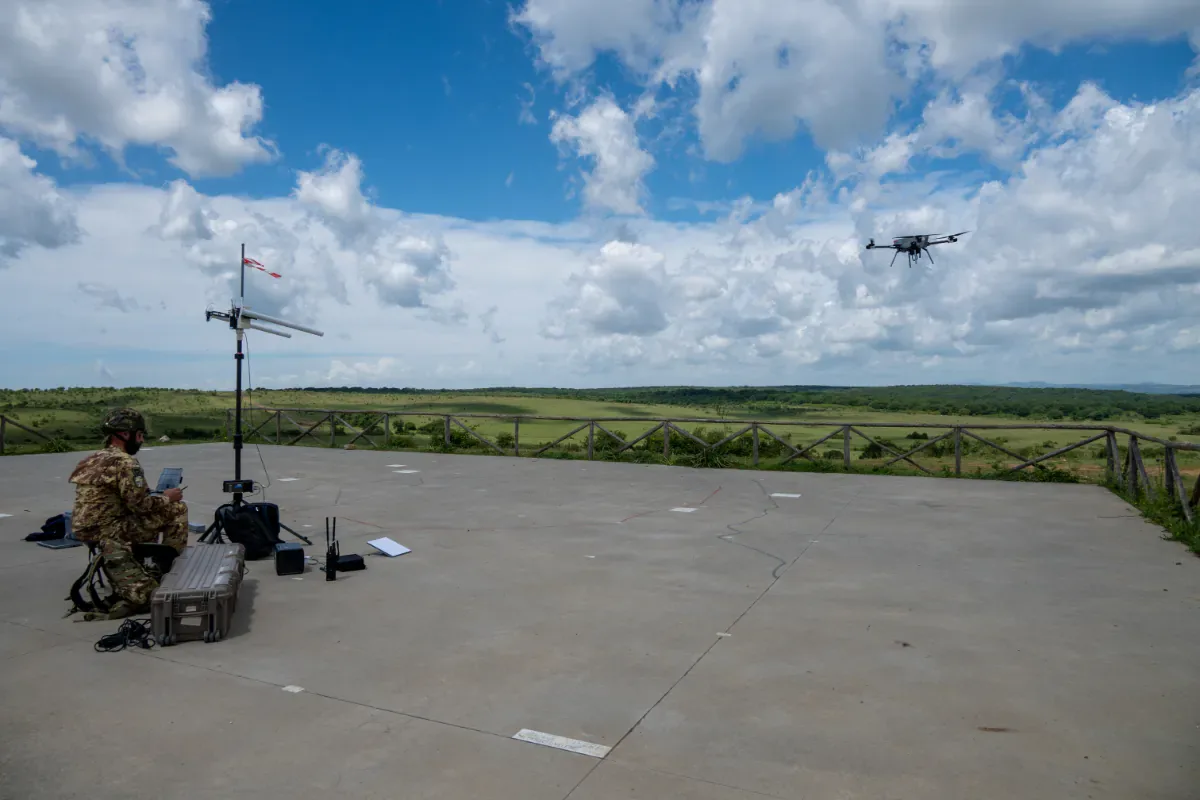
The experimentation conducted at Monte Romano is therefore not merely a technological test, but an important step in the transformation path of the Italian Army. The information collected will allow for the identification of which systems are ready for potential operational use and which require further development before being permanently integrated into the units.
In an international context where technological superiority, automation, and artificial intelligence are gaining increasing importance, the ability to effectively integrate autonomous systems and military personnel represents one of the main challenges for modern ground forces.
The conclusion of the RAS 2026 campaign thus confirms the Army's determination to decisively invest in innovation, pursuing a constant modernization of the Armed Forces and developing what could become future terrestrial operational capabilities. Monte Romano thus confirms itself as one of the main national hubs for technological experimentation, where men and technology work together to build increasingly effective, reliable, and safe tools, capable of meeting the operational needs of the present and the future.




Comments
No comments yet. Be the first!