


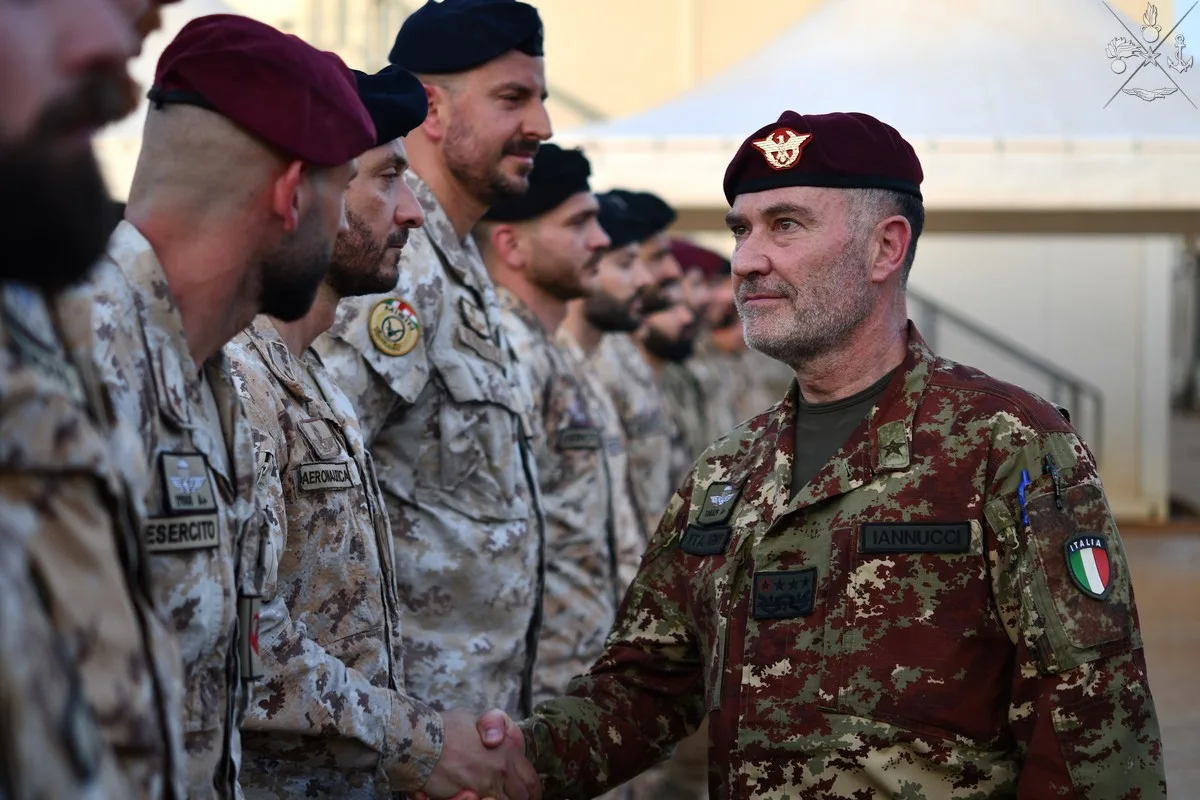

Rome, July 1, 2026 – A military tool "agile and flexible" capable of acting as «leverage and projection of the country's system» in a geopolitical scenario marked by multidimensional threats and rapidly evolving alliances. This is the strategic line for 2026 illustrated by the commander of the Comando Operativo di Vertice Interforze (COVI), General of the Army Corps Giovanni Maria Iannucci, in a hearing before the Foreign and Defense Committees of the Senate and Chamber.
Italy's overall commitment includes 40 international missions and operations (26 under the aegis of international organizations and 14 on a bilateral or coalition basis). The average force employed will be around 7,500 units, with a maximum authorized contingent of 11,900 military personnel. This is accompanied by a plan for high and very high readiness forces up to 6,500 units, also linked to the Italian command of NATO's Allied Reaction Force.

Defense planning is structured through the main geographical areas of national interest:
MEDITERRANEAN
The Mediterranean is confirmed as the «area of primary national strategic interest», where Italian commitment moves between operational and cooperation needs.
- Maritime devices: The core of activities remains the Mediterraneo Sicuro operation, which monitors the waters from the Balearic Sea to Suez. Italy also maintains the command of EUNAVFOR MED Irini (whose headquarters is hosted at COVI) and actively participates in NATO's Sea Guardian operations and the Alliance's permanent naval forces. The naval operational device employs about 1,600 military personnel, rising to 1,800 including cooperative activities with coastal countries.
- Focus on Libya: In North Africa, Libya remains the central hub. General Iannucci claimed Italy's leading role in training special forces belonging to the two different Libyan components, promoting their joint work. On the table is also the possible signing for the creation of the Maritime Rescue Coordination Center (MRCC) in Benghazi, which will mirror the already operational structure in Tripoli.
BALKANS
In the Balkan area, the primary strategic objective is the stabilization of an area marked by strong political instability, which, however, has not yet resulted in an open security crisis. The overall commitment in the area is 1,300 units, with the possibility of rising to 1,950 military personnel by activating the operational reserve.
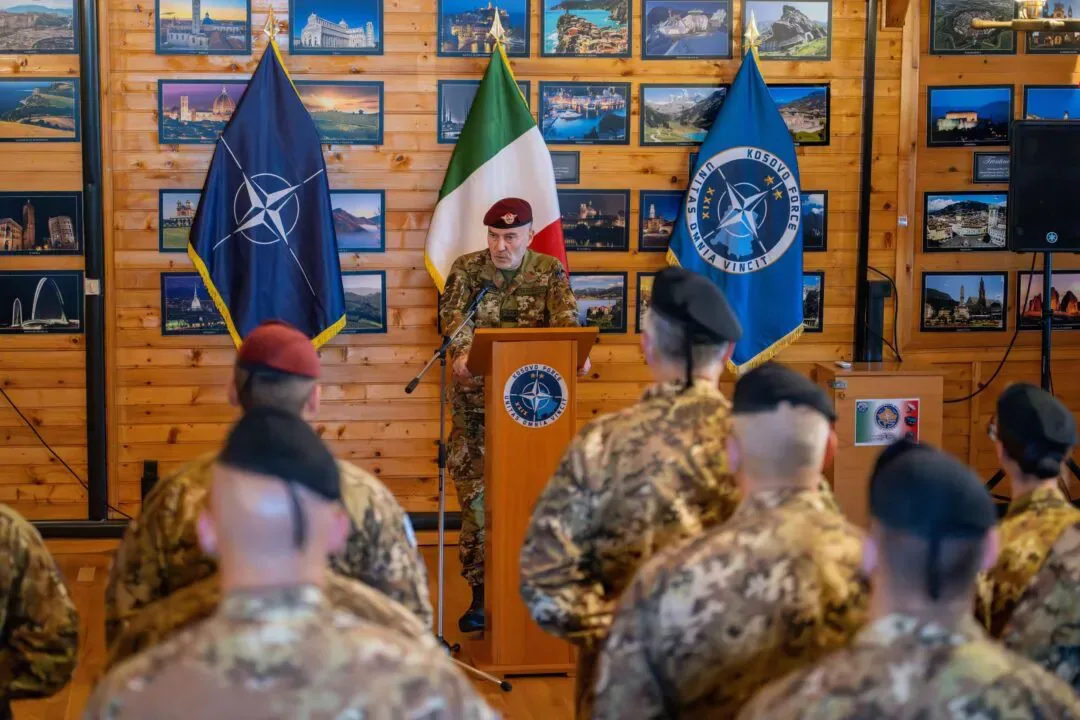
- Kosovo: Under the aegis of NATO, Italy deploys about a thousand military personnel in the KFOR mission, alongside a specialized component of the Carabinieri and participation in the European civilian mission EULEX Kosovo.
- Bosnia and Herzegovina: Defense expresses the command of the EUFOR Althea operation, deploying about 300 military personnel supported by a maneuver company, an intelligence task force, and five helicopters. Italy also supports the LOT (Liaison and Observation Teams), small presences widely spread across the territory, essential for interpreting and monitoring local political and social dynamics.
EASTERN FLANK
On the eastern front of the Alliance, the Italian contribution to NATO's deterrence, defense, and surveillance devices continues in the face of the Russian threat, with a maximum authorized contingent for the entire area of 3,040 units.
- Ground Presence and Missile Defense: Italy deploys about 300 military personnel in Latvia, 260 in Hungary, and 750 in Bulgaria, where it plays the strategic role of framework nation of the multinational battle group. Regarding NATO's integrated air and missile defense, Samp-T system assets have been deployed in Slovakia, Lithuania, Estonia, and Turkey. In Turkey, the Italian Samp-T battery will reach full operational capability on July 3, a deployment also connected to the security framework necessary for the upcoming NATO leaders' summit in Ankara.
- Air Policing: In the air domain, the commitment involves up to 387 military personnel and 19 aircraft. After the mission in Estonia, deployment is currently underway in Romania, while from August a task force will start in Siauliai, Lithuania, equipped with four Eurofighter jets and about 180 military personnel. The intensity of anti-incursion monitoring in allied airspace is evidenced by the data: Italian assets conducted 74 "alpha scrambles" (immediate interception takeoffs) in 2025 and 42 in 2026.
- Support to Ukraine: Training activities in favor of Kyiv's forces continue through the EUMAM Ukraine and NSATU (NATO Security Assistance and Training for Ukraine) missions. The Italian Defense has so far conducted about 75 courses, training a total of 2,280 Ukrainian military personnel.
MIDDLE EAST
The Middle Eastern quadrant has undergone a profound reshaping of Italian deployments due to the significant deterioration of security conditions in the area. The maximum contingent for the entire theater is set at 2,900 units.
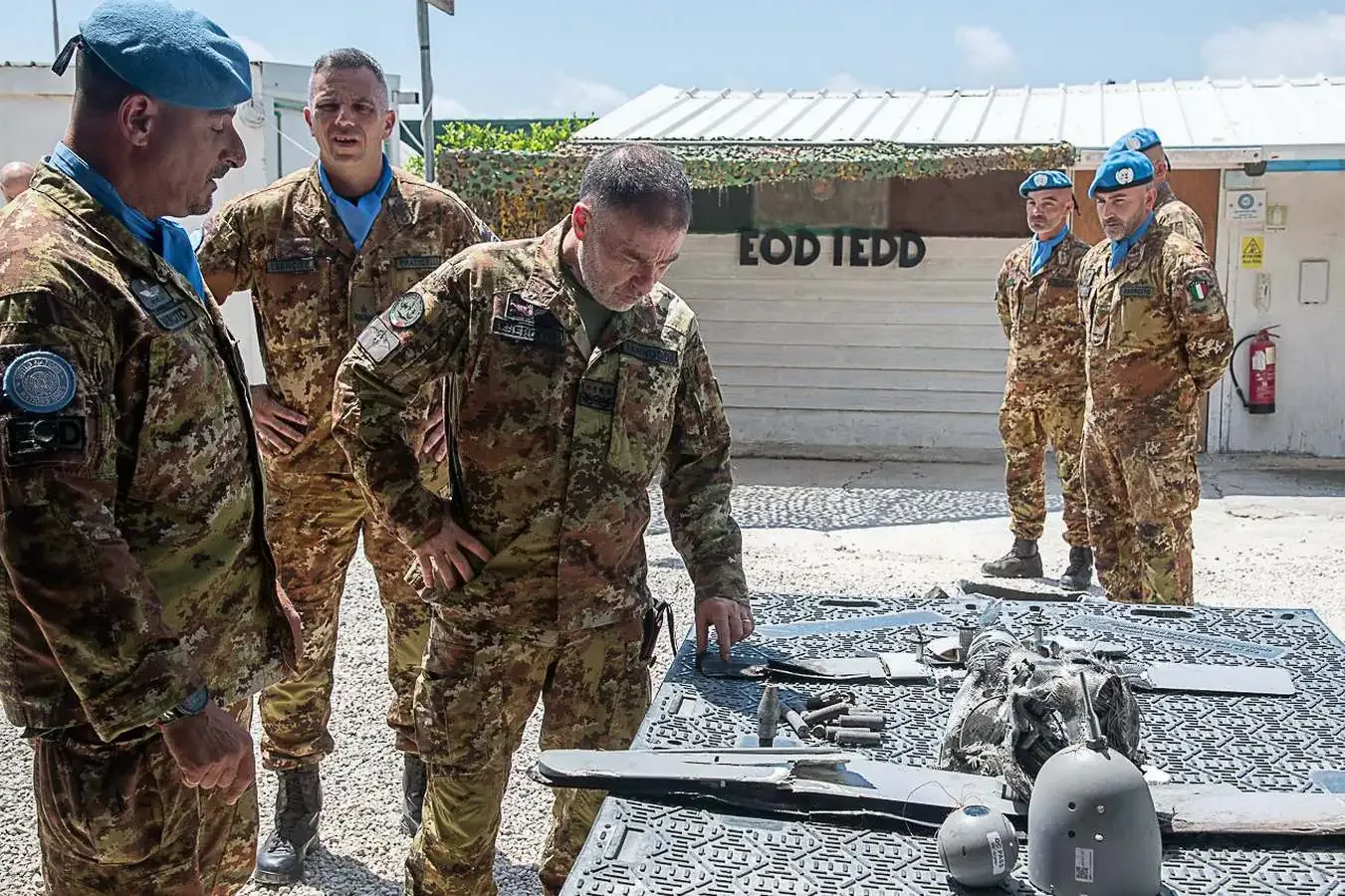
- Lebanon and the future of UNIFIL: Italy maintains about 1,200 military personnel between the UN mission (UNIFIL) and the bilateral mission MIBIL. From 2024, the Military Technical Committee for Lebanon will be integrated into the latter, an initiative promoted by Italy along with five other nations to provide humanitarian support and technical assistance to the Lebanese Armed Forces. On the fate of UNIFIL, General Iannucci has outlined a turning point: "By the end of the year, the closure of UNIFIL in its current configuration should be planned". However, the Lebanese government has made a strong request for an "evolutionary" UN presence with different numbers and tasks as a third-party monitor, a perspective formed by three models proposed by Secretary-General António Guterres that Italy intends to support in the appropriate forums.
- Gaza and Palestine Emergency: The Levante operation remains active, focused on humanitarian aid, health support, and the transport of Palestinian minors in need of care, in addition to the historic missions MIADIT Palestine, EUBAM Rafah, and EUPOL COPPS.
- Iraq and Kuwait: Following security tensions, various components of the Operation Inherent Resolve (OIR) mission have been temporarily redeployed between Saudi Arabia, Jordan, and Italy, while the command of the NATO Mission Iraq has temporarily relocated to Naples. With the expected end of the OIR mandate in Iraq starting in September, Italy will launch a new complementary bilateral mission, focused on training, advising, and assisting activities to consolidate the local security architecture.
SUB-SAHARAN AFRICA (SAHEL)
In the Sahel, Italian planning operates in an extremely fluid context that has seen the gradual withdrawal of many Western partners. The maximum authorized contingent for the area is 650 units.
- The presence in Niger: The core of Italian activities remains the MISIN mission in Niger. General Iannucci firmly defended the strategic choice to maintain the contingent in the country, defined as "the center of gravity of instability flows coming from the Sahel and the Horn of Africa". Following the recent attack near Base 101, troop protection measures have been further tightened. From a diplomatic-military perspective, the head of COVI noted a concrete interest from Niamey authorities to reopen channels with Western countries, "probably with the sole exception of France". If security conditions consolidate, Defense is considering expanding its presence in the strategic area of Agadez.
- Burkina Faso: For security reasons, any hypothesis of cooperation or military presence in the country remains currently frozen.
HORN OF AFRICA, RED SEA, AND INDIAN OCEAN
This quadrant represents the most vital economic and logistical hub for the defense of national commercial and energy interests, threatened in the "permanent contestation" zone stretching from the Gulf of Aden to the Suez Canal. The maximum contingent cap is 1,200 military personnel.
- Somalia and Djibouti: In Somalia, Italy confirms itself as the main international contributor, holding the command of the EU mission EUTM Somalia and participating in EUCAP Somalia and MIADIT. A key hub for the entire region is the Italian military support base in Djibouti, defined as a "logistical hub of fundamental importance" to project security and ensure freedom of navigation.
- Operations at sea (Aspides and Atalanta): In addition to the anti-piracy mission Atalanta and the Combined Maritime Forces (of which Italy will soon assume command of CTF 150), the focus is on the European operation Aspides in the Red Sea. Iannucci highlighted how Aspides is in all respects "an integral part of the national defense system", as the safe transit of goods in these waters directly affects the economic stability and competitiveness of Italian ports, heavily impacted during 2025.
- The demining plan in Hormuz: The general issued a strong warning for the Strait of Hormuz, where it is estimated that there are dozens of particularly sophisticated and advanced naval mines, whose clearance will require about two months of work by contingents with high technical expertise. In anticipation of a possible multinational demining mission open to regional and non-European actors, Italy has preemptively prepositioned two minehunters, a logistics ship, and an escort ship in Djibouti. Thanks to this prepositioning, should the political green light from the government and Parliament arrive, the Italian task force could be operational in Hormuz within a few days, eliminating the 25 days of navigation otherwise necessary starting from bases in Italy.



Comments
No comments yet. Be the first!