


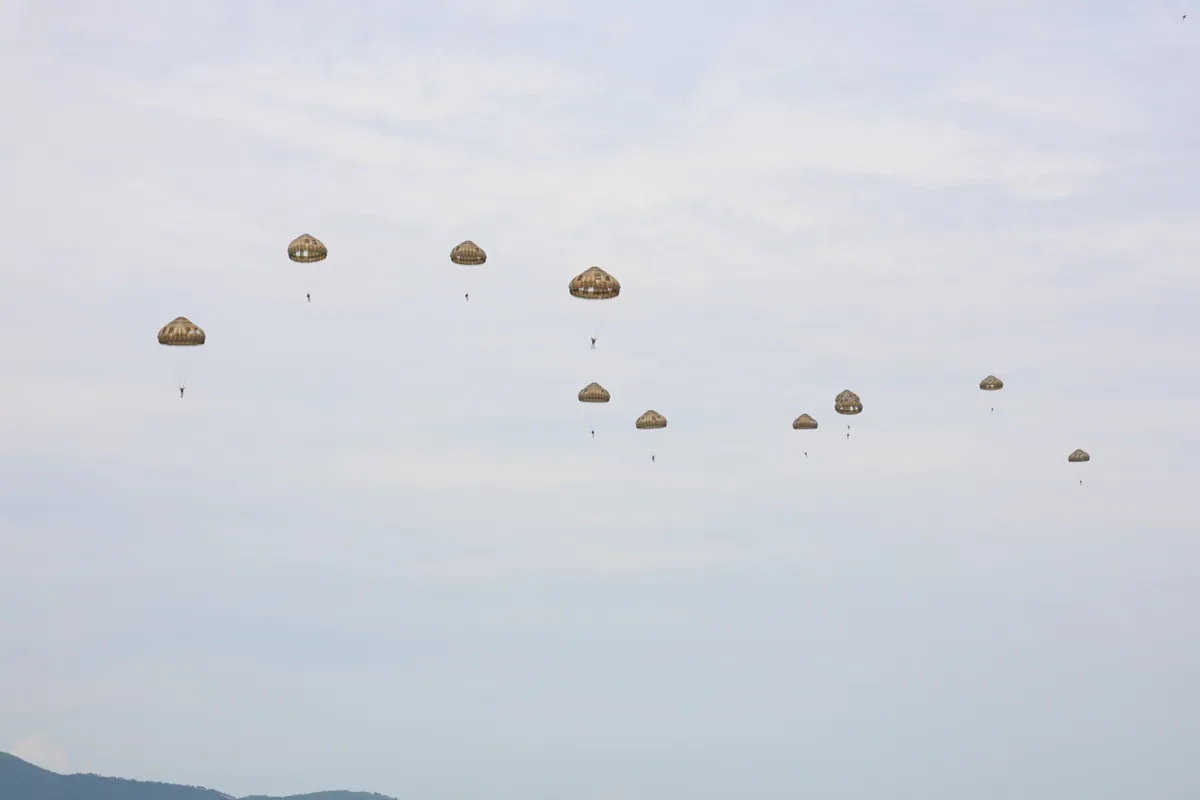

Earning the parachute jump certification represents much more than a technical achievement: it is a moment of personal and professional growth that tests preparation, discipline, and the ability to handle high-emotional-impact situations. For the 88 Cadet Marshals of the 27th "Volontà" Course of the Army Non-Commissioned Officers School, completing the course at the Parachuting Training Center of the "Folgore" Paratroopers Brigade marked one of the most significant milestones in their training journey.
The baptism of flight is indeed an experience destined to leave a mark on the career of every future platoon commander. The first jump not only represents the passing of a training test but also the acquisition of greater awareness of one's abilities, stress management, and the importance of trust in the procedures learned during training.
The training of Italian Army non-commissioned officers is based precisely on this principle: combining technical preparation, decision-making balance, and leadership, essential qualities for leading men and women in modern operational scenarios. The activities carried out at the "Folgore" Parachuting Training Center, a national reference point for parachuting training, once again confirm how experiential training represents one of the most effective tools for building commanders prepared to face complex situations.
Preparation, Safety, and Technique at the Heart of Training
Access to the certification course was preceded by a selection phase during which the Cadet Marshals demonstrated they possessed the physical and attitudinal requirements necessary to undertake a highly specialized activity such as parachuting.
After passing the selection, the attendees embarked on an intensive training program structured between athletic preparation, theoretical lessons, and practical exercises, essential for learning the techniques of automatic-opening parachute jumps and the correct landing procedures.

Great attention was paid to safety-related aspects, an essential element of every military parachuting activity. The instructors at the Training Center guided the Cadets in the progressive learning of operational procedures, from equipment preparation to aircraft boarding, from airborne exit to descent and landing management.
Each phase was repeated and consolidated through numerous ground simulations, allowing future non-commissioned officers to acquire fundamental automatisms to operate effectively even under high psychological pressure. This training method, consolidated by years of experience of the "Folgore" Paratroopers Brigade, aims to develop personnel capable of facing any situation with clarity, discipline, and full control of their actions.
A Certificate that Strengthens Skills, Responsibility, and Service Spirit
The final phase of the course saw the Cadets successfully complete the three jumps required to obtain the jump certification, an achievement reached by 88 Cadet Marshals of the 27th "Volontà" Course.
The activities also involved 21 colleagues already holding the certificate, along with the command line, engaged in the required reconditioning jumps necessary to maintain certification and operational efficiency.

The presence of personnel with different levels of experience represented an important opportunity for professional growth, fostering direct interaction between future commanders and already qualified military personnel. The first jump remains one of the most significant moments in the training of every paratrooper, as it requires determination, self-control, and full confidence in the skills acquired during the training path.
For the Cadet Marshals of the 27th "Volontà" Course, this experience constitutes an additional piece in building their professional identity, strengthening leadership skills, resilience, and team spirit, qualities essential for effectively exercising future command responsibilities.
The Army Non-Commissioned Officers School, a reference center of the Armed Forces for the basic and advanced training of non-commissioned officers, continues to invest in a training model capable of integrating technical skills, operational preparation, and personal growth, forming a new generation of commanders ready to professionally face the challenges of service.




Comments
No comments yet. Be the first!