


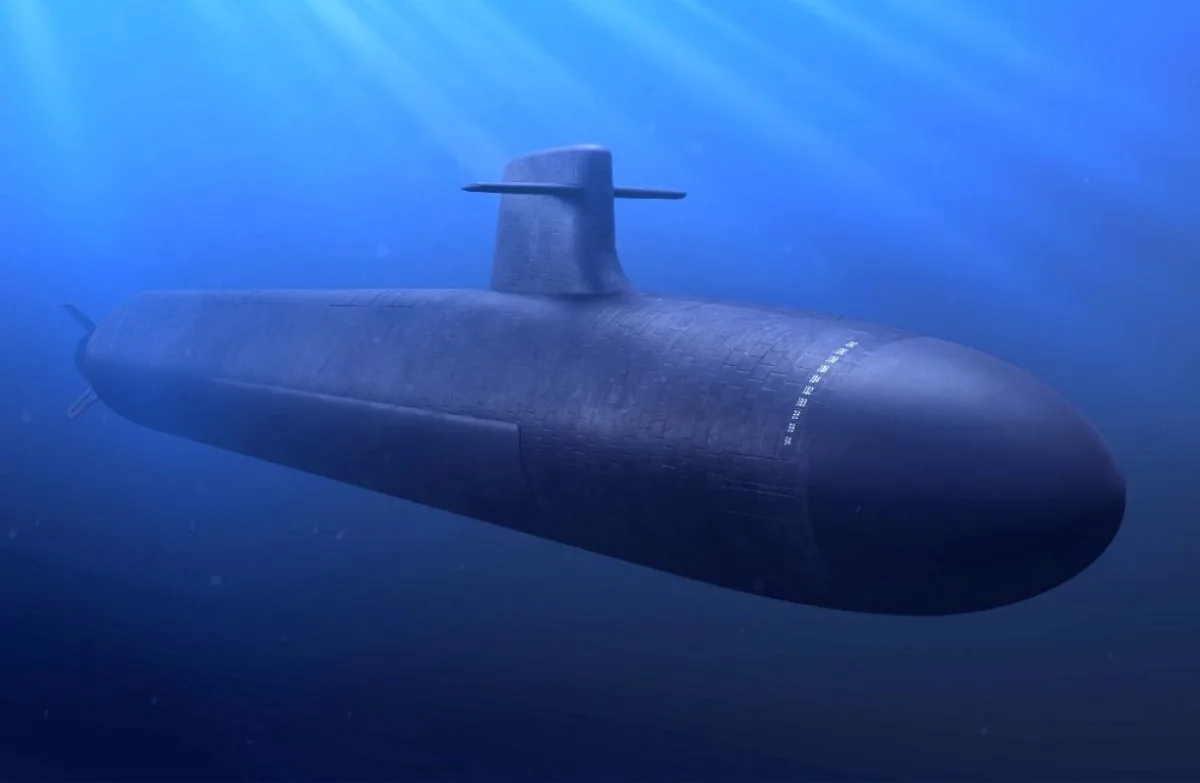

Italy, Japan, and South Korea – three allies of the United States, three countries with different histories and sensitivities on the nuclear issue – are converging on a common point: evaluating or initiating naval nuclear propulsion for major ships and submarines.
There is no talk (for now) of atomic weapons, but of nuclear reactors as a power source for military units, with enormous effects on autonomy, deterrence, power projection, and geopolitical weight. From the expanded Mediterranean to the Indo-Pacific, these choices are transforming traditionally “defensive” navies into actors capable of long-range operations.
Italy: Towards a Naval Nuclear Doctrine
In Italy, the shift is currently under study, but structured.
The Naval Armaments Directorate has entrusted Fincantieri with a two-year assignment to evaluate the use of nuclear propulsion on:
- the amphibious assault ship “Trieste”
- the submarines U212NFS
The study will define:
- design modifications to accommodate III/IV generation naval reactors
- where to develop prototype, production, and supply chain
- which naval bases to convert into “Nuclear Naval Base” for fueling, refueling, and maintenance
- requirements for shipyards and arsenals capable of building and maintaining nuclear-powered units
It builds on previous experience: the CISAM of Pisa and the “Minerva” project, on mini-naval reactors, involving Fincantieri, Cetena, Ansaldo Nucleare, RINA, and the University of Genoa.
Japan and South Korea: The Indo-Pacific Heats Up
The study (3 million euros) should provide by 2028 a theoretical framework of feasibility; any operational units would not be seen before 2040. Officially, it does not bind the Defense, but in fact, it paves the way for a possible Italian naval nuclear doctrine, with repercussions also on the civilian sector and Italy's role in NATO and the Mediterranean.
In South Korea, the process is more advanced politically.
After the support of President Donald Trump, the US Navy also gave full endorsement to Seoul's acquisition of nuclear-powered submarines, considering SSNs as a tool:
- for containment towards China
- to transform the South Korean navy from regional to global
President Lee Jae Myung spoke of a first informal agreement with Washington on:
- commercial and security terms
- expansion of South Korean rights on uranium enrichment and reprocessing of spent fuel
Crucial issues remain open (shipyards, submarine model, possible units for the USA, long construction times), while North Korea's submarine and nuclear missile program fuels the urgency perceived by Seoul.

In Japan, the shift is mainly doctrinal and symbolic.
The new Defense Minister Shinjiro Koizumi has called for an open discussion on the possibility of nuclear submarines, in a country:
- marked by Hiroshima and Nagasaki
- with a strongly pacifist constitution
- traditionally committed to nuclear disarmament
Strategic Implications and Arms Race
The deterioration of the strategic environment – North Korea's nuclear and missile arsenal, the growth of the Chinese nuclear fleet – has pushed Tokyo to reconsider the taboo on atomic naval propulsion. A Defense document already hinted at the start of feasibility studies. No definitive decision, but the mere fact that the issue has come to light represents a historic step.
The moves of Italy, Japan, and South Korea have a common denominator: the desire to not fall behind in a context where the depths of the oceans are increasingly the heart of competition between powers.
Nuclear propulsion offers:
- extended autonomy for submarines
- the ability to operate far from home for long periods
- greater deterrence and operational flexibility
For the United States, it means strengthening a maritime allies arc – from the Mediterranean to the Indo-Pacific – with advanced underwater capabilities.
For China and North Korea, these developments appear as part of a containment process and could fuel a new regional arms race, especially below the sea surface.
Italy, Japan, and South Korea have not yet launched new nuclear submarines, but they have taken the decisive step: politically and conceptually accepting the idea that nuclear at sea can be a tool of security and power, not just a taboo of the past.



Comments
No comments yet. Be the first!