




Strategic Analysis Drawing inspiration from the recent programmatic reflections of the Armed Forces leadership on the evolution of air defense in an integrated and multi-domain ecosystem, it becomes clear how the transition from a logic based on individual platforms to a complex network architecture raises crucial questions about sustainability, resources, and the real technological sovereignty of the country.
1. Development of UAS Capability vs. GCAP Program: What Resource Balance?
In the public debate and in the Defense's financial planning documents, the majority share of media attention and long-term allocations appears to be catalyzed by the Global Combat Air Programme (GCAP), the ambitious and costly sixth-generation project launched with the United Kingdom and Japan. It is undoubtedly a pillar for future decision and technological superiority, but it generates an inevitable polarization of financial and industrial resources.
Conversely, contemporary conflicts in Ukraine and the Middle East demonstrate daily that drone capability (UAS) and related counter-systems (C-UAS) constitute an absolute and urgent operational priority. Although the Air Force has long pursued excellence in the unmanned sector, the need for an enhanced airborne radar fleet within the next decade and the necessity to track low-altitude threats raise an economic allocation issue.
The industrial challenge posed by economically accessible offensive vectors requires proportionate interception responses in costs, to avoid suffering the adversary's numerical saturation strategy. It thus becomes essential to understand how much of the Defense budget will be allocated to the immediate implementation of mass and low-traceability drone platforms, compared to the significant cash windows required for the development of the sixth-generation fighter, whose operational maturity is set in a more distant time horizon.

2. Leading in the Space Domain: Where to Recruit Qualified Personnel?
The transition to a fluid continuum between atmosphere and suborbital space has seen the Air Force officially assume the role of national hub and guide for the space and aerospace domain. Satellite navigation, georeferencing, orbital debris surveillance, and early detection of ballistic launches are now indispensable daily requirements both in the civil and military fields.
However, this centrality clashes with a complex demographic and organic reality: the chronic personnel shortage affecting the entire Armed Forces sector. The new multilayered defensive architecture does not simply require pilots, but highly specialized professionals: data analysts, space engineers, cybersecurity experts, and radar operators capable of managing complex information flows in degraded multi-domain environments.
The recruitment and, above all, retention of such digital skills represent a real challenge. The Armed Forces must compete with the civilian market and private industry, often able to offer more attractive compensation packages and career paths. Without an extraordinary joint training plan, targeted university collaborations, and a revision of technical career profiles, the concrete risk is to acquire sophisticated space segments and next-generation radar networks without having the necessary organic volume to make them fully operational and efficient on a continuous basis.
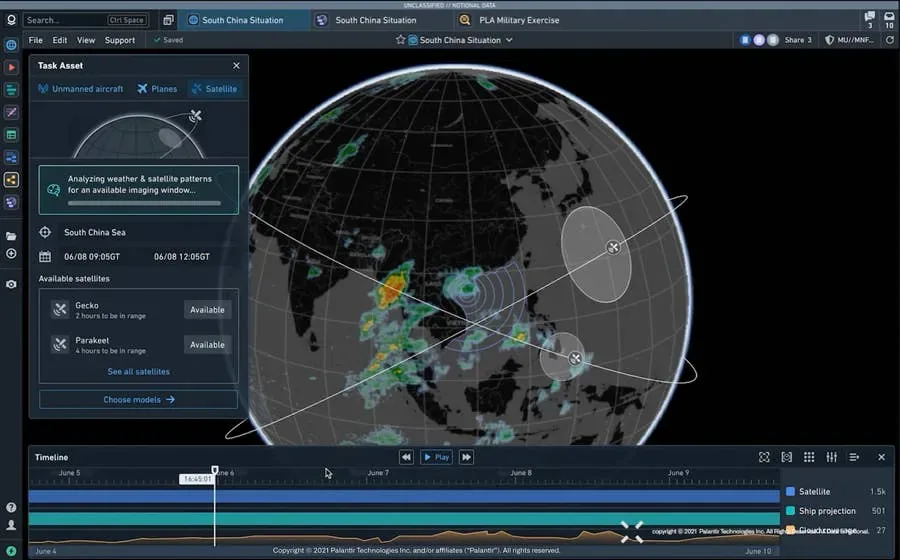
3. Artificial Intelligence: Is There a Real Capability under National Sovereignty?
Artificial Intelligence applied to supercomputing is described as the enabling factor for real-time distillation of the enormous information flow generated by next-generation sensors. In the doctrine of GCAP and integrated defense systems, AI does not replace humans but supports them by keeping them constantly within the decision-making process (human-in-the-loop).
The most pressing political and strategic question concerns the real sovereignty over such technologies. Much of the advanced algorithms, language models, and massive processing hardware infrastructures (data centers and high-performance processors) are today developed and held by transatlantic private giants or concentrated in specific global geopolitical areas.
For Italy, integration within the NATO framework and European cooperation are vital steps, but the absence of a strong and autonomous sovereign computing infrastructure raises doubts about the protection of sensitive data and the system's resilience in case of high-intensity symmetric conflicts. If national command and control systems depend on foreign proprietary software or uncontrolled technological supply chains, "decision superiority" risks turning into a strategic vulnerability, undermining the very effectiveness of deterrence.
Summary of Multidomain Development Requirements
| Technological Domain | Short-Term Operational Priority | Strategic Risk Factor |
| UAS & C-UAS | Air saturation, low-altitude tracking | Funding imbalance towards sixth-generation programs |
| Space and Aerospace | Orbital surveillance, early launch warning | Personnel shortage and competition with the private sector |
| Artificial Intelligence | Real-time sensor data processing | Dependence on foreign technologies and infrastructures |
In conclusion, as recalled in the international scenario analysis, preparing for the complexity of new domains serves primarily to preserve stability and peace, mitigating risk factors before they turn into concrete threats. However, to translate doctrinal theory into operational reality, it will be essential to balance industrial investments, protect data sovereignty, and invest in human capital, the true and irreplaceable node of any integrated defense network.






Comments
No comments yet. Be the first!