


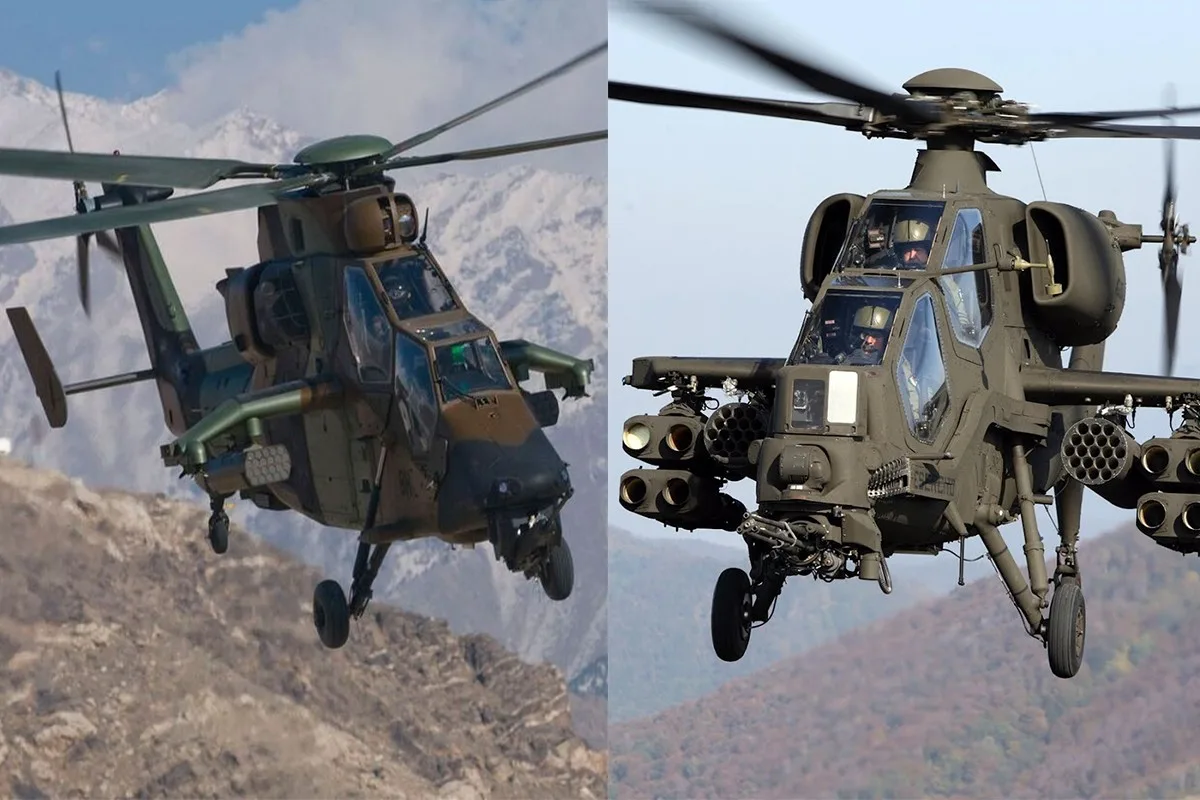

The operational successes achieved by modern attack helicopters in countering the threat of kamikaze drones highlight a doctrinal paradigm shift. The recent findings in the Middle Eastern theater (June 2026), where French Tiger helicopters intercepted and neutralized one-way attack drones (OWA-UAV) of the Shahed family with a 100% effectiveness rate, confirm that rotary-wing aircraft represent a fundamental and flexible resource for low-altitude air defense and Counter-UAS (C-UAS).
For the Italian Army, this evolution sets a clear course: it is necessary to accelerate the development of technical-tactical procedures (PTT) dedicated to its exploration and escort platforms, enhancing the current AH-129D Mangusta line and defining the employment doctrine for the new AH-249 Fenice from now.
The Key Factors of French Success
To understand how to replicate and adapt this model, it is necessary to analyze the technical and operational pillars that made the Tiger so effective compared to traditional jet interceptors:
- Persistence and Relative Speed: Kamikaze drones fly at relatively low speeds (between 150 and 200 km/h) and at low altitudes, profiles that challenge fast jets, forced into complex maneuvers to avoid overshooting the target and subject to reduced engagement times. The helicopter can "hunt" the drone by maintaining the same speed, tracking it for a long time.
- Onboard Optoelectronics and Sensors: Electro-optical/infrared (EO/IR) targeting and exploration systems allow for certain visual identification of the target even in nighttime contexts or at very low altitudes, where ground radars suffer from clutter (terrain reflection disturbances).
- Cost-Effective Lethality: The use of the 30mm automatic cannon proved cinematically perfect and financially sustainable, avoiding the waste of expensive surface-to-air or air-to-air missiles for low-cost technological targets.

The Roadmap for the Italian Army
The Army Aviation (AVES) has the skills and platforms to translate this capability into operational reality, but the quantum leap requires an integrated approach between system updates and rewriting of employment manuals.
1. Optimization of National Platforms
| Platform | Status of C-UAS Capability | Technological and Tactical Requirements |
| AH-129D Mangusta | Current: Excellent optoelectronic suite (OTS system), but limited by armament and onboard radars for autonomous detection of small radar-cross-section (RCS) targets. | * Tactical integration with data from ground or naval discovery radars via Link 16. * Exploitation of the precision of the M197 20mm three-barrel rotary cannon with specific ammunition. |
| AH-249 Fenice | Future (In development/introduction): Natively designed for multi-domain scenarios with high speed, autonomy, and interconnectivity capabilities. | * Integration of AI algorithms in the onboard suite for automatic tracking of micro-targets. * Full operability of the MUM-T (Manned-Unmanned Teaming) system to use scout drones as "advanced sensors" in the hunt for kamikaze drones. * Development of dedicated effectors (e.g., short-range missiles suitable for air-to-air engagement). |
2. Development of Technical-Tactical Procedures (PTT)
To systematize what France has demonstrated in the field, the Italian Army must focus on three doctrinal pillars:
- Integration into National Air Defense: The helicopter does not operate in isolation. The PTT must codify the transfer of target data (vectoring) from the integrated Air Defense radar network (Air Force/NATO) directly to the mission systems of the Mangusta or Fenice.
- Low-Altitude Interception Tactics: Definition of specific flight profiles. The helicopter must position itself in a rear or flanking attack sector relative to the drone's trajectory, using the cannon turret linked to the pilot's helmet (IHS) for dynamic engagement without having to align the entire aircraft.
- Weapon Employment Doctrine: Establish a rigid engagement matrix based on distance and threat type. The 20mm cannon remains the weapon of choice for medium-short engagement distances, while for long-range protection or against faster drones, it becomes essential to qualify short-range air-to-air vectors.
Strategic Impact: Transforming the attack helicopter into a mobile Counter-UAS asset allows bridging the operational gap between ground point defense systems (VSHORAD) and interceptor jets, offering a flexible shield that can be rapidly deployed both for the protection of national territory and for the safeguarding of Italian contingents in foreign operational theaters.



Comments
No comments yet. Be the first!