


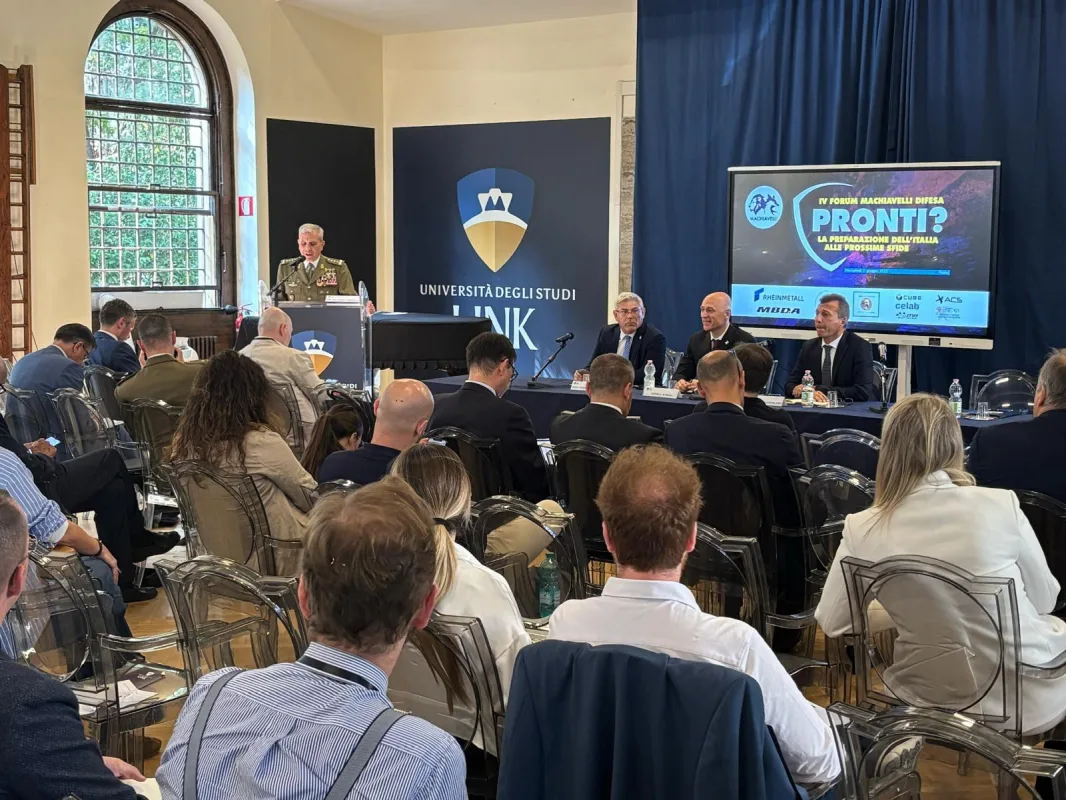

The IV Machiavelli Defense Forum, held on June 12, 2025, at the University of Link Studies in Rome, offered an important opportunity to reflect on the readiness state of the Italian Armed Forces. In a context characterized by increasingly complex threats and regional instability, the event delved into crucial topics such as autonomous defense, Italy's role in NATO, and strategic innovation. A central aspect of the debate was the evolution of the armored component of the Italian Army, with particular attention to new technologies and the strategies necessary to face future challenges.
General of the Army Corps Salvatore Camporeale, Deputy Chief of Staff of the Army, highlighted during his speech in the panel on "The Evolution of the Armored Component: Strategies, Technologies, and Perspectives," how the modern battlefield is marked by a dual transformation. On one hand, we are witnessing a return to high-intensity conflicts, in which the armored component plays a fundamental role. On the other, the introduction of new technologies is profoundly changing operational methods and military strategies.
Technological Innovations and the Future of the Armored Force
General Camporeale emphasized that tanks are not obsolete but should be considered as part of a broader ecosystem. Technology has evolved the concept of "tank," integrating it into a "tactical bubble" composed of advanced active protection systems and defense against threats from the third dimension and cyberspace. This approach allows armored vehicles to operate in synergy with other forces and respond to more sophisticated and diversified threats.
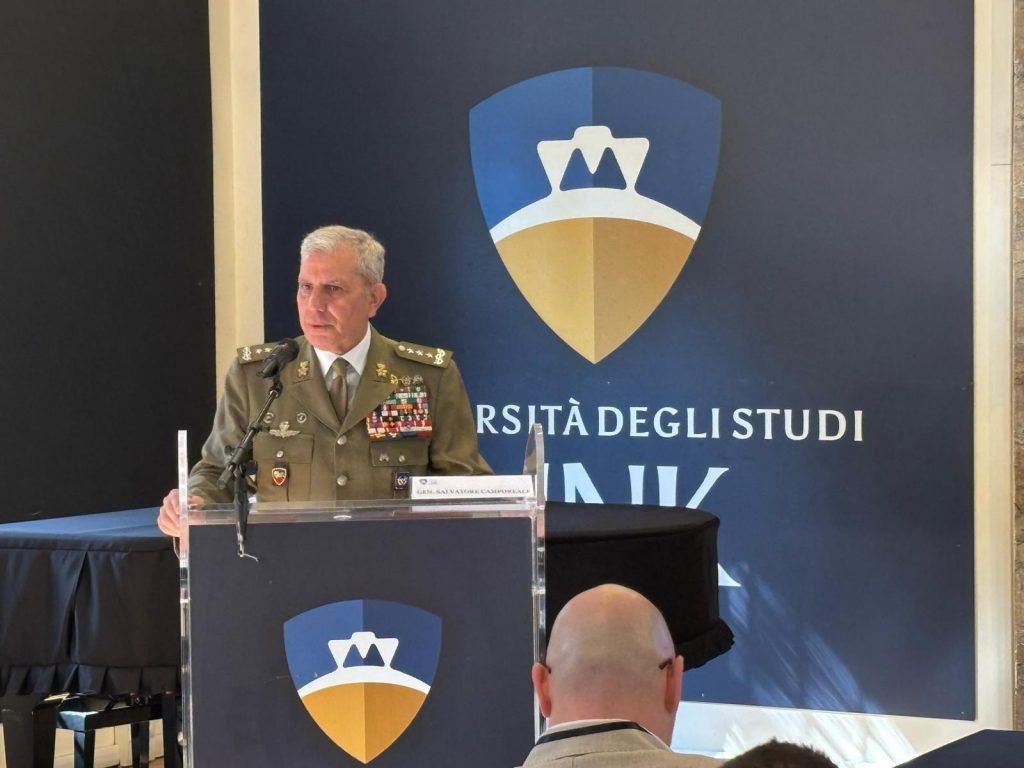
Recent operational experiences, such as the conflict in Ukraine, have indeed changed the nature of threats, the tools available to the armed forces, and the methods of intervention. In particular, the conflict has demonstrated the importance of a force that is not only mobilizable and ready for action but also well-trained and equipped. Gen. C.A. Camporeale highlighted the need for a constant availability of strategic reserves of ammunition and combat vehicles, fundamental factors to ensure operational sustainability and effectiveness in complex and prolonged scenarios.
The Role of the Armed Forces, Cooperation with Industry, and the Centrality of the Human Factor
In the context of the transformation of the armored component, two key strategic projects were presented. The first, the New Main Battle Tank program, involves the purchase of 132 new combat tanks, in addition to 140 derivative vehicles, representing an important technological upgrade for the Italian Army. The second, the A2CS (Army Armoured Combat System) program, is oriented towards the introduction of a modular family of 1,050 new-generation armored vehicles. Both projects are designed to meet NATO objectives and to form a basis for the development of the future European tank.
Another central theme that emerged during the event was the importance of a shared strategic vision between the Armed Forces and industry. Cooperation between the military and industrial worlds is essential to anticipate future challenges and ensure technological innovation in the Defense sector. The synergy between research, development, and operational application allows for timely and targeted responses to the emerging needs of the modern battlefield.
Finally, Gen. C.A. Camporeale reiterated a fundamental principle: despite technological progress, technology never replaces humans. Qualified, motivated, and trained personnel remain the central element of every military operation. The Italian Armed Forces must continue to invest in the human factor, both in terms of training and enhancement, to ensure that every soldier is capable of facing future challenges with competence and determination.
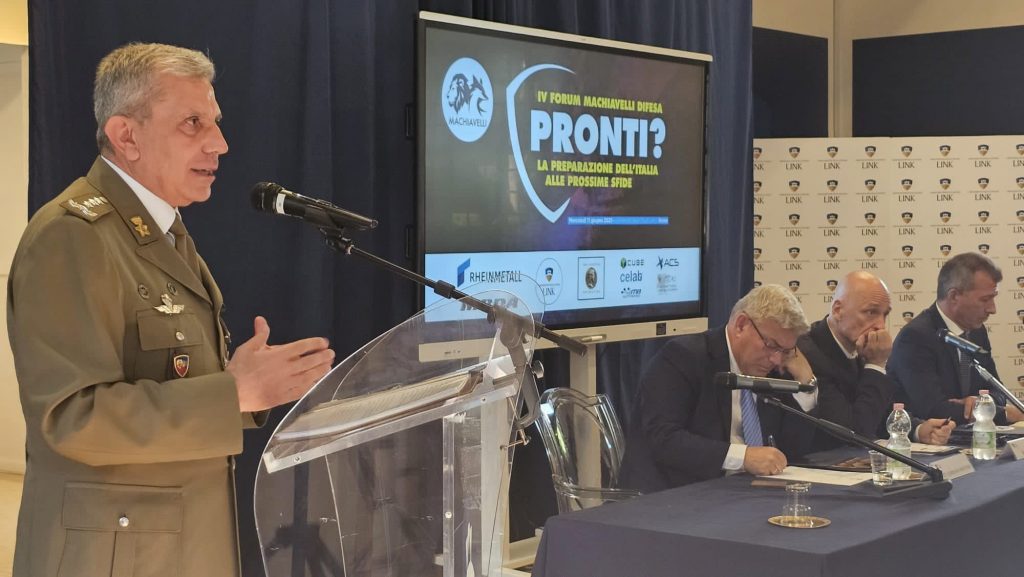
In conclusion, the intervention of the Deputy Chief of Staff of the Army represented a moment of synthesis between operational vision, technological innovation, and industrial sustainability. The future of the armored component of the Italian Army will be characterized by a balance between doctrine, technological development, and leadership. The ability to adapt and respond to the challenges of an ever-evolving international context will be decisive for the security and stability of our country.


Comments
No comments yet. Be the first!