


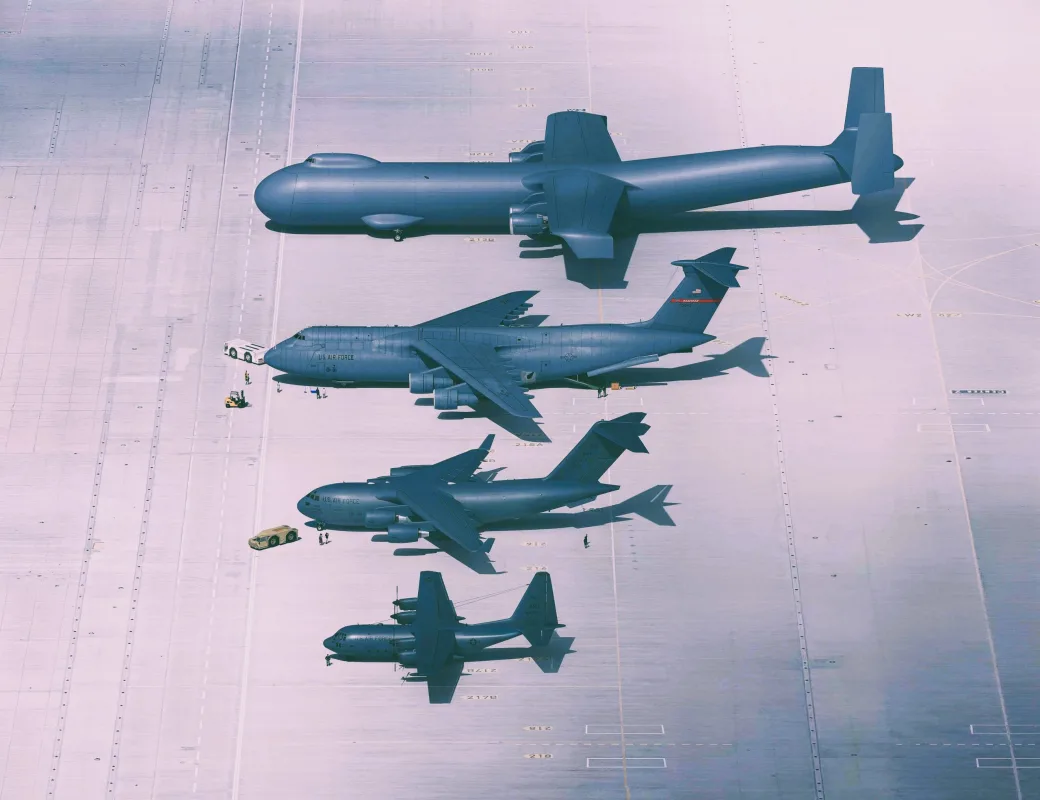

The project of the WindRunner, the gigantic cargo aircraft destined to become the new largest transport aircraft in the world, is taking shape in Italy, ideally inheriting the legacy of the Antonov An-225. Leading its development is the American multinational Radia, but the assembly will take place in Southern Italy, with Puglia in the spotlight and the airport area of Grottaglie, in the province of Taranto, at the center of the industrial program.
It is not a passenger aircraft, but a cargo designed to move exceptional loads: components of space launchers, satellites, aerospace modules, and wind turbine blades over 100 meters long. The goal is to revolutionize the logistics of oversized transport, today often entrusted only to ships, with delivery times that can last weeks or months.
The WindRunner has entered the development phase, while the first test flight is scheduled for 2029 and the entry into service in 2030.

Record dimensions and strategic functions
The dimensions of the aircraft are impressive: 108 meters in length, 24 meters in height, and 80 meters in wingspan. Its cargo capacity will reach about 7,000 cubic meters, an enormous volume, approximately six times that of the Antonov An-124 and eight times that of a Boeing 747-8F. The payload can exceed 72,000 kilograms.
According to Radia, the aircraft is designed to meet an increasingly urgent need, especially in the new Space Economy. With the growth of the space sector, the need to transport structures too large for the cargo planes currently in service is increasing. The WindRunner aims to drastically reduce logistical times, going from months to a few days, or even a few hours.
From a technical point of view, the aircraft will be equipped with high-bypass turbofan engines, chosen for fuel efficiency and ease of maintenance. The structure will use already established lightweight alloys, without resorting to experimental materials, and will also be designed to operate on unpaved runways, using sustainable aviation fuels.

Grottaglie, Italian supply chain and international interest
The industrial heart of the program will be Grottaglie, a site already known for the presence of strategic companies in the aeronautical and aerospace sector. Here the WindRunner will be assembled involving a high-level Italian supply chain. Among the already confirmed entities are Leonardo, which will handle the fuselage, Magnaghi Aerospace for the landing system, and Atitech for maintenance, repair, and overhaul activities. The project will also involve the Distretto Tecnologico Aerospaziale della Puglia and the Distretto Aerospaziale della Campania.
In addition to the aerospace sector, the WindRunner aims to become a decisive tool for the development of new generation wind energy. The ability to transport very long blades would indeed allow the construction of plants in areas today difficult to reach. The aircraft will be equipped with a huge front door and a patented loading and unloading system, designed to reduce operational times and ensure precision in handling.
The project has already attracted American attention on a strategic level. The United States Congress has included WindRunner in the National Defense Authorization Act, asking the Pentagon to work with Radia on the best design solutions. According to the Wall Street Journal, the company has already raised 104 million dollars to support the development of the aircraft. If the timelines are met, the world's largest aircraft will also speak Italian.



Comments
No comments yet. Be the first!