


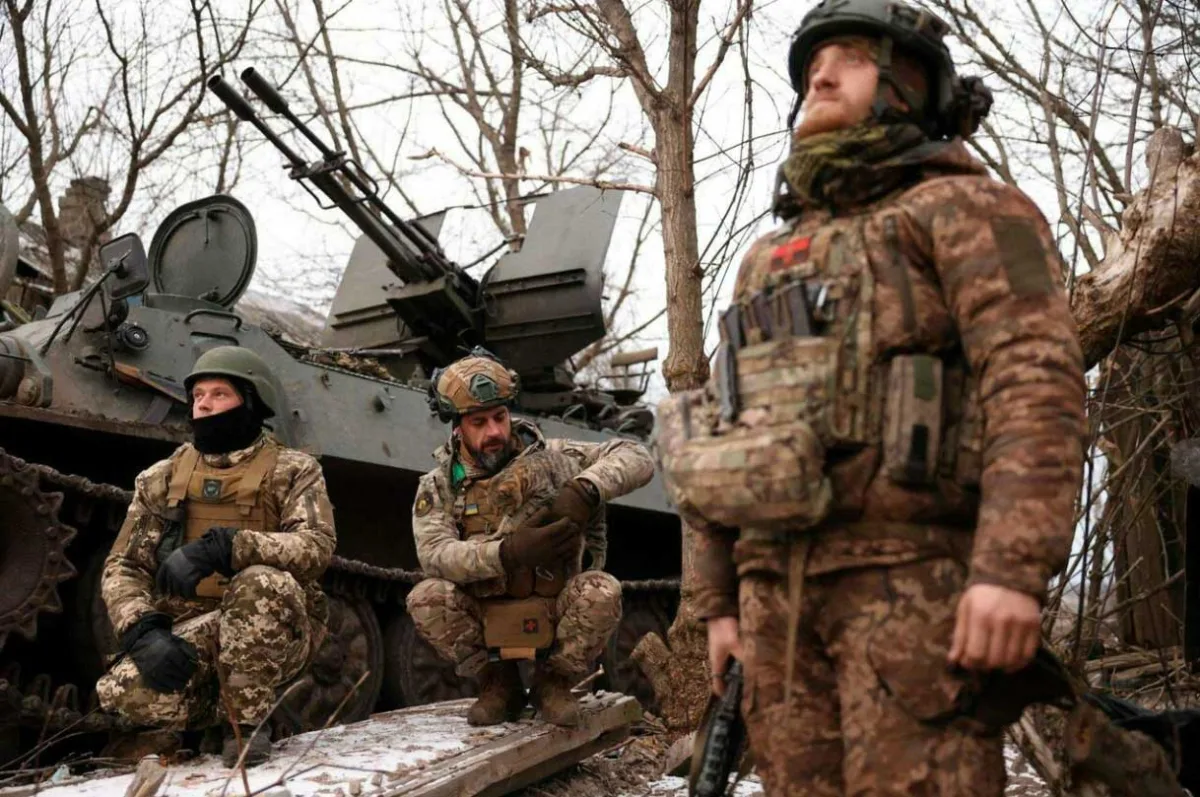

The United States House of Representatives has approved a massive military aid package totaling $95 billion, primarily intended for Ukraine, Israel, and Taiwan, marking a significant move after a period of deadlock. The measure, named the "Ukraine Security Supplemental Appropriations Act", provides $60.8 billion in support to Ukraine and received broad approval with 311 votes in favor and 112 against.
Ukrainian President Volodymyr Zelensky expressed deep gratitude for this decision, which, according to NATO Secretary General Jens Stoltenberg, enhances security not only in Europe but also in North America. The House celebrated the approval with a symbolic waving of Ukrainian flags, demonstrating the bipartisan support obtained, despite opposition from extreme factions like the one led by Trumpian Representative Marjorie Taylor Greene.
Of the package for Ukraine, $23 billion will remain in the United States to replenish arsenals, while $7.8 billion will be directly allocated to Ukraine in the form of forgivable loans. The Pentagon announced that the first military aid could reach Kyiv as early as next week, including ammunition and advanced air defense systems.
Simultaneously, the House approved $26 billion in aid to Israel, with a significant portion allocated to air defense systems like Iron Dome and Iron Beam, and $9 billion for humanitarian aid to Gaza. Another $8 billion was allocated to Taiwan and the Indo-Pacific region, strengthening American policy against China's growing influence.
This decision comes at a crucial moment, with the escalation of the conflict in Ukraine and tensions in the Middle East between Israel and Iran. The House's move, which divided the aid package into four distinct bills, allowed for managing the different sensitivities within Congress, demonstrating the ability to overcome internal divisions to promote the United States' national security interests.
President Joe Biden praised the vote, emphasizing how it sends "a clear message about the power of American leadership on the world stage," confirming the US commitment to supporting its allies and reflecting the strategic importance of these aids in a complex global context.
Moscow's reaction was swift, with Russian Foreign Ministry spokeswoman Maria Zakharova harshly criticizing the aid, predicting a negative outcome for American efforts and comparing them to failures in Vietnam and Afghanistan.
The issue remains highly polarized, with profound implications not only for the recipient countries but also for the internal American political dynamic, especially during an election campaign period. The aid is seen as a crucial investment to stabilize strategic regions and support key allies, reflecting the role of the United States as a pillar of global security.





Comments
No comments yet. Be the first!