




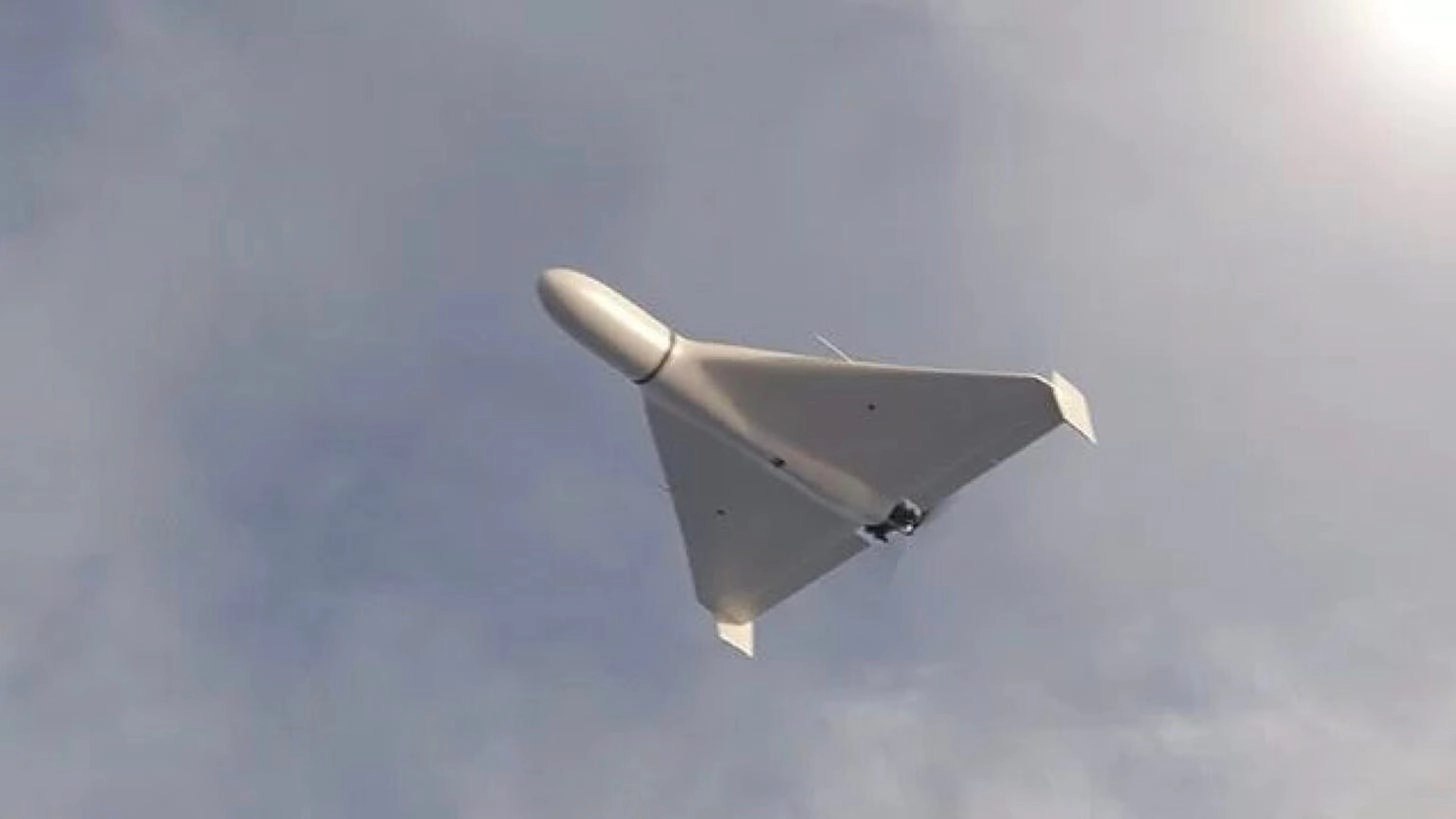
The incursion and subsequent crash of the Russian drone in Galați, Romania, which violated NATO airspace causing injuries and forcing Bucharest to invoke Article 4 of the Atlantic Alliance, is not just another border "incident." It is the definitive wake-up call for European defense and, in particular, for Italian defense.
While leaders condemn the escalation, the facts on the ground demonstrate that the nature of war has structurally changed. For Italy, it is time to unlock already planned projects, but above all to understand where to direct capital. The absolute priority is not the costly sixth-generation fighters, but UAS (Unmanned Aircraft Systems) and C-UAS (Counter-Unmanned Aircraft Systems). This is where we must gravitate.
Italy Enters the Operational Phase: Unlocking Planned Projects
The event in Romania sharply accelerates the perception of risk and pushes Italy to enter the heart of the implementation phase for technological modernization plans already budgeted. There is no more time for bureaucracy or mere conceptual simulations. The projects planned for the defense of national airspace and support for contingents abroad must be immediately translated into contracts and supplies.
However, accelerating spending is not enough: it is necessary to spend with strategic foresight. And recent events tell us that we are looking in the wrong direction if we continue to chase the dreams of aeronautical science fiction at the expense of the reality of mud and silicon.
The Lesson from the Front: Just Look at Iran and Ukraine
To understand where the real asymmetric advantage lies today, just observe the global operational theaters:
- Ukraine has become an open-air laboratory where commercial drones costing a few hundred euros, modified with explosives or guided by fiber optics, neutralize million-dollar tanks and block entire lines of advance.
- Iran has demonstrated how mass production of low-cost drones (like the infamous Shahed/Geran) can saturate the world's most sophisticated air defenses, creating unsustainable economic dilemmas for those who must defend themselves. Using a million-dollar missile to shoot down a twenty-thousand-dollar drone inevitably leads to financial collapse before even military collapse.
The Great Illusion of 6th Generation Fighters
In this scenario, billion-dollar programs for the development of sixth-generation fighters (like the GCAP - Global Combat Air Programme) risk being born obsolete if considered the only or main priority. A single advanced fighter requires over a decade of development, astronomical maintenance costs, and, above all, an extremely vulnerable logistical chain.
Modern warfare is played on quantity, saturation, and the ability to deny airspace at low cost. A sixth-generation fighter is not needed to stop a swarm of 40 suicide drones flying at low altitude between the buildings of a border city or hitting an isolated energy infrastructure.
UAS and C-UAS: The True and Exclusive Strategic Priority
The systems on which Italy must concentrate immediate industrial and doctrinal efforts represent two sides of the same coin, and both require an absolute investment focus.
On one side are the UAS (Unmanned Aircraft Systems), the unmanned aerial systems. Their strategic objective is to ensure constant surveillance, precise reconnaissance, and asymmetric attack capability at reduced costs compared to traditional systems. Practically, these technologies allow constant border monitoring and enemy line saturation, offering the fundamental advantage of not risking human lives on the front line.
On the other side, equally vital, is the need for C-UAS (Counter-Unmanned Aircraft Systems). The strategic objective in this case is the timely defense and interception of threats posed by short and medium-range drones. To protect national skies and critical infrastructures, the practical use of these systems must be based on electronic jamming to disrupt guidance signals, the use of directed energy laser weapons, and the adoption of programmable ammunition capable of destroying swarms before they reach the target.
The Italian Army and Air Force have already initiated the first contractual programs in this regard (such as funds related to digital infrastructures and AD3S/ACUS systems), but a political paradigm shift is needed: the allocation of funds must massively gravitate towards unmanned technologies and short-range air defense (GBAD).
Conclusions
The explosion in Galați is a symptom of a structural vulnerability that Europe can no longer afford to ignore. Italy has the industrial expertise, thanks to our excellence in defense electronics, to become a leader in autonomous and anti-drone systems. Unlocking already ready projects is the first step; stopping idolizing costly manned jets in favor of intelligent swarms and electronic shields is the second, indispensable leap forward. Ukraine, Iran, and Romania are showing us the future of warfare: it is up to us to decide whether to be caught unprepared or to immediately redefine our priorities.



Comments
No comments yet. Be the first!