


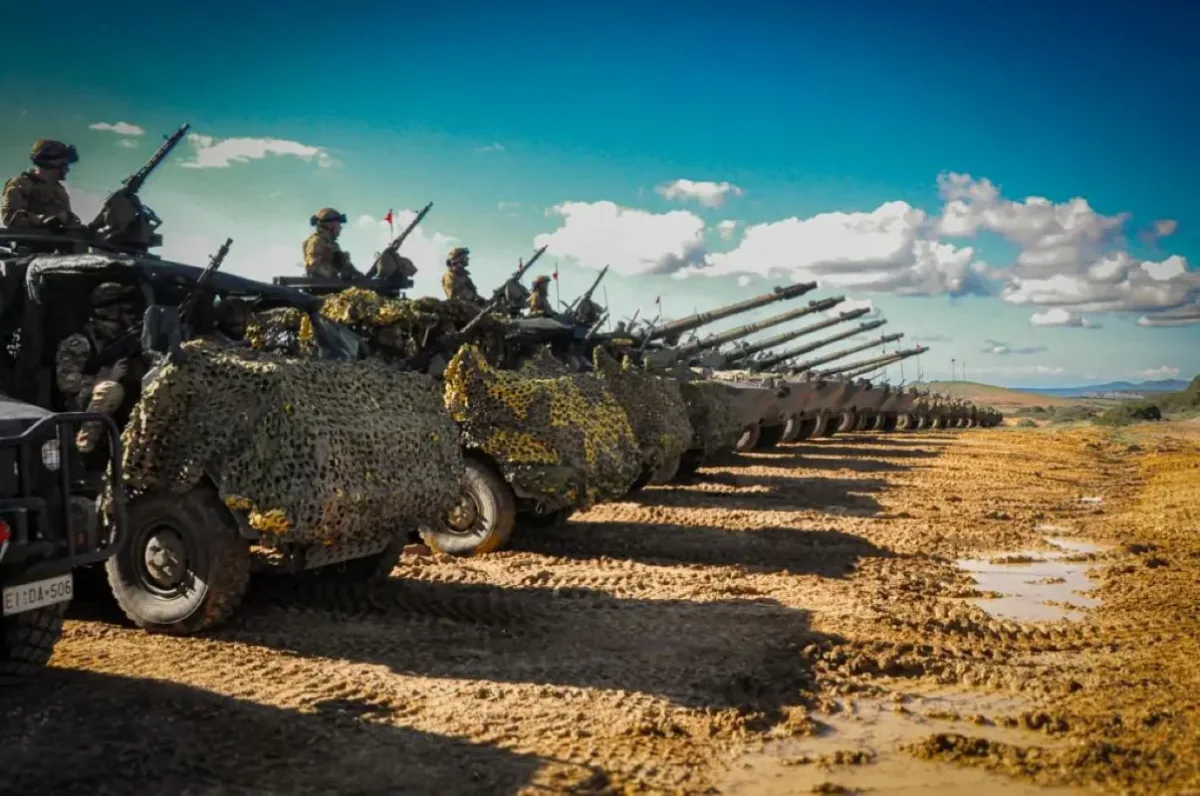

From November 6 to December 12, the Reggimento Lancieri di Montebello conducted an intense and structured training cycle at the Capo Teulada range, one of the most important training complexes of the Italian Army. A prolonged period on the ground, designed to strengthen the reconnaissance capabilities of the unit and validate its operational readiness in high-intensity scenarios, where decision-making speed, coordination, and physical endurance are determining factors.
The activities involved three armored reconnaissance squadrons, initially engaged in day and night live-fire reconnaissance patrols over large areas of terrain. The training scenarios, characterized by high tactical fluidity and continuous maneuvering, allowed the “Verdi Lancieri” to refine procedures, interoperability, and command capabilities, central elements for units called to operate on the front line in reconnaissance and security missions. The training, conducted with intense rhythms and high standards, confirmed how the professionalism of the personnel represents one of the main strengths of the Italian Army.
Alongside the technical aspect, the cycle also significantly impacted the human and professional dimension of the soldiers. Operating for weeks in a realistic and complex environment strengthened cohesion, discipline, and esprit de corps, foundational values that have always distinguished the units of the Cavalry Arm.
From patrol to tactical group: integration, command, and realism
As activities progressed, the training saw a gradual increase in complexity. The units transitioned from deployment in reconnaissance detachments to conducting a live-fire tactical group exercise, in which maneuvers, support, and command functions were integrated into a unified and coherent operational framework. This transition allowed for the verification not only of the capabilities of individual squadrons but also the effectiveness of decision-making processes and command and control in dynamic and high-pressure contexts.
Of particular note was the activity conducted at the CAT – Tactical Training Center, where live simulation systems with opposing forces were employed. The confrontation with a real enemy on the ground, complemented by fixed and knockdown targets, allowed for the recreation of highly realistic combat situations, enhancing reaction capability and post-action analysis. The integration between real and simulated training thus confirms itself as an essential tool for preparing units for contemporary operational challenges.

To ensure the necessary coordination, a task organization was deployed as a tactical group command, with main and alternate command posts, operating in conditions as close as possible to operational reality. The contribution of the Command and Logistic Support Squadron was fundamental, whose platoons – transport and materials, health, commissariat, and C3 – ensured continuous and timely support, demonstrating the high level of integration between the operational and logistical components of the Italian Army.
Numbers, logistics, and strategic value of the training
The quantitative data of the training cycle provide an objective measure of the effort sustained. The regiment's vehicles covered over 38,000 kilometers in total, totaling 576 hours of operation of combat vehicles. A prolonged and intense deployment, made possible by an efficient and highly professional logistical apparatus.
The logistical components of the regiment operated continuously, ensuring the efficiency and safety of the vehicles through preventive and corrective maintenance activities conducted before and during the field exercise. A work often away from the spotlight, but crucial for the success of operations and for the protection of personnel.

Overall, distances covered, hours of vehicle use, and day and night activities testify to the centrality of realistic and continuous training in maintaining high operational readiness of reconnaissance units. The experience gained at Capo Teulada once again confirms how the Italian Army invests with determination in the quality of training, the professionalism of its soldiers, and the ability to face, with competence and credibility, the present and future operational challenges.


Comments
No comments yet. Be the first!