


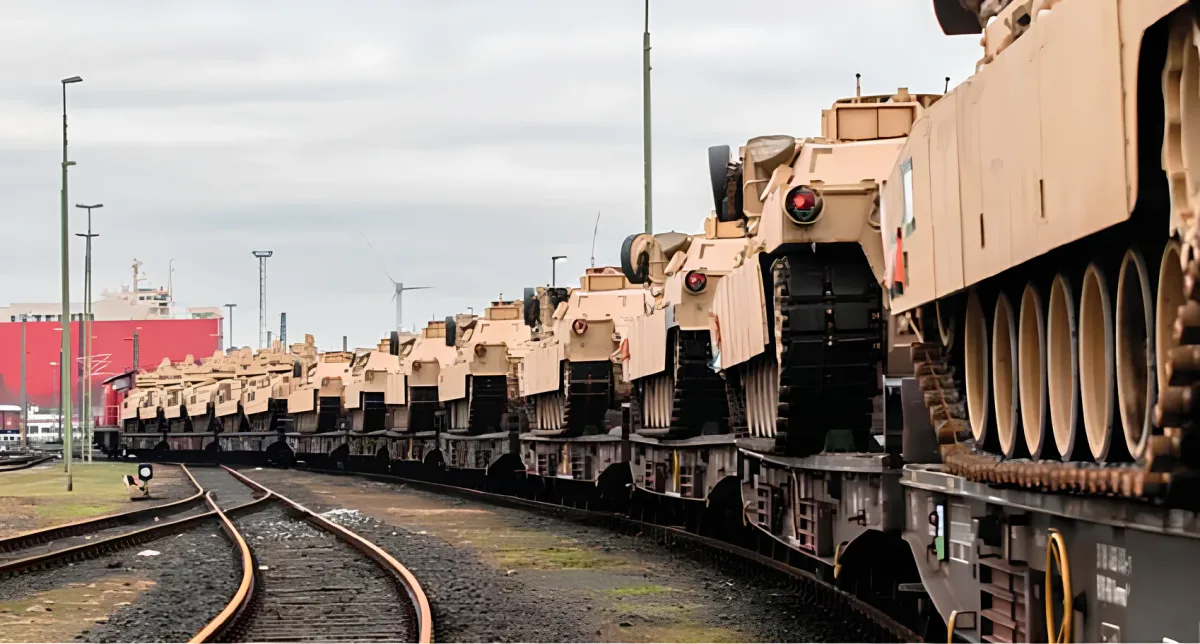

The renowned military historian Martin van Creveld wrote that “amateurs study tactics, professionals study logistics”. If high-intensity conflicts at Europe's doorstep have taught us anything, it's that the combat capability of a modern army is not only measured by the number of next-generation platforms in its hangars, but by the resilience, flexibility, and sustainability of its supply lines.
In Italy, the current architecture of the Joint Operational Command (COVI) has successfully centralized the command and control (C2) chain of operations. However, beneath the operational umbrella of COVI, a structural vulnerability remains: logistics is still largely fragmented on a "single-Service" basis (Army, Navy, Air Force). To face contemporary multi-domain challenges, Italy can no longer do without the establishment of a Joint Logistic Command (JLC) stably integrated and subordinated to COVI.
The Limitation of the Logistical "Silos" of Individual Armed Forces
Currently, each Armed Force manages its own logistics chain almost autonomously. Although this approach ensures technical specificity (maintaining an Eurofighter requires different skills than a submarine or a tank), on a strategic and operational projection level, it generates significant inefficiencies:
- Duplication of chains and costs: Three different systems for storage, management of non-specific materials (e.g., fuels, food, health), separate procurement contracts with private industry.
- Waste of human capital: Qualified personnel employed to duplicate administrative and management functions in individual sectors, rather than being optimized globally.
- Coordination deficit and operational friction: In a modern operational theater, competition for transport resources (air bridges, cargo ships, rail hubs) risks clogging the system in the absence of a single joint authority to prioritize logistical flows based on the real objectives of the COVI Commander.
International Models: The Example of the United Kingdom and NATO
Looking at those who have already optimized these processes is not only useful, it is necessary to ensure interoperability within the Alliance.
1. The UK Model: Strategic Command and Defence Support
The British Ministry of Defence has overcome logistical silos by centralizing the so-called Joint Enablers (the joint enabling factors). Under the Strategic Command (UKStratCom) and the direction of Defence Support, logistics, engineering, and equipment support are managed centrally from industry to the first operational line. The key concept is the "Support Advantage": considering logistics not as an accessory service, but as a strategic capability to project forces at the "speed of relevance".
2. NATO Models: JSEC and JLSG
At a multinational level, NATO has developed structures dedicated to resolving the bottleneck of movement and support:
- The JSEC (Allied Joint Support and Enabling Command) in Ulm (Germany) coordinates the rapid movement of troops and equipment across Europe, defining transit priorities based on collective defense plans.
- The JLSG (Joint Logistics Support Group), like the one employed by the Joint Force Command Naples (JFCNP), operates by merging the logistical efforts of different nations and components into a single theater logistics command. This reduces the overall logistical footprint, maximizes synergies, and prevents individual contingents from clogging communication lines.
The Benefits for Italy: Efficiency, Savings, and Readiness
The establishment of a Joint Logistic Command under COVI would bring Italy three fundamental advantages:
Maximization of Synergies and Rationalization
A single logistical decision-making hub would allow for the centralization of strategic transport management, material warehouses, and common supply flows. This would enable economies of scale in contracts with private industry and in the management of the material life cycle.
Drastic Savings of Men and Resources
Eliminating bureaucratic and functional duplications between Army, Navy, and Air Force would free up significant volumes of military personnel to be reallocated to purely operational or specialized technical tasks, reducing financial waste in times of constrained Defense budgets.
Uniqueness of Operational Command
The COVI Commander would have direct authority over logistics for the entire theater. He would no longer have to "negotiate" assets and transports with individual Armed Forces Staffs, but could rely on a single integrated logistical tool capable of sustaining the war or peacekeeping effort in real-time.
Conclusion
The transition to a Joint Logistic Command requires strong political impetus and overcoming traditional Armed Forces "culturalisms". However, in the current geopolitical context, where operational readiness is measured in hours and no longer in weeks, maintaining three separate logistical systems is an anachronistic luxury that Italy can no longer afford. Uniting the vectors, centralizing governance, and eliminating waste under the aegis of COVI is the only way to ensure that the national military instrument remains sharp, sustainable, and ready to win future challenges.
To better understand how NATO concretely integrates these logistical capabilities in the field during multinational exercises, it may be useful to closely observe the joint logistical support structure employed in the strategic commands located right in Italy, by watching this report on the operation of the Joint Logistics Support Group (JLSG) of JFC Naples.



Comments
No comments yet. Be the first!