


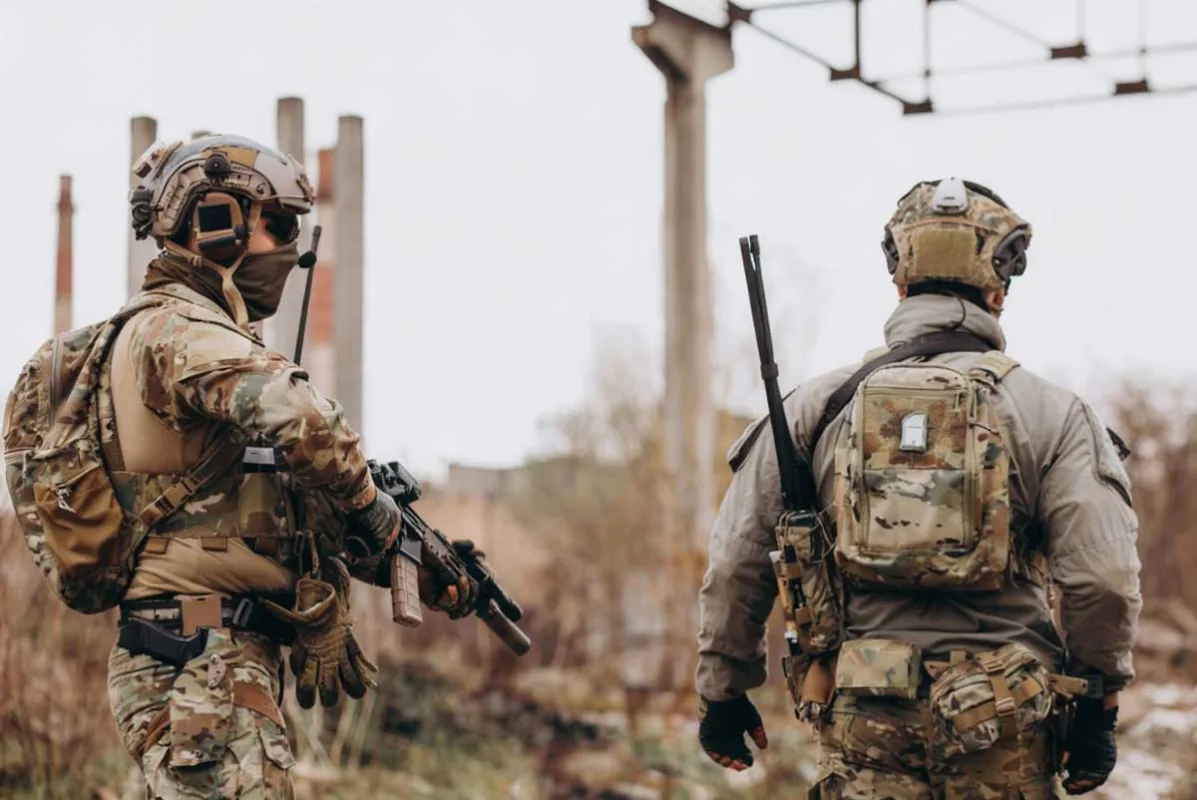

Major developments are unfolding in Libya: the U.S. Africa Command (AFRICOM) has announced that the “Flintlock” exercise – its most important annual special operations exercise – will take place in the spring of 2026 at a “key” location in Libya, with the joint participation of the country's Western and Eastern forces, namely Tripolitania and Cyrenaica.
Lieutenant General John Brennan, Deputy Commander of AFRICOM, announced the decision during a week-long visit to Libya, during which he met with representatives of the two Libyan “sides” (west and east).

Flintlock as a symbol of partnership and stabilization
The “Flintlock 2026” exercise will be conducted in spring 2026, likely in the Sirte region, which serves as a fracture line between the West and East of the country, and for the first time, Western and Eastern Libyan forces will participate together, marking a significant step towards the unification of Libyan military institutions. AFRICOM states that this exercise is not just training, but «a symbol» of the growing USA-Libya partnership and Libya's ability to take responsibility for its own security. Italy is identified as a key partner, through its Special Operations Command, which will assist in planning/execution. This event can be seen as the U.S. response to jihadist threats in the Sahel and – some observers note – to the strengthening of Russian/“Wagner” influence in Libya and North Africa.

Why Libya and why now
The choice of Libya as the site of the exercise – and with Libyan forces from both the West and the East – has several turning points such as the modification of the arms embargo on Libya in January 2025, which allowed for USA-Libya cooperation in training and security.
The country, after the fall of Muammar al-Qaddafi's regime in 2011, remains divided and fragile: conducting a joint exercise is also an internal and external political message and for Washington and its European partners, it is an opportunity to establish a “Libya model” of stabilization and military partnership that can pave the way in North Africa.
Inevitably, the event presents some risks and uncertainties such as the actual operationality of infrastructure, logistics, ground security, air and training space management in a volatile area like Libya.
Success will largely depend on real cooperation, trust, and coordination between Western and Eastern Libyan forces; moreover, there is a risk that external actors (e.g., Russia, through Wagner or other proxies) may react or intensify their commitment in Libya to counter U.S. influence.
The symbolic effect is strong, but the substance (training, equipment, unified command) requires time and constant Libyan political will.
The implications for the USA are to strengthen presence and commitment in North Africa after years of relative “reduction” since 2010, while for Italy, alignment with Washington can increase influence in Libya and the Mediterranean, in terms of security, energy, and stabilization.
For Libya, if the exercise is successful, it becomes a concrete element of military reconciliation between Tripoli and Benghazi, which could yield benefits in terms of stability and investments (also in the oil sector).

Conclusion
The announcement of the Flintlock 2026 exercise in Libya, with the joint participation of Tripoli and Benghazi forces and under the aegis of AFRICOM, represents a significant development for both Libya and the USA-Europe strategy in North Africa. If conducted successfully, it can be an important step towards Libyan military stabilization and the strengthening of the USA/Italy/Libya partnership. However, operational uncertainties, trust between parties, and strategic risks remain.



Comments
No comments yet. Be the first!