


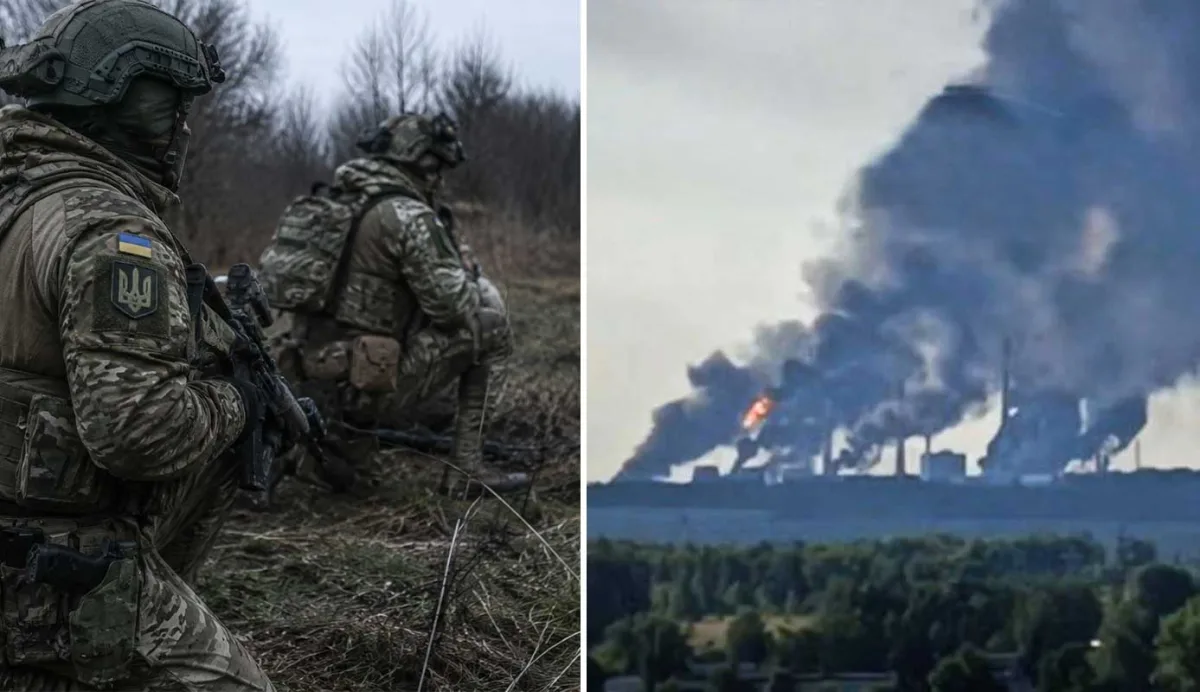

The Ukrainian Special Forces conducted a new deep operation against Russian strategic infrastructure, hitting two major oil facilities in the Republic of Tatarstan, over 1,100 kilometers from the front lines.
The action, which took place on the night between July 7 and 8, targeted the TANECO and TAIF-NK refineries, located in the industrial area of Nizhnekamsk. According to the Ukrainian Special Forces, several long-range unmanned aerial vehicles reached the targets, causing fires within the industrial complexes.
A New Dimension of Special Operations
The operation is an emblematic example of the evolution of modern Special Forces. In the past, SOF units were primarily associated with reconnaissance missions, local sabotage, direct actions, and personnel recovery, but the conflict in Ukraine has shown a radical transformation in their deployment.
Today, Special Forces operate as strategic tools capable of producing effects across the entire operational theater:
- striking critical infrastructure;
- degrading the enemy's industrial capacity;
- disrupting logistical chains;
- forcing the adversary to disperse defense systems.
In the case of the operation in Tatarstan, the distance from Ukraine demonstrates the ability to project military effects well beyond the front line.
From Battlefield to Multidomain Warfare
The attack on the Russian refineries highlights a profound change in the way special operations are conceived.
Modern warfare is no longer fought solely through direct contact between ground units. The battlefield has become:
- transparent, thanks to satellites and ISR systems;
- connected, through digital networks and advanced communications;
- deep, with the ability to strike strategic targets hundreds or thousands of kilometers away.
Special units must therefore integrate traditional capabilities with new technologies:
- long-range drones;
- satellite intelligence;
- electronic warfare;
- remote guidance and control systems.
The human component remains fundamental, but the modern special operator increasingly becomes an element within a complex network of information gathering and precision fire.
The Ukrainian Strategy: Targeting the Russian Logistic and Energy System
Refineries are particularly important targets because they connect the energy sector to military capability.
Reducing refining capacity potentially affects:
- fuel availability;
- military transport;
- industrial activities;
- the ability to sustain prolonged operations.
Ukrainian attacks on Russian energy infrastructure have increased in recent months, with numerous actions conducted via long-range drones against facilities located far from the Ukrainian border.
The Lesson for Western Special Forces
The war in Ukraine is also changing the preparation of NATO special forces.
The model of the last twenty years, developed mainly during counter-insurgency campaigns in Afghanistan and Iraq, was based on:
- small, highly trained units;
- technological superiority;
- informational dominance.
The current scenario requires additional capabilities:
- operating under constant enemy observation;
- surviving in drone-saturated environments;
- integrating with artillery and missile systems;
- conducting operations at great distances.
For units like the 9º Reggimento Col Moschin, the British SAS, the Navy SEALs, the German KSK, or the French special units, the Ukrainian lesson is clear: the future of special operations will increasingly be linked to the ability to create strategic effects with relatively small forces.
The New Era of the Special Operator
The attack on the Nizhnekamsk refineries is therefore much more than a simple raid against infrastructure.
It is the symbol of a transformation initiated by the war in Ukraine: the 21st-century Special Forces operator is not just someone who goes behind enemy lines with a rifle and a knife.
They are an operator embedded in a complex system, capable of combining individual training, intelligence, technology, and the ability to strike deep.
A new generation of special warfare has already begun.



Comments
No comments yet. Be the first!