



The recent Strategic Defence Review (SDR) of the United Kingdom, published in June 2025, outlines a profound transformation of the structure and role of the British Army, in the context of a renewed NATO commitment. However, many of the issues and challenges highlighted in the document also find direct parallels in the current situation of the Italian Army, which is called upon to face very similar dynamics, both in operational terms and in industrial and organizational capacity.
NATO: between ARRC and NRDC-IT, the parallelism of multinational commands
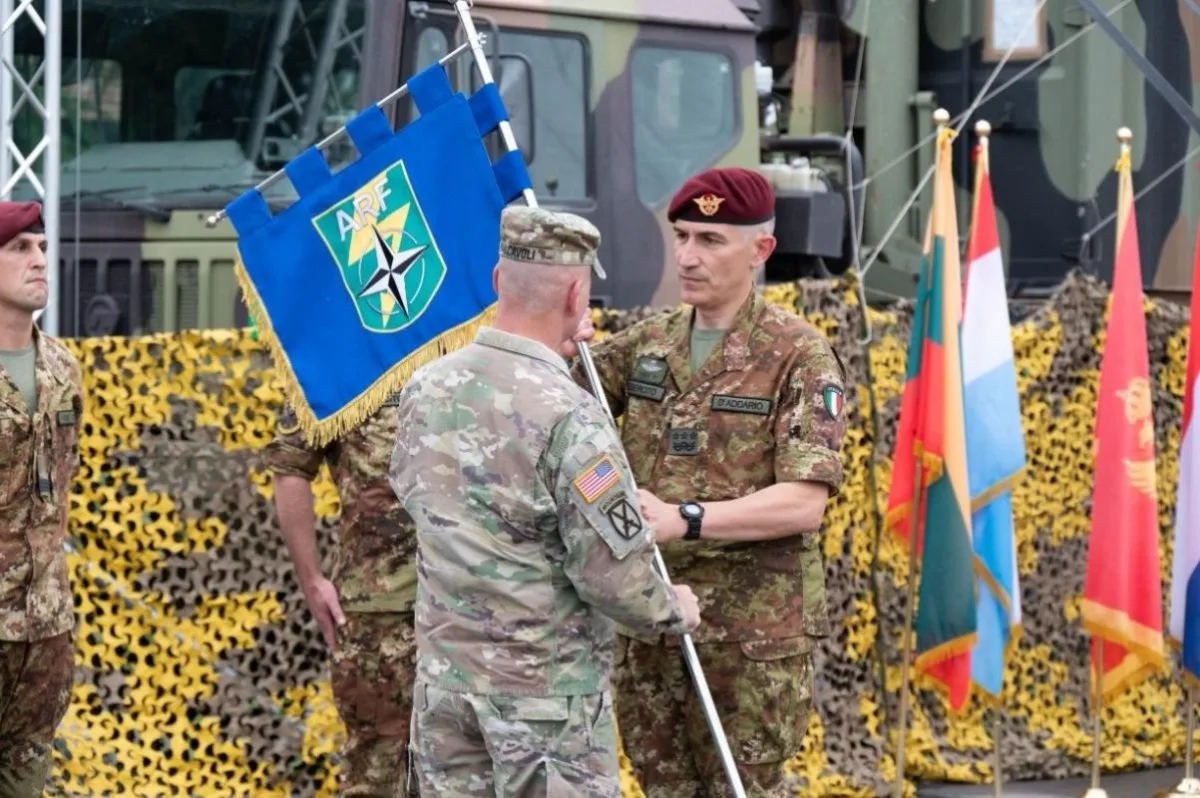
In the framework of NATO restructuring, the United Kingdom confirms its central role within the Alliance, through the command of the Allied Rapid Reaction Corps (ARRC), ready to provide two divisions deployable in rapid times. Similarly, Italy plays an equally strategic role thanks to the command of the NATO Rapid Deployable Corps - Italy (NRDC-IT), based in Solbiate Olona, which constitutes one of NATO's main operational readiness multinational forces on the southeastern flank.
In parallel to the British divisional commands (3rd Armoured Division and 1st Light Division), Italy maintains two reference divisions operational: the "Vittorio Veneto" Division and the "Acqui" Division, as Combat elements. However, just like for London, the full employment of these formations would be complicated by the current level of readiness, shortage of young personnel, and especially the limitations in equipment and training.
The great technological challenge: thousands of drones and the doctrine to be rewritten
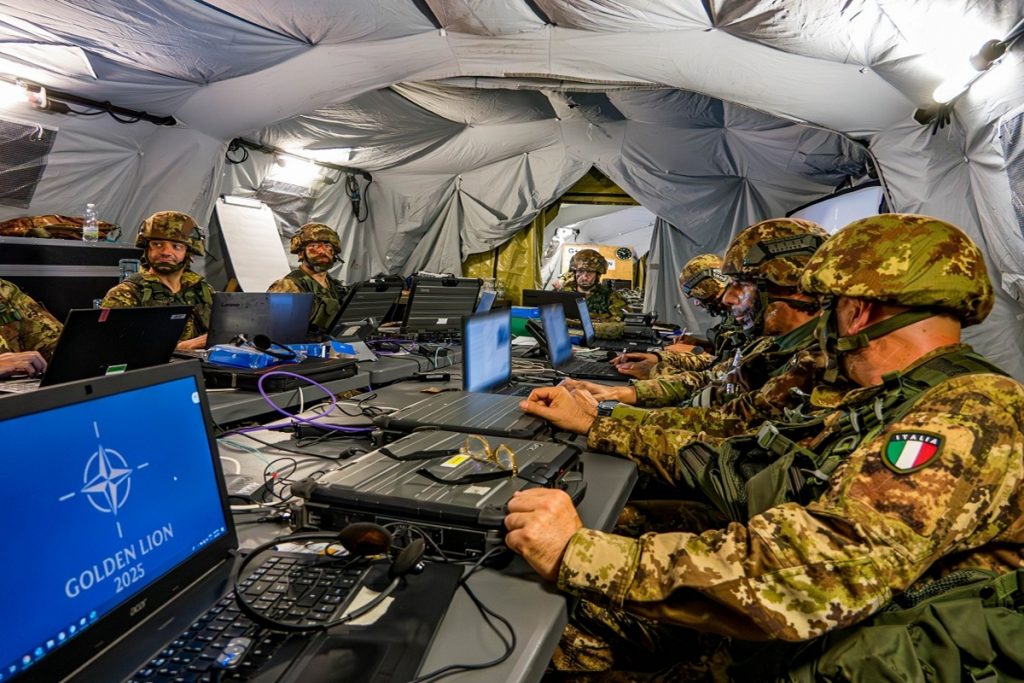
The British SDR clearly identifies the future of land warfare: a "20-40-40" model, in which the combat mass is progressively transferred to autonomous platforms and smart munitions. It is the same scenario towards which the Italian Army should also aim, today still largely based on traditional platforms with limited presence of unmanned capabilities.
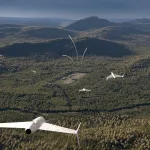
Thousands of drones of various models and uses will be needed, from tactical reconnaissance micro-UAVs, to low-altitude kamikaze systems, to strategic surveillance drones, up to automated swarms and anti-drone systems. However, this technological transition will require a profound doctrinal and organizational rethink, with the development of a new Italian multidomain land warfare doctrine, today still absent or limited to a few conceptual studies.

The Ukrainian experience offers a concrete reference model: Kyiv has managed in a few years to activate an entire distributed national war industry, capable of producing drones, munitions, vehicles, command systems, and software for integrated battlefield management. Italy, significantly lagging in this field, must urgently launch a major industrial defense plan, enhancing the national sector and focusing on technological SMEs, in close public-private collaboration.
The serious demographic problem of the Italian Army
While the United Kingdom maintains an active force of about 73,000 regulars and 27,000 reservists, the Italian Army today suffers from another very serious problem: the structural aging of personnel. The average age is now dangerously approaching 45 years, with direct consequences on physical efficiency, the ability to sustain prolonged operations, and the ability to quickly absorb new complex technologies. The lack of a constant turnover of young volunteers and officers, combined with the hiring freeze of recent years, risks compromising operational projection for the coming decades.
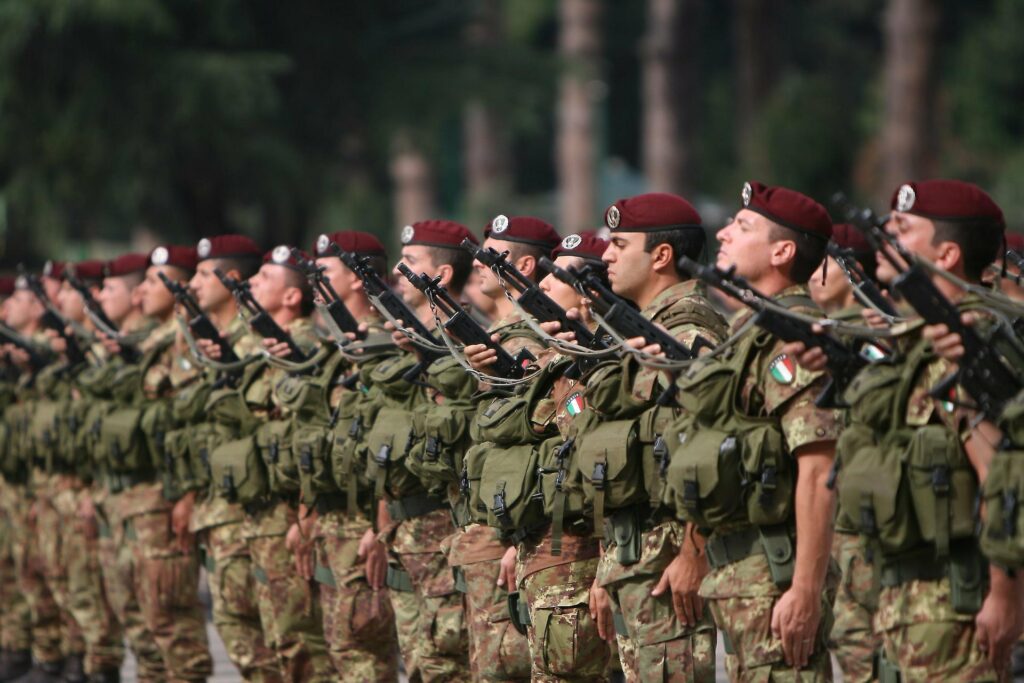
This demographic data, aggravated by very long careers and very low internal mobility, makes a reform of the professional model of the Army even more urgent, with particular attention to the creation of highly specialized technical corps in new digital, cyber, ISR functions and for the use of autonomous systems.
Training under siege: the battle of the ranges
As already highlighted for the United Kingdom with the case of Salisbury Plain, Italy is also experiencing a phase of systematic siege of training ranges, increasingly under pressure due to local committees, environmental constraints, and cross-political opposition. Structures like Capo Teulada, Monte Romano, Torre Veneri, or Persano now operate under strong limitations, effectively reducing the possibility of large-scale realistic exercises.
This picture is compounded by the chronic underutilization of fundamental capabilities such as:
- division/corps interforce maneuvered exercises;
- long-range artillery fires;
- electronic warfare and cyber-domain effect simulations;
- complete logistical mobilization (transport of vehicles, supplies, personnel).
The solution, as emphasized by the British SDR itself, can only pass through a massive use of integrated virtual training systems, based on artificial intelligence, immersive simulators, and multidomain digital networks. Only in this way will it be possible to overcome environmental limits and maintain high readiness.
The common industrial and financial challenge
For both the United Kingdom and Italy, the final issue remains that of resources. London struggles to maintain the ambitious promises of the SDR despite a budget already at 2.5% of GDP. Italy, with a defense budget barely reaching 2% of GDP, appears even more exposed to the risk that modernization projects will be slowed down or diluted.
The comparison with British investments is impressive:
- over 130 billion pounds for nuclear renewal (Astraea project);
- over 12 billion for the new SSN-AUKUS submarines;
- over 6 billion for the replenishment of ammunition stocks.
Italy does not currently have a similar ten-year planning, and the Multi-Year Modernization Program proceeds by individual chapters, often not coordinated with each other.
Conclusion: a historic crossroads for the Italian Army
The challenges described in the British Strategic Defence Review, read in an Italian key, show how the structural problems of the Italian Army are today even more delicate and urgent: aging personnel, outdated equipment, insufficient ISR capabilities, industrial delay, and ranges under attack.
A long-term strategic vision is needed that integrates technological modernization, doctrinal reform, industrial revival, and a new professional personnel architecture. Only in this way can our country guarantee its role as a leading nation within the Atlantic Alliance.



Comments
No comments yet. Be the first!