


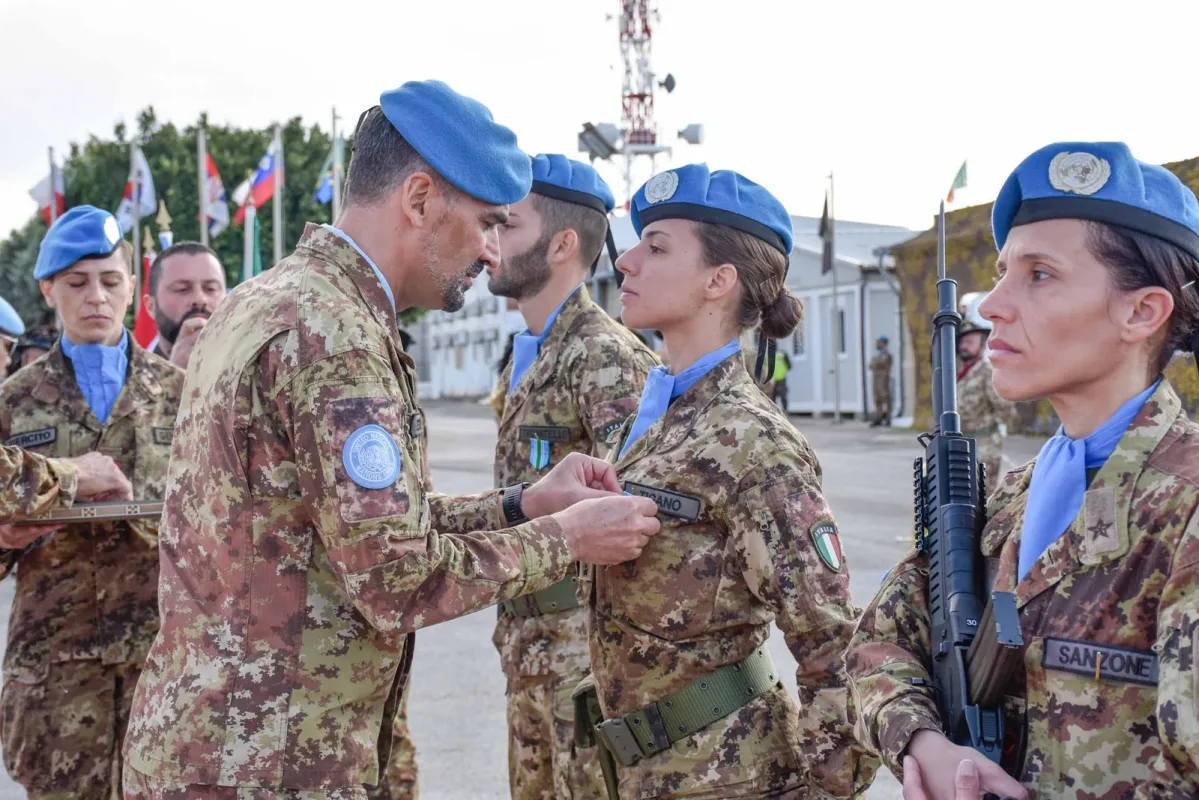

With the approval by the Chamber of Deputies, Italy confirms its military and civilian commitment in major international theaters also for 2025. The measure, supported across the board by government forces and part of the opposition, provides for a total expenditure of about 1.5 billion euros, aimed at the continuation and expansion of Italian missions abroad. These missions aim to protect peace, international cooperation, humanitarian support, and the protection of human rights.
Particularly significant among the new introductions is the Government's request to establish a contingent of forces with high and very high operational readiness. This is an unprecedented initiative in recent Italian history: a military unit ready to be deployed with an accelerated procedure in case of crises or emergencies, subject to parliamentary authorization and subsequent deliberation by the Council of Ministers. This contingent may also be employed within the NATO Rapid Reaction Forces (ARF), thus contributing to the collective defense of the Atlantic Alliance.
The Chief of Defense Staff, General Luciano Portolano, reiterated the need for a flexible, credible, and responsive military tool: «Our Armed Forces must be able to defend Italy and the stability of the Euro-Mediterranean area at any time. It is a duty imposed on us by the current geopolitical context».

Missions in Europe, the Middle East, and Africa: Between Deterrence and Training
Italy will continue to play a central role within NATO and the European Union, participating in numerous multilateral missions. Among these, the EUMAM Ukraine – the European military assistance mission to Ukraine – is extended until November 15, 2026. Italy will contribute by organizing training modules on its own territory, with the aim of strengthening Ukrainian defensive capabilities at various levels: from basic to advanced and specialized.
In parallel, in the Middle East context, Italy's presence in Lebanon is extended through three distinct missions: UNIFIL (the United Nations Interim Force), MIBIL (the bilateral training mission for the Lebanese Armed Forces), and MIADIT (supporting Palestinian security forces). The Italian contingent can count on a maximum of 1,650 units, with a setup that also includes 376 land vehicles, 5 aircraft, and 1 ship.
In West Africa, Italy will continue to support the authorities of Niger and Burkina Faso through the MISIN mission, particularly significant in an area affected by political instability and jihadist terrorism. The mission, which has trained over 9,000 local forces since 2018, will be reinforced in 2025 by a maximum contingent of 550 Italian military personnel, with a financial requirement of over 75 million euros.

New Strategic Priorities: Operational Readiness and Internal Security
The most innovative element of the 2025 plan concerns the establishment of the Italian contingent at “high readiness” within the NATO Allied Reaction Forces (ARF) framework. According to the approved plan, Italy will be able to mobilize up to 2,867 military personnel, supported by 359 land vehicles, 15 aircraft, and 4 ships, in case of international emergencies or crises. This measure is part of a broader strategy to strengthen deterrence and rapid reaction capability on the eastern flank of the Atlantic Alliance.
In addition to international fronts, the commitment of the Italian Armed Forces remains strong on the national level. The operation “Strade Sicure”, born as a response to a temporary emergency, is maintained throughout 2025 with the deployment of 6,800 military personnel, also in view of significant events such as the Jubilee and major sporting events. General Portolano emphasized the need to evolve the deployment towards more dynamic forms, capable of ensuring greater effectiveness with fewer numbers, through mobile patrolling and coordination with the Prefectures.
Finally, there are critical voices. The Istituto di Ricerche Internazionali Archivio Disarmo has highlighted the growing complexity of the operational framework and the need for greater transparency in the strategic evaluation of missions. However, for Italy, a clear choice is confirmed: to remain a leading player in international security, investing resources, capabilities, and personnel in the defense of peace and global stability.



Comments
No comments yet. Be the first!