


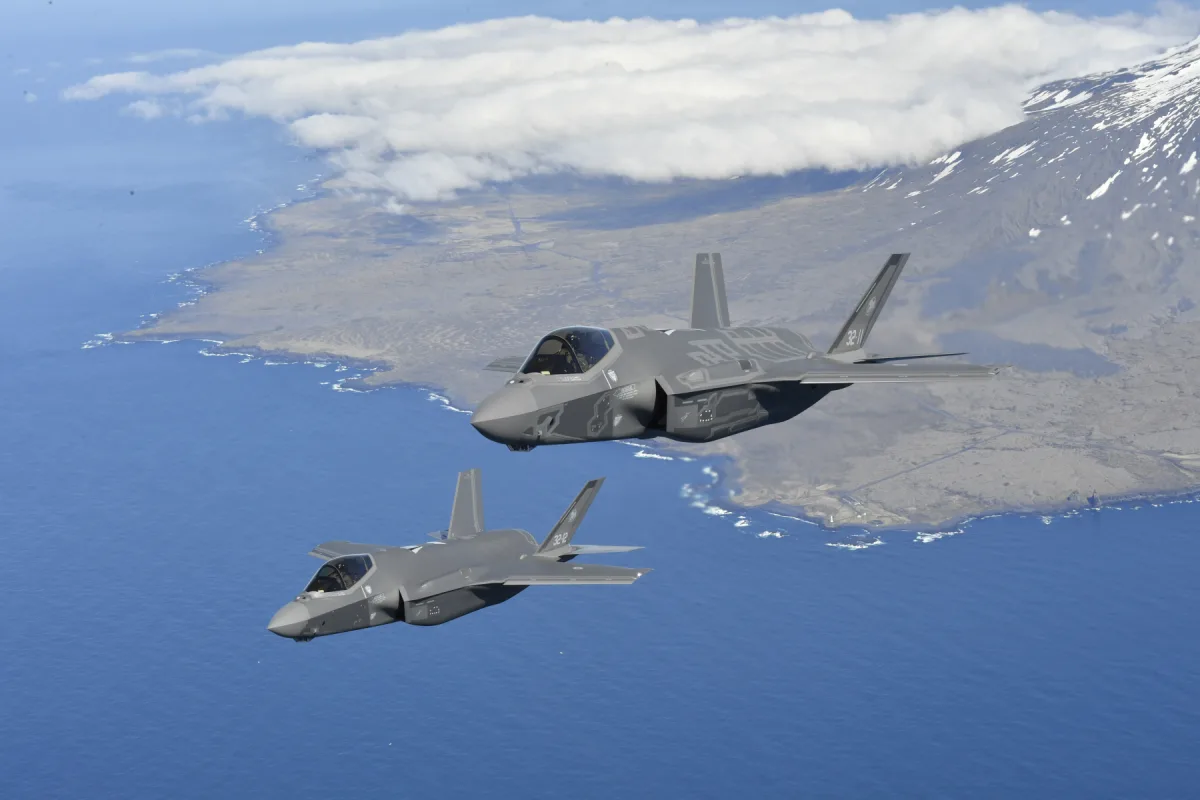

In the European defense landscape, Italy is increasingly positioning itself as a key player. Not only as a purchaser of advanced technologies, but as a strategic hub for training and production. The new goal of the Italian Government is ambitious: to create a national center for F-35 pilot training, confirming the country's role as a cornerstone of the Atlantic defense ecosystem and advancing the position of the Italian Air Force among the most modern in the world.

A Symbolic Announcement, in a Symbolic Place
The project was relaunched solemnly on March 28th, during the celebrations for the 102nd anniversary of the Italian Air Force, held at the “Mario de Bernardi” military airport in Pratica di Mare. On that occasion, Defense Minister Guido Crosetto publicly confirmed Italy's intention to host a training hub for F-35 pilots, unique outside the United States. “I hope,” he said, “that soon, alongside Decimomannu, there will also be training for F-35 pilots.”
The reference is to the International Flight Training School (IFTS) in Decimomannu, Sardinia, a result of the collaboration between the Air Force and Leonardo. This facility will continue to be dedicated to advanced training on 4th and 5th generation jets, but the new hub dedicated exclusively to F-35s could be established elsewhere, still in Southern Italy. A persistent hypothesis is that of a base in Puglia or Campania, areas already equipped with significant military infrastructure.

A Strategy Looking Ahead
The decision to create an F-35 training hub is not an isolated initiative, but part of a broad and long-term strategy, as outlined in the Multi-Year Defense Program Document for the 2024-2026 period. The plan includes increasing the Italian fleet of F-35s from 90 to 115 aircraft, with the purchase of 25 new units and an investment of 7 billion euros. A significant commitment, demonstrating Italy's desire to strengthen its military and industrial potential in the combat aviation sector.
To date, Italy is the first country in the world – after the United States – to have its own F-35 production line, at the FACO (Final Assembly and Check-Out) plant in Cameri, Piedmont. Not only that: it will also be the only country to host a training center for international pilots of the program. “The United States,” Crosetto explained in an interview with La Stampa, “can no longer meet the training needs alone, and thus rely on us. This is a sign that major investments, if done well, return multiplied in the form of industrial, technological, and strategic value.”

A Fleet for the Future
The F-35 Lightning II is a fifth-generation multirole fighter, designed to operate in high-threat environments. Equipped with stealth features and net-centric capabilities, it can operate in synergy with other defense systems, collect real-time data, and share it within a joint operational network. Precisely because of these capabilities, it has become the centerpiece of modernization strategies for air forces in many NATO countries.
Looking ahead, the Italian Air Force aims to operate – by 2040 – with a combined fleet of over 180 combat aircraft between F-35s and updated Eurofighters, to which will be added the sixth-generation fighter GCAP (Global Combat Air Programme), currently under development with the United Kingdom and Japan. This project aims to ensure Italy full technological autonomy in the air defense sector for future generations.

An Industrial and Diplomatic Opportunity
Hosting an international training hub is not only of operational value, but also represents a major economic and geopolitical opportunity. Welcoming pilots and technical personnel from other NATO countries and non-European partners means developing a stable supply chain of services, infrastructure, technologies, and know-how. In other words, it means consolidating a regional leadership role in a high-value-added sector.
Moreover, strengthening cooperation with the United States – precisely when Washington is focusing on the Asia-Pacific and asking for greater operational autonomy from European allies – is a diplomatic move that enhances Italy's credibility within the Atlantic Alliance. In times of rising tensions, like the current ones, security becomes a common good to be built together. And Italy seems determined to play its part, with vision and pragmatism.
Conclusion
The establishment of an F-35 pilot training hub in Italy is not just news for insiders, but a strong signal of the direction our country wants to take in terms of defense, innovation, and international role. A project that combines industrial capability, strategic vision, and solid alliances. With an expanding fleet, cutting-edge infrastructure, and a clear focus on technological autonomy, Italy is preparing to play a leading role in the skies of the future.



Comments
No comments yet. Be the first!