


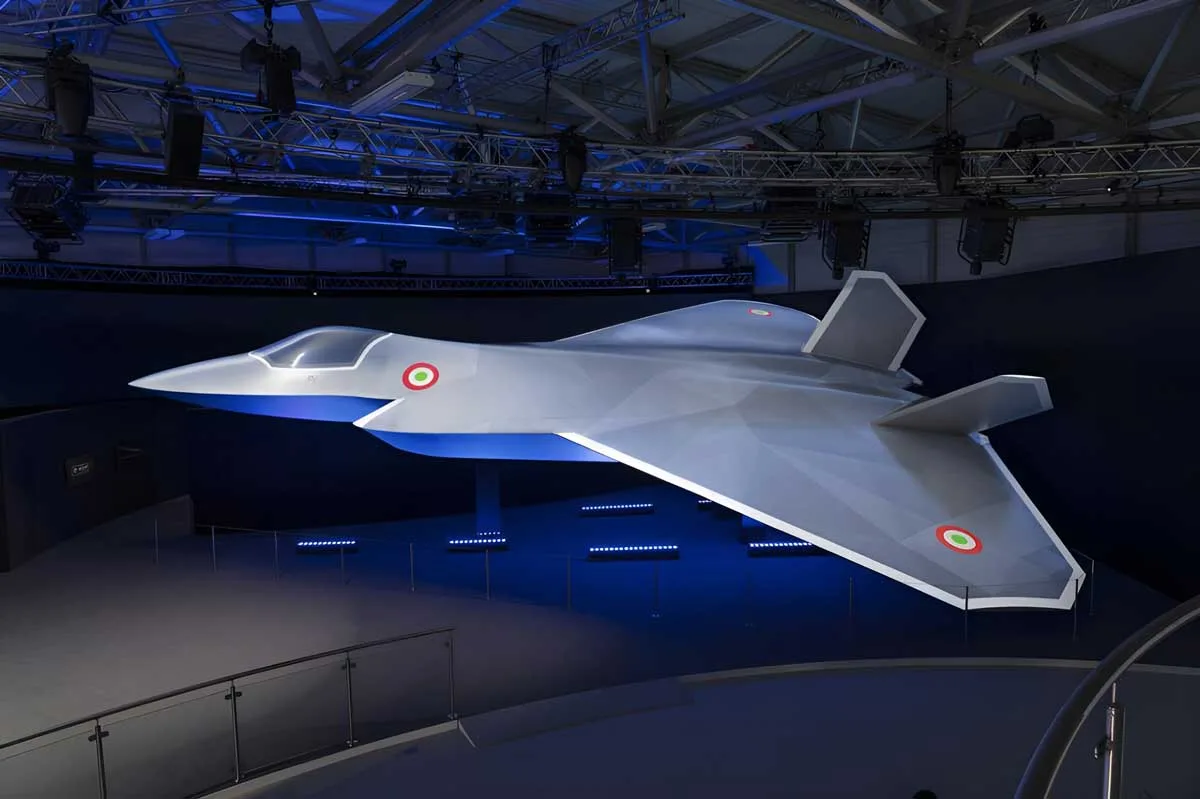

The GCAP (Global Combat Air Programme), born from the strategic alliance between the United Kingdom, Italy, and Japan, represents one of the most ambitious projects for the future of air defense. The goal: to develop a sixth-generation fighter that can ensure technological and operational superiority in the decades to come.
In this context, Italy plays a leading role thanks to the leadership of Leonardo, a flagship company in the national aerospace and defense sector, tasked with coordinating the Italian industrial contribution to the program. Leonardo will be responsible for the development of advanced sensors, radar, mission systems, and strategic technologies, confirming Italian excellence in the sector.

A Strategic Shift from the USA: Trump Effect
According to the Spanish magazine INFODEFENSA, the birth and consolidation of GCAP is not only the result of technological choices but also of an autonomous geopolitical strategy by its three founders. The arrival of Donald Trump to the presidency introduced a more commercial and less cooperative approach to alliances, raising concerns among Washington's historical allies. During the presentation of the future American fighter F-47, Trump stated that the aircraft could also be sold to allies, but at a higher price “because they might stop being our allies”.
Words that cooled the interest of some countries, already oriented towards greater strategic and industrial autonomy. GCAP was born precisely as a Euro-Asian response to the need to break away from a US-centric vision of defense, focusing on shared technological sovereignty and equal multilateral collaboration.

A Program Looking Beyond: New Alliances and Industrial Opportunities
After consolidating the initial core, the GCAP program is seeking new strategic partners. The United Kingdom has already initiated contacts with Australia and Canada, while Italy has left open the possibility of involving Saudi Arabia. In this context, the general manager of Leonardo, Lorenzo Mariani, has suggested the possibility of setting up production plants in Saudi Arabia, confirming the expansive potential of the project and opportunities for the national industry.

The Successor of the Eurofighter, in Synergy with the F-35
The fighter developed under the GCAP program will be intended, in the next decade, to replace the Eurofighter Typhoon fleets currently in service with the air forces of Italy and the United Kingdom. However, it will not be an alternative to the F-35, but a strategic complement, designed to operate in synergy with the latter, enhancing air defense capabilities and superiority in airspace.
The new aircraft will integrate cutting-edge technologies such as artificial intelligence, advanced data fusion, and coordination between autonomous systems, representing a true generational leap compared to current platforms.



Comments
No comments yet. Be the first!