


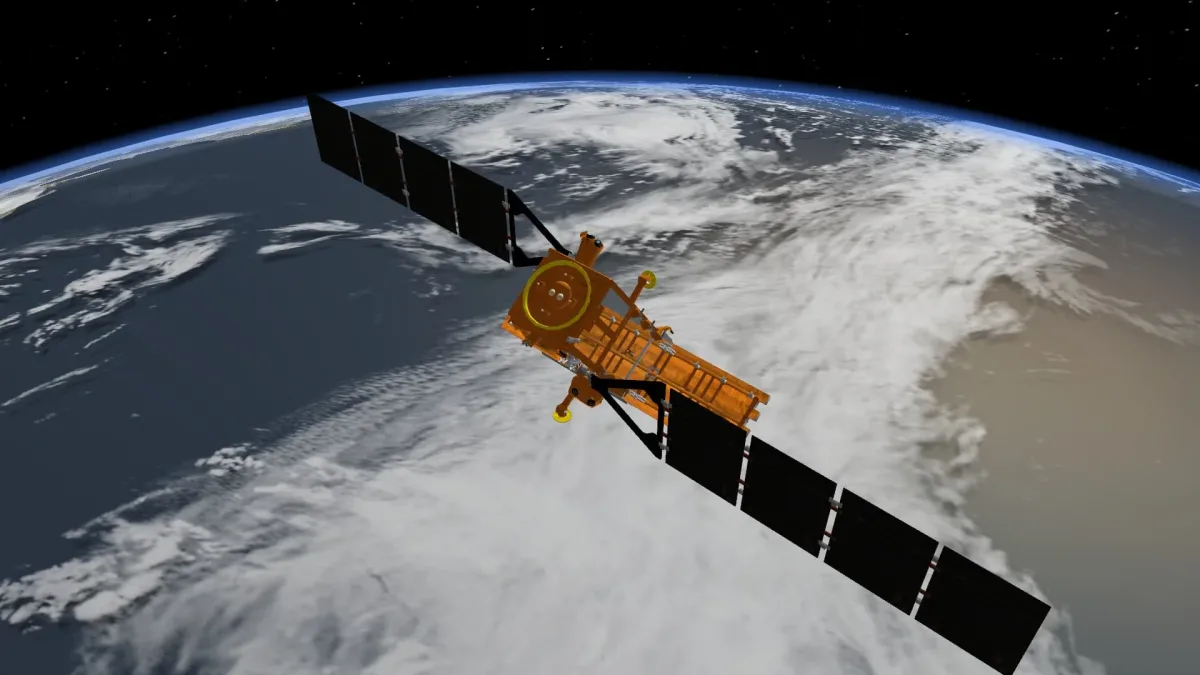

The Defense Programming pays particular attention to space programs, recognizing the orbital domain as a strategic component of military power and national security. Italy aims to consolidate its autonomy in three macro-areas: Earth observation, protected communications, and access to Space.
Earth Observation: Continuity and Innovation
In the field of Earth observation, the DPP outlines two key projects.
The first is the 3rd generation optical satellite system, which will ensure the continuity of the national autonomous high-resolution detection capability. The program, intended to replace the OPSTAT 3000 system launched in 2018, includes two electro-optical satellites and a total expenditure of 556.64 million euros until 2031.
Alongside this, the expansion of the COSMO-SkyMed Second Generation (CSG) constellation continues, already operational with two PFM and FM2 satellites. The new integrative intervention will lead to four satellites in orbit by 2026-2027, with funding until 2029 and an additional allocation of 14.33 million euros.
These capabilities ensure global radar and optical coverage for the Defense and the Italian scientific community, with dual applications ranging from security to environmental emergencies.
Protected Communications: The Satellite Network of the Future
The core of the secure communication component is represented by the SICRAL 3 program, intended to replace the SICRAL 1B satellite, which is nearing the end of its operational life. The DPP allocates 288.29 million euros until 2029, which adds to the 320 million from the ordinary budget and the 211 million from the 2025 budget law.
SICRAL 3 will ensure the continuity of secure telecommunication services for the Armed Forces, integrating with NATO and EU partners and providing resilience in operational theaters.
In parallel, a study is taking shape for a LEO (Low Earth Orbit) constellation for low latency and high data rate communications, with 5 million euros of initial funds until 2028. This initiative aims to develop a new generation satellite network, functional to the Defense's digitalization process.
The framework is completed by two support programs:
– the orbital beacon gap filler, with 3.37 million euros until 2026, to maintain the geostationary position assigned to Italy by the ITU;
– the future SICRAL R1, a geostationary reserve satellite that will ensure the continuity of communications in case of degradation or loss of current capabilities, with 300 million euros of funds until 2029.

Advanced Space Systems and Autonomous Access to Space
The third area of the DPP is dedicated to innovative space programs, essential for ensuring Defense capabilities in surveillance, rapid response, and technological autonomy.
The HAPS (High Altitude Platform System) program, already underway, aims to develop hybrid and modular stratospheric platforms with long persistence and wide coverage range, supporting ISR missions, electronic warfare, and SIGINT/ELINT. The project will receive 44.5 million euros until 2034 and also involves the Air Force in the context of Human Space Flight.
Following is the initiative for the airborne launch of small payloads, aimed at developing a national technological demonstrator for the insertion into orbit of microsatellites from an air carrier. With 17 million euros until 2030, the program intends to equip Italy with an autonomous "responsive space" capability, useful in case of crises or orbital threats.
The Defense Space Plan, which will include the HORUS program, represents the long-term strategic framework: 110 million euros until 2039 to coordinate national space projects in line with NATO and EU strategies.
The vision is completed by programs for suborbital access to Space (2.37 million euros until 2032) and the national capability of Space Situational Awareness/Space Surveillance and Tracking (SSA/SST), with 103.15 million euros until 2029. The latter will ensure the monitoring of orbital objects and the protection of Italian space infrastructures from collisions and debris.
Strategic Perspective: From Space to Sovereignty
The DPP 2025-2027 outlines a clear trajectory: Space is now an integral part of the military operational domain and a pillar of national technological sovereignty.
Italy aims for an integrated defensive space ecosystem, where satellites, stratospheric platforms, and launch capabilities cooperate in synergy, supporting both national security and industrial competitiveness.
In the medium term, the success of these programs will depend on the continuity of funding, coordination between the Ministry of Defense, ASI, and national industry (Leonardo, Telespazio, Thales Alenia Space, Avio), and cooperation with European partners and allies.
But the political and strategic message is unequivocal: Italy intends to remain a protagonist in Space, defending its assets and developing a truly sovereign orbital future.




Comments
No comments yet. Be the first!