


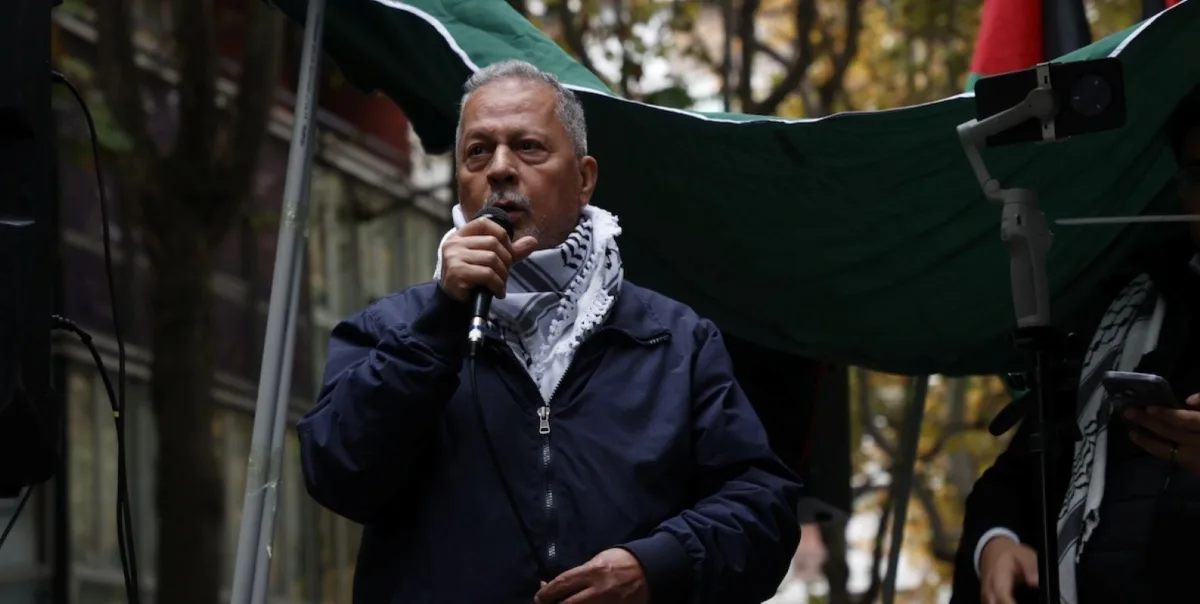

Genoa, 9 arrests and millions seized. This is where one of the most delicate Italian investigations of recent months into the financing of terrorism begins: according to the Prosecutor's Office, a “humanitarian” fundraising circuit allegedly fueled Hamas through financial triangulations, front associations, and foreign channels. At the center of the operation is Mohammad Hannoun, arrested along with eight other people.
The operation and the accusation: charity as a cover
The accusatory framework, in summary, claims that about 7 million euros collected in the last two years with declared purposes of supporting the Palestinian population were diverted to entities linked to Hamas, exploiting complex banking transactions and organizations based abroad to “break” the traceability of the flows. Law enforcement also seized assets worth over 8 million euros, including cash found during searches and inspections.
According to investigative sources and the press, the precautionary order was executed by Digos and Guardia di Finanza at the request of the Anti-Mafia and Anti-Terrorism District Directorate of Genoa. The accusation framework speaks of a stable structure that, behind associative activities and solidarity initiatives, allegedly economically supported an organization considered terrorist by the European Union.

Who is Mohammad Hannoun and why his name has been recurring for years
Hannoun is indicated by investigators as the node and promoter of the contested fundraising. However, the story does not arise from nowhere: the United States has sanctioned him in the past. In communications from the Treasury Department, Hannoun is described as an individual based in Italy and linked to an alleged fundraising network for Hamas, through an entity presented as charitable.
Important note: all criminal charges in Italy are accusations in the investigation phase and are subject to the presumption of innocence and procedural contradiction.
A European (and beyond) investigation: banks, reports, and cooperation
A strong emerging element is the transnational dimension of the investigation. Journalistic reconstructions report that the investigation gained momentum also thanks to reports of suspicious transactions and coordination with authorities from other European countries, in addition to external informational contributions cited as relevant in the reconstruction of the flows.

Why all this falls under “hybrid warfare”
We usually associate war with tanks, missiles, and trenches. But Western security doctrines define “hybrid threats” as those actions that combine military and non-military tools, often in a covert manner, to destabilize societies and institutions. In this sense, an alleged system of disguised fundraising can become a typical piece of the “hybrid” dimension:
- Supports operational capabilities (if the flows indeed reach an armed group or its branches).
- Exploits legal infrastructures (associations, accounts, donations) reducing perceived risk.
- Camouflages within the social fabric, making detection more complex and potentially divisive.
- Generates internal polarization: every repressive intervention can be seen as security protection or as a political attack, fueling fractures.
The most delicate point: national security vs. civic space
The political and social reaction, as often happens, has become part of the story. On one hand, institutions have claimed the importance of the operation as a counter-terrorism measure; on the other, pro-Palestinian groups have spoken of the criminalization of solidarity.
It is significant that, in communications reported by the press, the same investigators highlighted a dual track: pursuing the financing of terrorism does not erase the civilian suffering in Gaza nor the need to protect civilians, but at the same time such suffering does not justify terrorist acts. It is a phrase that well captures the trap of hybrid warfare: colliding, in the same public space, humanitarian and security issues.
What the “Hannoun case” teaches
Beyond the judicial outcome, three lessons are already clear:
- Money is a front: the counteraction involves anti-money laundering controls, reports, and international judicial cooperation as much as intelligence and police.
- Networks matter more than individuals: when there are associative structures and foreign channels, the action is effective only if it “follows the flows,” not just the people.
- Democratic antibodies are needed: transparency of NGOs, proportionate controls, protection of legitimate humanitarian aid, and rigorous public communication. Otherwise, the risk is giving adversaries (state or non-state) the typical goal of hybrid threats: dividing from within.






Comments
No comments yet. Be the first!