


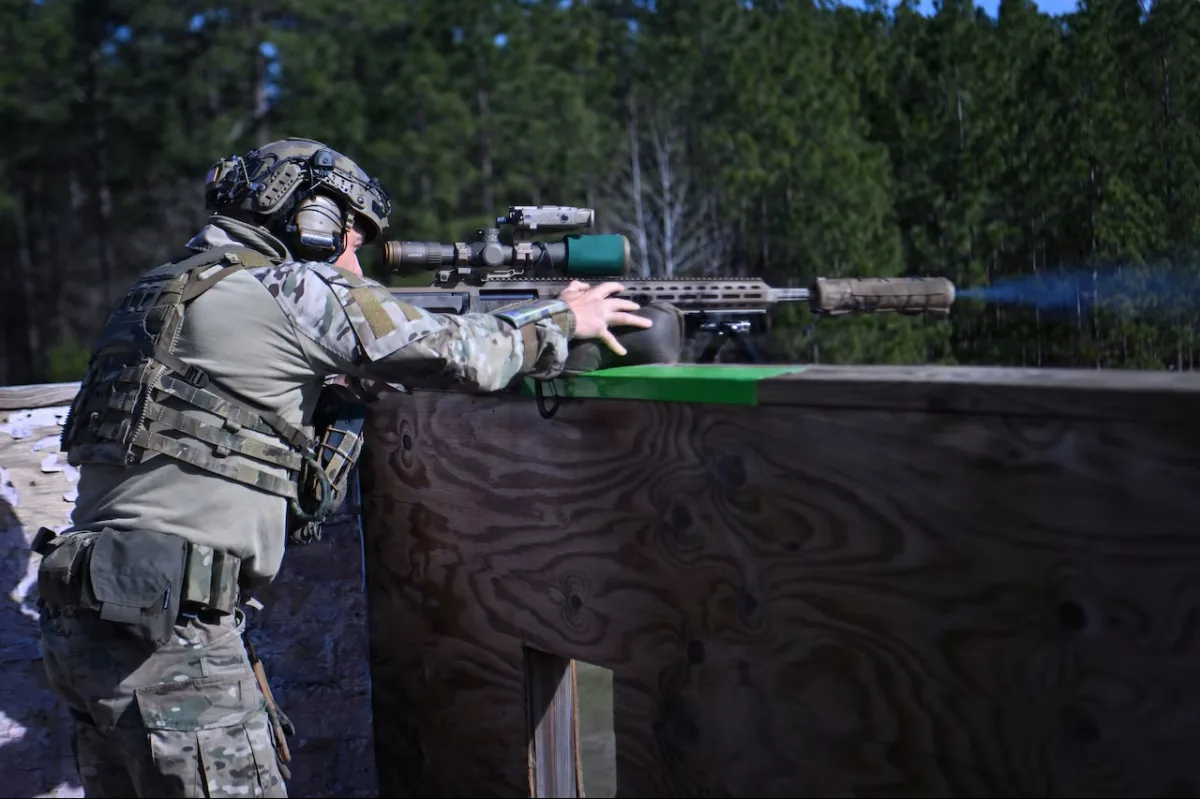

Fort Bragg (North Carolina), March 23, 2026 — Precision, endurance, and perfect team coordination: these were the key elements at the center of the U.S. Army Special Operations Command International Sniper Competition, held at Fort Bragg from March 15 to 19, bringing together 17 elite sniper teams from various components of the U.S. armed forces and allied countries.
The event, now in its 17th edition, was hosted by the John F. Kennedy Special Warfare Center and School of the U.S. Army. The instructors of the Special Forces sniper course, along with the leadership of the facility, designed the tests and supervised the entire competition as referees and scorekeepers.
“This competition represents the pinnacle of sniper craft,” said Colonel Simon Powelson, commander of the 2nd Special Warfare Training Group. “We have brought together highly trained teams from the entire joint force and partner nations. These competitors are not here by chance: they are the result of intense and highly specialized training within their respective units.”
The five-day competition included operators from the Army Special Forces, Rangers, Naval Special Warfare Command, Marine Forces Special Operations Command, and the Coast Guard, along with representatives from allied nations' special forces.
The goal was not only to determine the best team but also to strengthen interoperability and foster esprit de corps among international partners and units from different armed forces. For this reason, the program included a series of complex tests, conducted both during the day and at night, designed to challenge physical abilities, mental readiness, and operational cohesion.
Throughout the week, the teams — composed of two highly qualified operators — were evaluated on various ranges at Fort Bragg. Competitors had to demonstrate proficiency in the use of precision rifles, carbines, and pistols, with engagements up to 1,200 meters, constantly adapting to changing scenarios.

Operating in Any Condition
From the first day, the competition showed all its toughness. Persistent thunderstorms, intermittent rain, and strong gusts of wind reduced visibility, made the ground slippery, and significantly complicated shooting conditions, adding an extra level of realism to the training.
“The weather played a significant role,” explained Timothy Gozelski, head of the sniper course. “With wind and rain, our goal was to ensure that visibility was the same for all teams.”
In the following days, the bad weather subsided, but conditions remained difficult: temperatures dropped to 35 degrees Fahrenheit (about 2 degrees Celsius) and variable winds continued to complicate long-distance shots.
In this context, competitors had to quickly calculate wind speed and direction, while maintaining constant communication and coordination with their partner.
“Good, clear, and concise communication is essential,” emphasized Richard Cuza, sniper course instructor. “It’s not just important: it’s crucial.”
Each test highlighted how success does not depend solely on individual precision, but especially on the harmony between the two team members. The sniper pairs had to identify, measure the distance, and hit multiple targets in rapid succession, often moving between different shooting positions.
“Being in sync with your partner is as important as communicating,” added Gozelski. “To succeed, the two must talk and be aligned in everything they do.”
The organizers reiterated that the competition goes beyond a simple test of technical skills. The event is indeed a concrete opportunity to have joint force teams and international partners operate together in a high-pressure environment, fostering the development of professional relationships and improving the ability to collaborate effectively in real missions.
“It’s fantastic to have international teams competing,” Gozelski said again. “It helps interoperability and allows us to observe each other’s equipment and techniques. It’s not just about competing, but also learning from our allies and their way of operating.”
Cuza echoed this sentiment, highlighting the value of the presence of other armed forces and foreign partners: working together, he explained, will be essential in future joint operations as well.

Final Results
At the end of the five days of trials, the team from the Army Special Operations Command emerged at the top of the overall standings, maintaining the most consistent performance across all specialties and in every environmental condition. The second place was taken by the team from the 3rd Special Forces Group.
The competition concluded not only with a final ranking but also with a broader outcome: refined skills, shared operational experience, and stronger ties between allies and different units.
“Above all, this competition is a powerful tool for building esprit de corps among an elite group of warriors who might one day find themselves operating side by side,” concluded Powelson.


Comments
No comments yet. Be the first!