


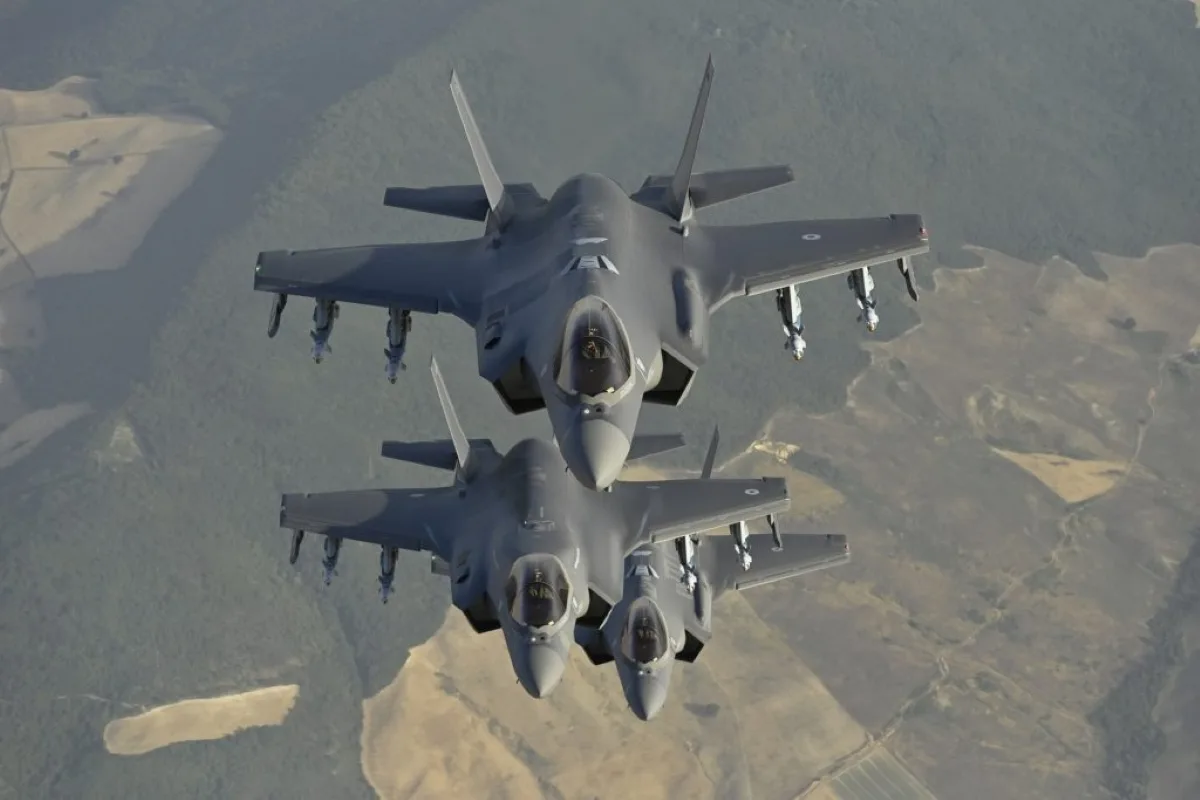

The Amendola air base, fifteen kilometers from Foggia, was transformed for two weeks into the beating heart of the multinational training Falcon Strike 2025, one of the largest and most technologically advanced exercises organized in Europe this year.
Over one thousand military personnel and fifty aircraft from Italy, the United States, the United Kingdom, France, and Greece are operating side by side, sharing tactics, skills, and technologies to improve operational readiness and integration capability in complex, joint, and multi-domain scenarios.

An Operational Laboratory for the Atlantic Alliance
The goal of Falcon Strike 2025 is clear: to demonstrate that NATO can operate in a coordinated manner in high-complexity scenarios, integrating air, land, naval, space, and cyber capabilities.
The crews and specialists of the various Armed Forces are testing joint procedures, refining interoperability, and testing the capabilities of modern combat systems — from fourth and fifth-generation fighters to air refueling and aerial surveillance aircraft.
Inside the large hangars of the 32nd Wing, usually reserved and inaccessible, are F-35, Eurofighter Typhoon, Tornado, Rafale, and F-16: a technological mosaic representing the best of Western combat aviation.

The Pilots' Voice: “The More Complex the Situation, the Greater the Training Value”
“Every mission is an opportunity to learn something new,” says an Italian F-35 pilot. “The more complex the situation, the greater the added value from a training perspective. Here it's not just about flying together, but about understanding how to operate as a single force, even with different doctrines and operational languages.”
During the exercise, missions started in daylight, then gradually moved to the night phase, when operational conditions become more challenging and cooperation between the various departments is crucial.

Technology, Coordination, and Interoperability
The exercise is part of the strengthening of European and Atlantic defense, in a geopolitical context marked by increasing instability.
Falcon Strike 2025 aims not only to train pilots but also to synchronize command and control capabilities, integrating sensors, weapon systems, and advanced communication networks.
The participating forces simulate realistic scenarios of air defense, joint attack, and support for ground operations, coordinating their interventions in real-time thanks to sophisticated data exchange platforms.

A Joint Commitment to Collective Security
The exercise, directed by the Italian Air Force, confirms the centrality of our country in the Euro-Atlantic defense system.
“Falcon Strike represents a milestone in cooperation among allies,” military sources emphasize. “Each edition allows us to further raise the bar of our operational readiness, refining the ability to react quickly and coordinatedly to any threat.”
For those observing the takeoffs and landings from the Amendola runway, the message is clear: NATO's collective defense is based on exercises like this — where technology, training, and team spirit merge to ensure security, interoperability, and deterrence.



Comments
No comments yet. Be the first!