


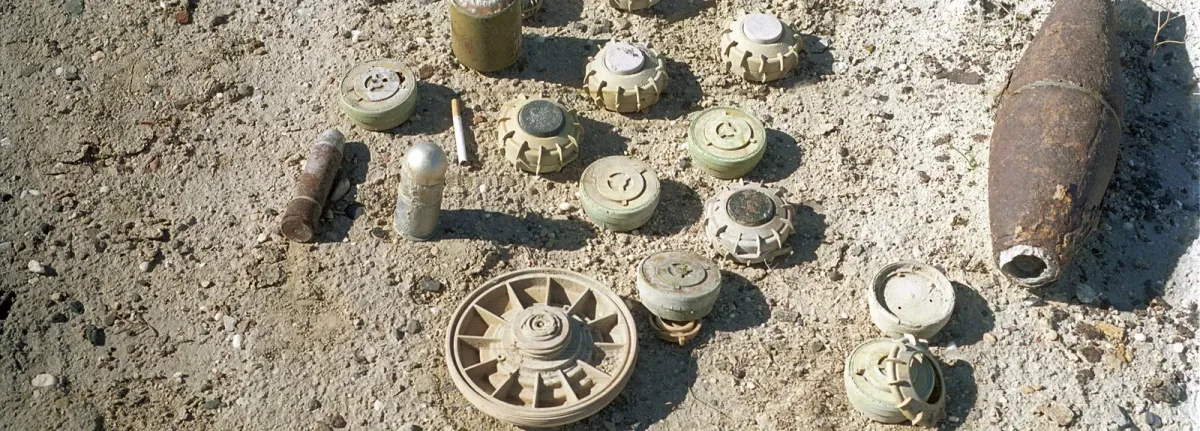

World – Security on the eastern border of Europe is entering a new phase of strategic redefinition. The defense ministers of Poland, Lithuania, Latvia, and Estonia have jointly announced their intention to withdraw from the Ottawa Convention, the 1997 international treaty that bans the production, stockpiling, sale, and use of anti-personnel mines. The decision, formalized in a joint statement, must now be submitted for approval by the individual national parliaments.
A move that, if confirmed, would represent a significant shift in the security policy of the four countries. According to the ministers, the deteriorating security in the Baltic region and along the eastern borders of the Atlantic Alliance is weighing heavily. "Since the ratification of the Convention banning anti-personnel mines," the official statement reads, "the security situation in our region has fundamentally deteriorated." The signatory countries specifically cite "Russia's aggression and its ongoing threat to the Euro-Atlantic community" as the motivation behind the review of their defense choices.

The choice after leaving the Oslo Convention
This is not the first time these states have reconsidered multilateral arms agreements. Lithuania, in fact, recently abandoned the Oslo Convention, which bans the use of cluster bombs, signaling an increasing priority given to strengthening territorial defenses.
"Flexibility and freedom of choice in adopting new offensive and defensive systems," the ministers state, "are now essential elements to ensure the security of NATO's vulnerable eastern flank." In the declaration, the defense ministers of Estonia (Hanno Pevkur), Latvia (Andris Sprūds), Lithuania (Dovilė Šakalienė), and Poland (Władysław Kosiniak-Kamysz) emphasize that, while withdrawing from the Ottawa Convention, their countries will continue to respect international humanitarian law and protect civilians during armed conflicts.

The pressure of the eastern front
The war in Ukraine and the escalation of tensions with Russia have reopened the debate on the need for Eastern European countries to adopt extraordinary defense measures. Polish Prime Minister Donald Tusk, earlier this month, had already announced the initiation of procedures for Poland's withdrawal from the Ottawa treaty. Finland, although not a signatory of today's declaration, has also confirmed it is considering a similar step.
However, Hanno Pevkur clarified that, at present, there are no plans to develop, stockpile, or use anti-personnel mines, while the Latvian Chief of Defense, Major General Kaspars Pudāns, reiterated that Riga's priorities remain focused on anti-tank mines and the availability of artillery shells.

A blow to the Ottawa treaty
The joint withdrawal of Poland and the Baltic countries would represent a severe blow to the Ottawa Convention, already under pressure from ongoing conflicts and the increasing militarization of border areas. Signed in 1997, the Convention aimed to ban anti-personnel mines worldwide, garnering the adherence of over 160 countries so far.
However, twelve states – including the United States, China, and Russia – have never ratified the agreement nor officially renounced the possibility of manufacturing anti-personnel mines. Additionally, 16 countries worldwide continue to produce cluster bombs, weapons banned by the 2008 Oslo Convention, but still considered strategic in numerous conflict scenarios.
Now the exit of four strategic nations, positioned on the most delicate front of the Atlantic Alliance, risks further undermining the solidity of international disarmament agreements and reopening the issue of using controversial weapon systems, deemed essential by some governments for the defense of their territories.



Comments
No comments yet. Be the first!