


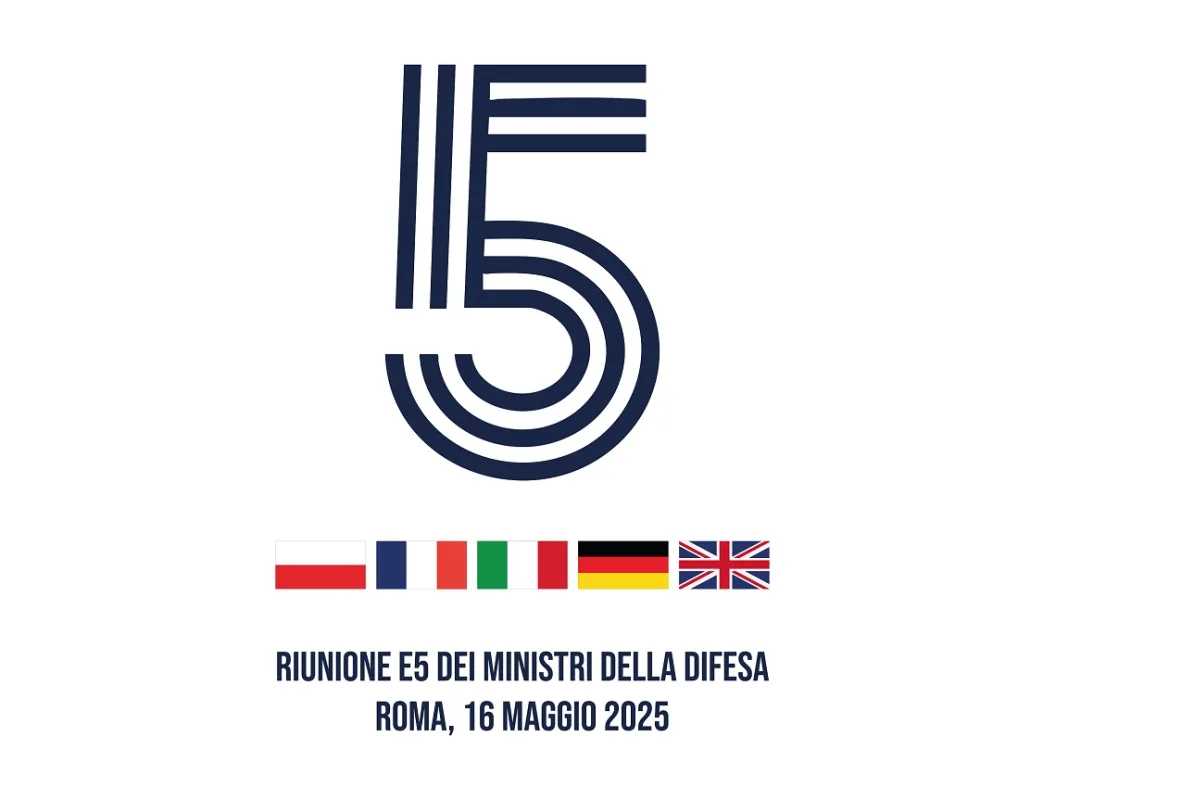

Today, Rome hosts the fourth “E5” Meeting of Defense Ministers at the Palazzo dell’Aeronautica. The meeting involves representatives from France, Germany, Italy, Poland, and the United Kingdom, at a strategic moment for the future of European security.
The E5 format was born in 2022, in the wake of the Russian invasion of Ukraine, as an informal but highly operational tool for coordination among the continent's main defense players. Initially promoted by France and the United Kingdom, the E5 stands out for its agility, informality, and rapid response, offering an alternative platform compared to the slower structures of the European Union and NATO.
A distinctive element of the format is also the involvement of the United Kingdom, which, despite having left the EU, maintains a central role in the continent's security. The E5 thus allows for bridging the strategic gap between London and Brussels, fostering smoother cooperation among countries with complementary visions and tools.
After previous meetings in Berlin, Helenów, and Paris, Rome hosts the fourth summit, with the aim of consolidating the role of the E5 as a political and operational engine of European defense. The choice of the Palazzo dell’Aeronautica is not accidental: a symbol of the Italian Armed Forces, it underscores Italy's role as a key player in building a new European defense architecture.

Common Defense and Support for Kyiv: The Two Priorities
The agenda of the E5 Meeting revolves around two strategic axes: the strengthening of European defense, both industrial and operational, and the continuous support for Ukraine, at a still delicate moment for the continent's geopolitical balance.
The war in Ukraine remains the testing ground for European unity. The ministers confirm their commitment to ensuring military, logistical, and training assistance to Kyiv, emphasizing the importance of better coordinating national efforts to avoid dispersion and maximize the effectiveness of aid. The Russian invasion, in addition to threatening Ukraine, directly affects the security of the entire Europe through hybrid forms of conflict involving cyberspace, infrastructure, and public opinion.
This is precisely what Andrius Kubilius, European Commissioner for Defense and Space, insists on, present at the Roman table. On the eve of the summit, he sends a strong message: “We need a Big Bang in European defense”. For Kubilius, Europe must stop acting in a fragmented way and start investing at least 3% of GDP in defense, but above all, do so intelligently, with joint purchases, common supply chains, and a shared industrial strategy.

Italy is indicated as a virtuous example, thanks to the role of Leonardo, defined by the commissioner as “the strongest company in Europe in the defense sector”. Kubilius invites the Union to value and replicate effective industrial models, which combine technological innovation and production capacity.
However, his words also include a jab at Italian politics, accused of ambiguity in supporting the “Readiness 2030” plan, aimed at improving the EU's operational readiness. On the institutional level, Italy declares itself in favor, but the issue of military spending still divides political debate and public opinion. Kubilius poses a clear question: “Does Italy support or not the need to generally strengthen our defense?”
The E5 Towards the Future: Autonomy, Cohesion, and Realism
The Rome summit demonstrates that the E5 format is no longer just an informal experiment, but increasingly configures itself as a reference operational core for European defense. Its flexibility makes it capable of adapting to new threats and responding quickly, qualities essential today in an unstable geopolitical context.

Italy, host and protagonist of the summit, reaffirms its commitment to a stronger, autonomous common defense compatible with Atlantic ties. It also emphasizes the centrality of the enlarged Mediterranean as a strategic area often overlooked in collective defense plans.
The future of European security depends on the ability of member states to overcome fragmentation and build concrete synergies between industry, operational capabilities, and political will. The E5 format can become a reference platform, capable of uniting countries with different visions but shared goals.
The message coming from Rome is clear: Europe can no longer afford to be a spectator. It must act, invest, decide. The E5 Meeting, with its practical and results-oriented character, represents a concrete response to the challenges of our time, between conventional warfare, hybrid threats, and the need for strategic autonomy.
In an era marked by uncertainty, the E5 stands as a credible tool of unity, deterrence, and European strategic vision.


Comments
No comments yet. Be the first!