


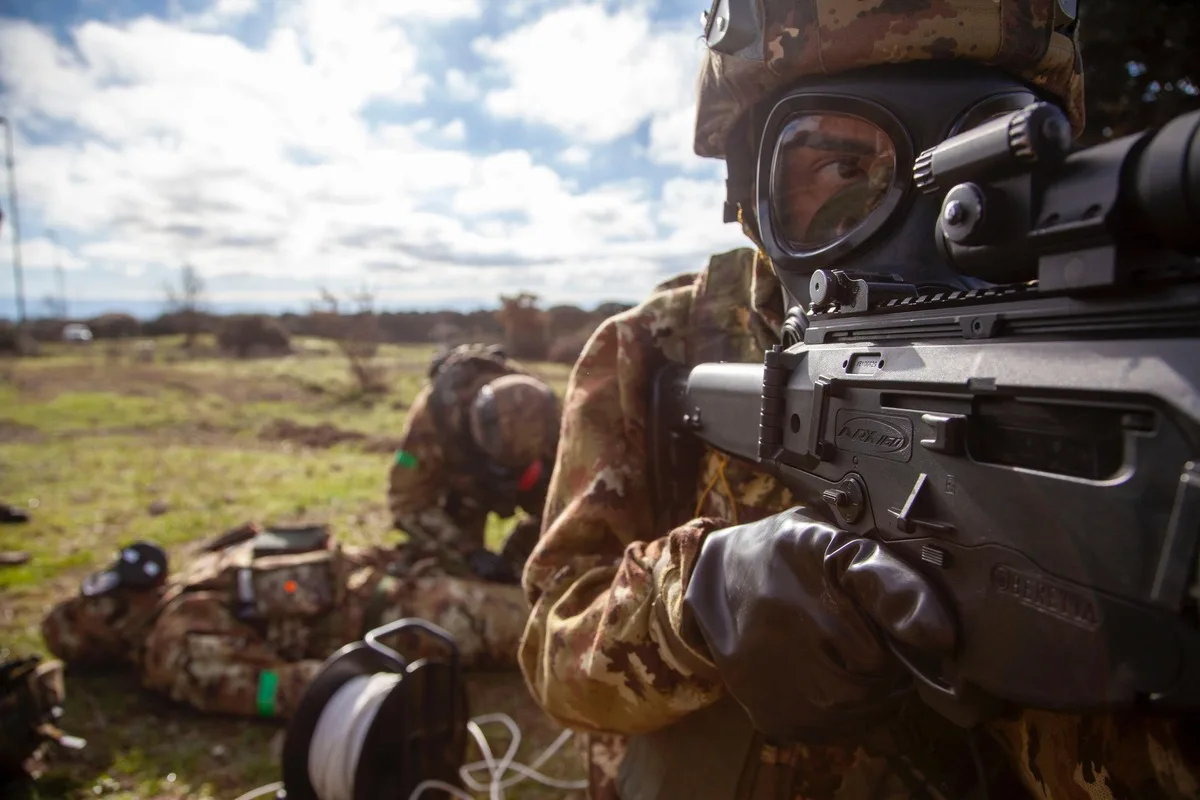

Cagliari/Macomer, December 12, 2025 – The training cycle has concluded, which saw the 151st Infantry Regiment "Sassari" and the 5th Engineer Regiment engaged in one of the most complex scenarios of modern warfare: the response to Chemical, Biological, Radiological, and Nuclear (CBRN) threats.
The activity, conducted between the "Monfenera" and "Bechi Luserna" barracks and the "Sa Crabarza" area, tested the Brigata Sassari's ability to operate according to strict NATO standards, integrating kinetic maneuver with protection and decontamination procedures.

The Technical Context: What CBRN Defense Means
Operating in a contaminated environment doesn't just mean wearing a mask, but activating a complex survival chain based on three fundamental pillars, all tested during the exercise:
- Individual and Collective Protection: The soldiers operated wearing special protective clothing (IPE) that isolates the body from contaminants. This equipment, while life-saving, limits movement, visibility, and drastically increases physical and thermal stress, making every tactical maneuver extremely more strenuous and difficult to coordinate.
- Detection: Before reacting, the threat must be identified. The exercise simulated the use of equipment to analyze the air and ground, determining the nature of the agent (chemical or radiological) and delineating the "dirty zone" (contaminated area) from the "clean" one.
- Decontamination: Once exposed, men and equipment must be "decontaminated" to continue fighting or return to base. This is where the role of the Engineers becomes vital.
The 151st Infantry and NATO Alarm Management
The core of the 151st Regiment's response was the decision-making flow. In the CBRN field, the speed of information is as vital as physical protection. Command Posts managed the so-called "Warning and Reporting Chain", applying standardized NATO procedures (often known as ATP-45) to map the toxic cloud or risk area and transmit data to allied units.
Through coordination with the Sub Collection Center (SCC) of the Army Military Command “Sardegna”, the regiment demonstrated its ability to manage complex incidents through the Tactical Decision Exercise (TDX), maintaining command and control capability even under the psychological pressure of an invisible threat.

The 5th Engineers: Mobility in a Contaminated Environment
For the 5th Engineer Regiment, the challenge was twofold. Besides personal protection, they had to ensure troop mobility in a hostile environment.
The training focused on Engineer Intelligence (ENGINT): collecting technical data in the field to understand how to overcome contaminated obstacles or how to clear a path to allow infantry advancement, while simultaneously ensuring counter-mobility actions against the adversary.
Innovation: Drones for "Remote Detection"
A standout element of the exercise was the use of remotely piloted systems. The use of drones in the CBRN field represents a fundamental operational breakthrough: it allows reconnaissance of the suspect area and preliminary detection without exposing human operators to the direct risk of contamination. This technological integration provided a high degree of realism to the scenario, aligning "Sassari" procedures with the most modern international doctrines.

Conclusions
The exercise confirmed that responding to a CBRN threat requires perfect synergy between physical endurance (to operate with protections), procedural discipline (for managing NATO alerts), and technical competence (for decontamination). The 151st and 5th Regiments demonstrated they possess these capabilities, ready to be employed in defense of national and collective security.



Comments
No comments yet. Be the first!