


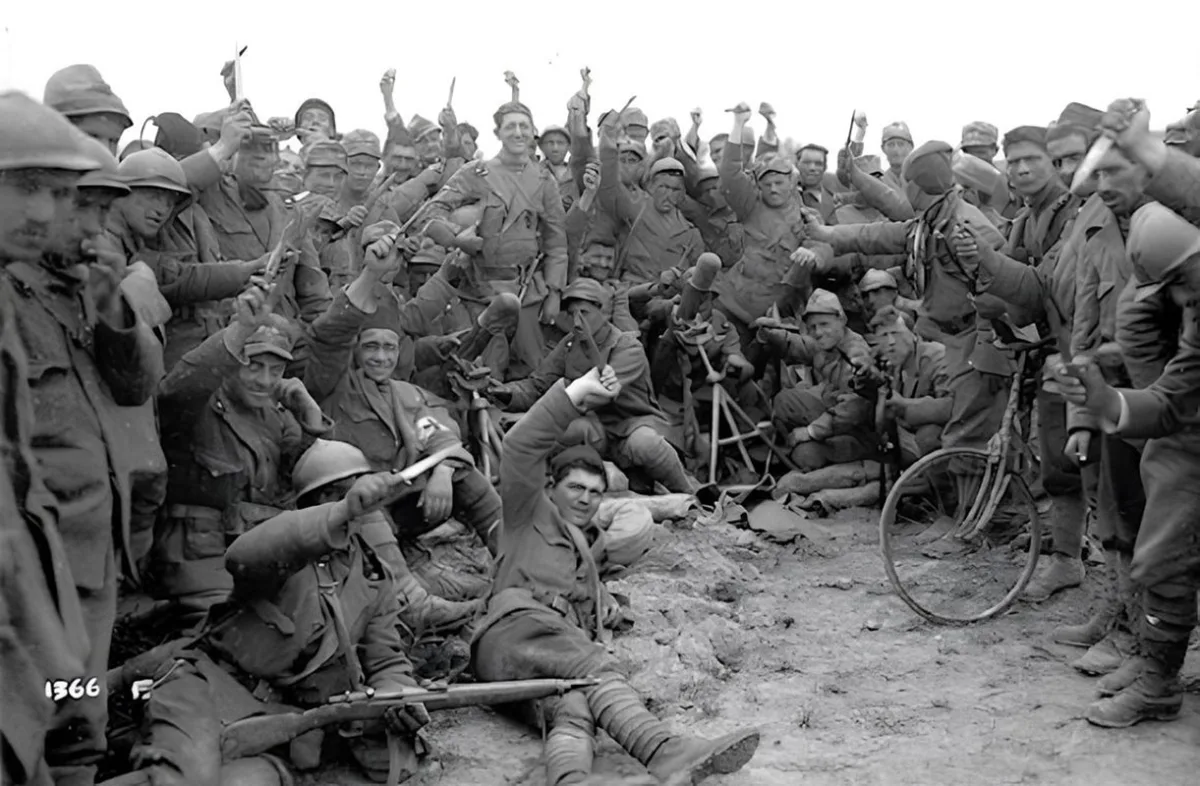

June 16, 1918 – June 16, 2025. Today marks the anniversary of one of the most heroic actions of the First World War: the reconquest of Col Moschin, a swift feat accomplished by the Arditi of the IX Assault Unit, which marked a decisive turning point in the Battle of the Solstice, halting the Austro-Hungarian offensive on the Grappa massif. An action destined to forever change the operational methods of armies, deeply inspiring the birth of modern Special Forces worldwide.
The Austro-Hungarian attack
On June 15, 1918, at the first light of dawn, the XI Austro-Hungarian Army under General Viktor von Scheuchenstuel launched a violent attack against the Italian front in the Grappa sector. The objective was ambitious: to break through the Italian defenses and spread into the Venetian plain, outflanking the entire deployment of the Royal Army between the Brenta and the Piave.
At 8 in the morning, the 27th Austro-Hungarian Division launched the assault: despite tenacious resistance and Italian artillery fire on the eastern slope, the imperial forces quickly broke through the lines of the IX Italian Army Corps, capturing Col del Miglio, Col Fagheron, Col Fenilon, Col Moschin, Palazzo Negri, Casa dei Pastori, and Ca’ dei Briganti. The situation was dramatic: the entire left flank of the Italian forces was in disarray, and the Austro-Hungarians were on the verge of reaching the plain.
The Italian counteroffensive: the Arditi of Major Messe
To prevent the Austro-Hungarians from consolidating their positions, an immediate counterattack was ordered. Under the command of Brigadier Colonel Giorgio Boccacci, the "Basilicata" Brigade was joined by the IX Assault Unit of Major Giovanni Messe and the 91st and 92nd Infantry Regiments. The men reached Col del Gallo at 12:15, ready to reclaim the fallen hills one by one.
The battle – First phase: Quota 1318 and Col Fagheron
At 14:00 on June 15, the Arditi launched the assault.
The 1st Company of Captain Pinca attacked Palazzo Negri, Casa dei Pastori, and Ca’ dei Briganti, then aimed at the redoubt on quota 1318. The assault was successful, but Captain Pinca heroically fell in action.
Simultaneously, the 2nd Company of Captain Zancanaro climbed Col Fagheron, engaging in fierce hand-to-hand combat with enemy troops entrenched on the slopes. In less than fifteen minutes, the summit was recaptured, thanks also to the use of flamethrowers against the remaining pockets of resistance.
Second phase: Col Fenilon and Col Moschin
In the afternoon, reconnaissance sent to Col Fenilon and Col Moschin confirmed a strong enemy presence. Messe planned the second phase of the counteroffensive, now with the support of the II Battalion of the 92nd Regiment, commanded by Colonel Mariotti.
Between 20:30 and 22:00, Italian artillery pounded the Austro-Hungarian positions. At 21:00, in the fog and under fire, the Arditi and a company of the 91st Regiment assaulted Col Fenilon, capturing it after an hour of violent clashes. 85 prisoners were captured, including 5 officers, and 4 machine guns.
At 4 in the morning on June 16, Messe received the order to attack Col Moschin at 7:00. The Arditi gathered in the saddle below, but Italian artillery delayed the extension of the fire. At 7:10, without waiting any longer, they launched the assault anyway.
In just ten minutes, they managed to wrest the summit from the enemy. The results were extraordinary: 27 officers and 250 Austrian soldiers captured, 17 machine guns, a trench cannon, two previously captured Italian mountain batteries, and a column of 20 mules.
Glory and memory
After two days of intense fighting, the IX Assault Unit was put back in reserve. The losses were contained but not negligible: 6 fallen (including Captain Pinca) and about 80 wounded. The action received wide recognition: 40 silver medals for military valor and 19 bronze medals were awarded.
The city of Rome wanted to honor the feat with a monument on Col Moschin, built with an ancient Roman column, symbolizing the connection between the new Italy and its millennial roots.
The legacy
Today, 107 years later, the memory of those days continues to live in history and in the hearts of those who remember the sacrifice and courage of the Arditi, the absolute protagonists of one of the most brilliant military actions of the Great War.
A wholly Italian story that will pave a path destined to forever transform the way conflicts are faced, with an operational mode aimed at consciously opening asymmetric scenarios and unconventional combat techniques.
Their heroic deeds live on today in the 9th Paratrooper Assault Regiment "Col Moschin", heir to that tradition of valor, audacity, and dedication to the Homeland.





Comments
No comments yet. Be the first!