


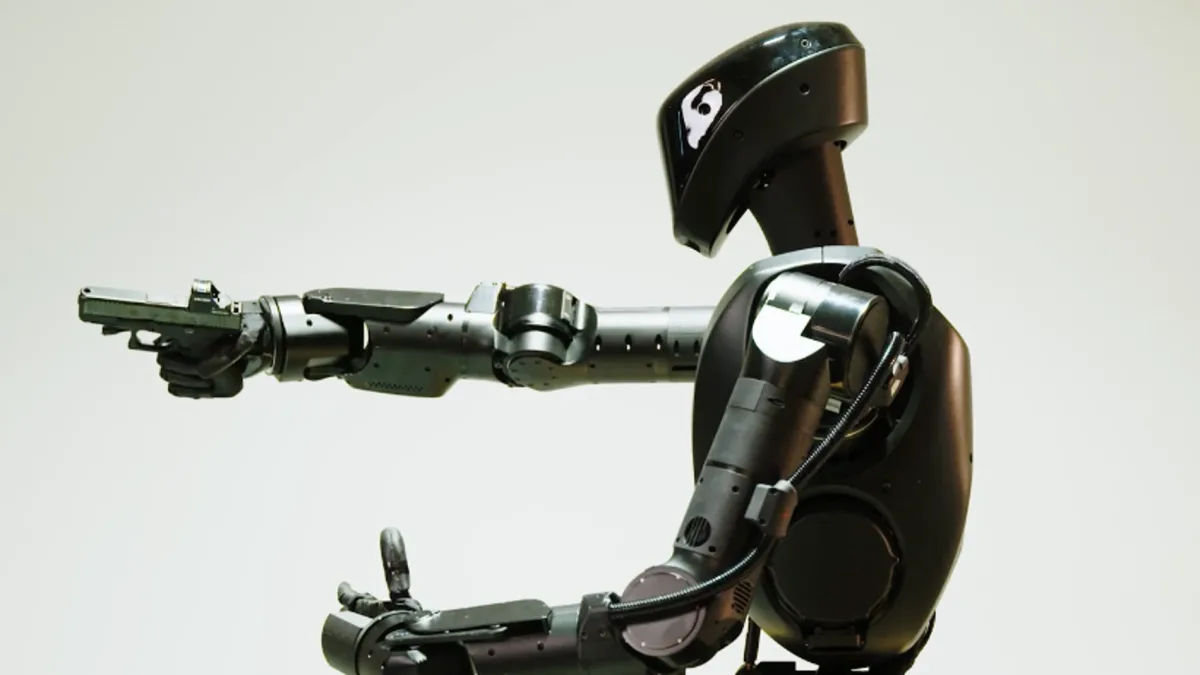

In February, the San Francisco-based company Foundation marked a breakthrough in the military landscape by delivering two units of the Phantom MK-1 to Ukraine. These are humanoid robots specifically designed for defense, initially sent with the aim of supporting frontline reconnaissance operations. Unlike traditional drones, the Phantom MK-1 has an anthropomorphic structure that allows it to move and act in spaces designed for humans. Its most innovative feature is the ability to use existing standard weaponry, such as pistols, shotguns, and M-16 assault rifles, eliminating the need to develop dedicated weapon systems and allowing for rapid integration into current military equipment.

The Tactical Vision and Moral Imperative
The project, led by Marine veteran Mike LeBlanc, stems from the belief that there is a moral imperative to replace soldiers with machines in high-risk zones. According to Foundation's leadership, robotic soldiers represent the natural evolution of autonomous systems and can operate where drones fail, such as inside underground bunkers or fortified buildings. These robots are designed to perform high-risk tasks, including resupplying ammunition under enemy fire and breaching protected sites by placing explosive charges. The initiative is supported by multi-million dollar contracts with the U.S. armed forces, with a commitment to always maintain a human operator as the final authority for any lethal action, in line with Pentagon protocols.

Technical Limits and Dilemmas of the Mechanical Soldier
Despite its revolutionary potential, the deployment of the Phantom MK-1 raises significant doubts related to its mechanical complexity and ethical implications. Technically, the robot relies on about twenty independent motors and requires constant recharging, making it vulnerable to minor malfunctions that could completely immobilize it. Furthermore, its effectiveness in extreme environmental conditions, such as mud and rain, has yet to be tested in the field. In parallel, experts warn that the use of humanoids could further dehumanize conflicts and lower the political barrier to the use of force, as the reduction of one's own human losses could make war a less costly and more frequent diplomatic choice, while simultaneously blurring responsibilities for potential abuses.



Comments
No comments yet. Be the first!