


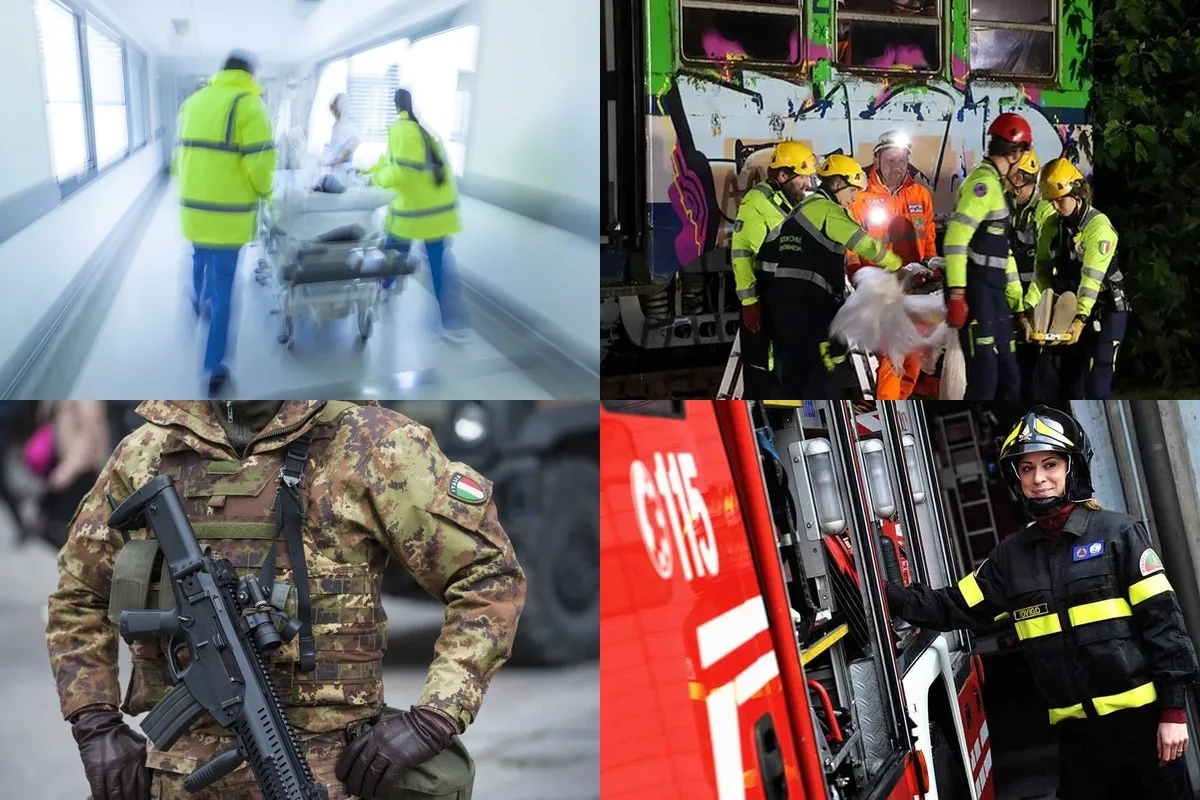

There is a simple, almost old-fashioned idea that today has a very modern value: serving the Country. Not as a slogan, but as a concrete experience, lived within the real needs of people. A period in which young people become more aware citizens, learn to take care of others and, at the same time, build skills and character.
Talking about “Homeland” does not mean rhetoric: it means recognizing that the community is our common home. And that every generation has the duty to protect it, improve it, make it fairer and safer.

A Service That Matters in Multiple Areas: Health, Education, Defense, Civil Protection
A national service path for young people can take different forms, all useful.
Health sector
Logistical and organizational support in hospitals and clinics, assistance with prevention campaigns, non-medical home assistance for the elderly and vulnerable in collaboration with local entities and the third sector: here the service becomes a training ground for empathy, precision, and teamwork.
Education sector
Tutoring and after-school programs, digital literacy, help in libraries and laboratories, inclusion projects: serving in schools means investing in the future, learning patience, communication, and responsibility towards the younger ones.
Civil protection sector
Emergencies, territory monitoring, prevention, drills, support to the population during floods, fires, or earthquakes: it is the most immediate form of service to the community and teaches readiness, procedures, and concrete solidarity.
Defense sector
It is the most demanding and uncomfortable path, even psychologically: precisely for this reason, it should be better recognized and rewarded, with solid protections and training. Those who intend to access armed professions (Armed Forces, Carabinieri, State Police, Guardia di Finanza, local police, forestry also regional) should have performed their service here. And those who want to work in Public Administration, state or local, should have served in Defense and have sworn to defend the Nation, as a public commitment to citizens.

The Heart of the Project: Volunteering, Community, Growth
The most important aspect is not “where” you serve, but what happens to the person while serving.
A period of service:
- strengthens the sense of volunteering: not an occasional gesture, but a continuous contribution;
- develops responsibility: schedules, deliveries, rules, teamwork;
- teaches how to manage time and resources: organization, discipline, autonomy;
- helps discover vocations and marketable skills;
- builds a civic identity: not “me against the world”, but “me within a community”.
It is a school of life that prepares for university, work, and adult citizenship.
Near Home or Far Away: A Service That Unites the Country
A well-designed service should offer two modes:
- in one's own region, to root energies and skills in the territory;
- upon request, even far from home, to promote autonomy, cultural exchange, and national cohesion.
When young people are asked to move, it is fair to guarantee food and accommodation coverage (in addition to transport and insurance protections), so that the service is truly accessible to everyone.

Examples from Northern Europe: A Culture of Duty with Concrete Support
In Northern Europe, there is a strong tradition of civic responsibility, often linked to national security and crisis preparedness.
In Sweden, the concept of “total defence” is central, including both military and civilian dimensions: the defense of the Country concerns the entire society. Moreover, practical supports such as food and accommodation and coverage related to movements are provided for conscripts.
In Norway, conscription has been extended to women, in a setting that links duties and equal responsibilities. Official information indicates that during the initial service, essential elements such as accommodation and food are guaranteed, along with allowances.
In Finland, there is also a path of non-military service, with a logic of concrete support for engaged youth: aspects indicated include forms of coverage for maintenance and expenses during the service period.
In Denmark, the service can also include components related to emergency management through dedicated national structures, showing how collective preparation is not just “armed defense”.

Conclusion: A Generational Pact That Gives Meaning and Future
Serving the Homeland today can mean saving lives in emergencies, supporting a healthcare department, helping a student not to give up, protecting territories and communities. A well-done national service does not “take away a year”: it multiplies it. It gives back to young people something that is often missing before adulthood: meaning, direction, responsibility, belonging. And it gives back to the Country a precious resource: young people who are more prepared, more supportive, more capable of taking care of their community.





Comments
No comments yet. Be the first!