


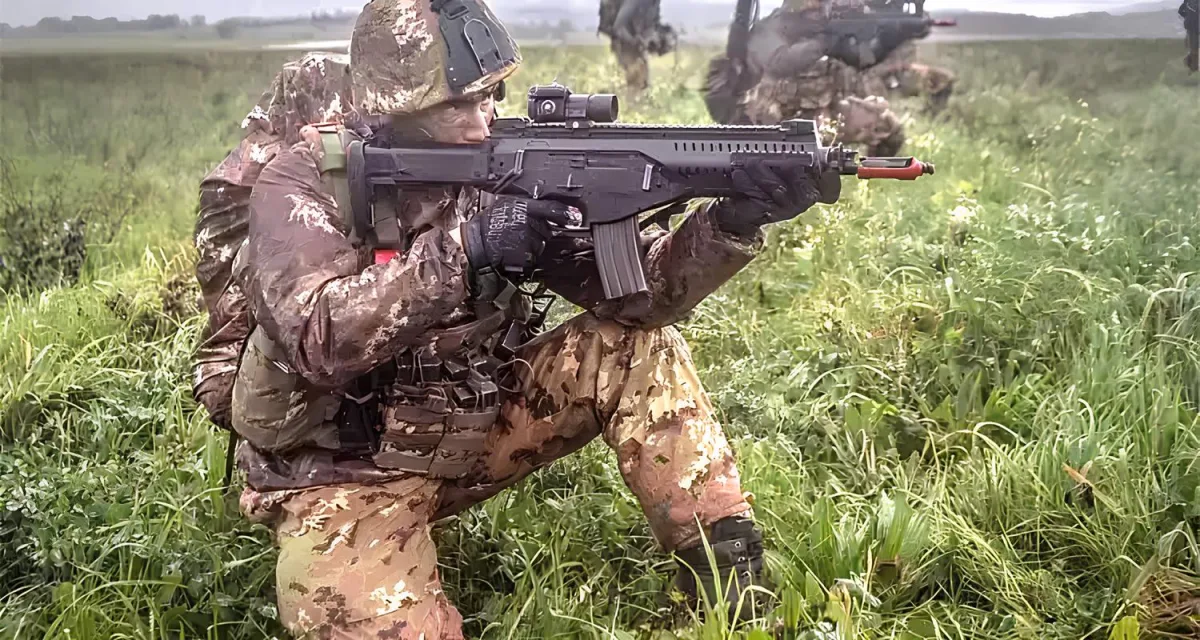

The conflict in Ukraine has dismantled the paradigms of Western land warfare, forcing NATO doctrine to confront a reality radically different from that theorized over the past three decades. Expectations of fluid maneuvering, supported by absolute air superiority and guided by massive armored forces, have shattered against the reality of a hyper-technological and saturated battlefield. In this context, where layered air defense prevents air dominance and constant surveillance makes surprise impossible, infantry has returned to being the indispensable pivot of operations. Far from being obsolete, infantry has undergone a genetic mutation, transforming from a mere support force into an advanced technological integration platform.
The Evolution of Maneuver: From Mass to Tactical "Cloud"
Between 2022 and 2026, the operational architecture of Ukrainian infantry underwent a structural metamorphosis to survive and counter an adversary superior in terms of artillery fire volume and critical mass. In the early stages of the large-scale invasion, the Ukrainian Armed Forces still operated according to traditional combined schemes: the Battalion Tactical Groups exploited the protection and fire of combat vehicles (IFV and APC) to conduct assaults in which teams of 10 to 40 soldiers penetrated enemy lines.
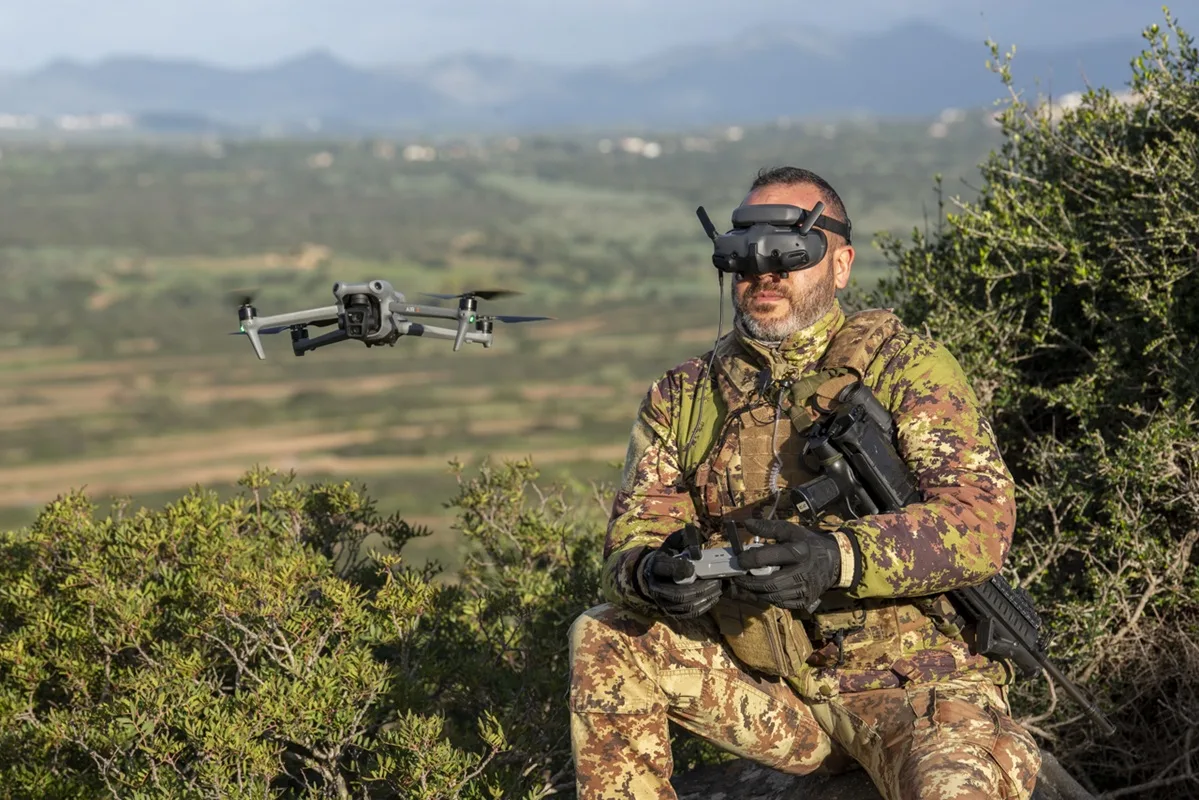
The massive advent of FPV (First-Person View) drones and the pervasiveness of real-time aerial reconnaissance systems made this approach unsustainable. Starting in 2023, the concentration of armored vehicles became a magnet for radio-controlled attack vectors, capable of neutralizing vehicles well before the contact line. The tactical response was extreme dispersion.
The geometry of the battlefield fragmented into a "cloud" of nuclei reduced to 5-9 operators, distributed over areas previously manned by entire companies. This pulverization of the threat redefined the concept of economic efficiency of Russian weapon systems: hitting an isolated nucleus of three infantrymen with precision artillery became tactically disadvantageous, forcing the adversary into a fragmented and positional war of attrition.
The "Drone Wall" and Interforce Integration at the Minimum Level
The real revolution lies in the composition and tasks of the single assault unit. Today, the primary source of fire support is no longer field artillery, but the organic component of unmanned weapon systems integrated directly into the team. A modern Ukrainian assault nucleus synergistically combines various specializations:
- Kinetic Component: 5-9 riflemen, engineers, and ammunition handlers, responsible for the physical consolidation of positions.
- Unmanned Aerial Component: 4-6 drone operators (FPV for targeted attacks, heavy bombing drones, and tactical reconnaissance).
- Unmanned Ground Component: 1-3 UGV operators (Unmanned Ground Vehicles) for advanced logistics and fire support.
In this new employment doctrine, dismounted infantry intervenes only after the drone component has systematically disarticulated machine gun nests and enemy command centers. The infantryman thus becomes an advanced sensor: identifying targets, coordinating the FPV vector, saturating residual resistance pockets, and holding occupied ground.
On the defensive level, this has led to the birth of "robotized strongholds" (ShaBlia, Wolly, Burya 2.0), allowing the deployment of machine gun turrets and thermal sensors on the front line, retreating operators into protected bunkers 50 to 500 meters behind. This architecture compensates for manpower shortages and allows isolated positions to be held for weeks with minimal personnel exposure. Additionally, in the Pokrovsk sector, over 90% of last-mile logistics has been delegated to UGVs for resupply and casualty evacuation under enemy fire.
Hybrid Defense and the Challenge of Technological Counter-Deduction
Parallel to the fragmentation of forces, the front line has lost the continuity of the classic trench, evolving into a hybrid and deep defense. The space between the main defensive nodes – which can extend for several kilometers – is not covered by a constant physical presence of troops, but by persistent monitoring and a "drone wall" ready to spring into action in case of infiltration.
However, this model presents intrinsic vulnerabilities linked to technological dependence. The introduction by Russia of fiber-optic guided FPV drones – immune to standard electronic warfare (EW) countermeasures – and the coordinated use of attack swarms require continuous adaptation. Ukrainian infantry has had to abandon large fortifications visible from above in favor of so-called "foxholes" and branched underground complexes, associating a strict camouflage discipline with continuous position changes to escape thermal and optical tracking.
Lessons Learned for NATO Forces
The experience gained on the Ukrainian front imposes a profound revision of the employment manuals of the Atlantic Alliance countries. Battlefield evidence clearly indicates that the pillars of Western doctrine need a structural update on three main axes:

In conclusion, the conflict demonstrates that operational effectiveness lies in the speed of adaptation of the man-machine duo. The armed forces of the future will not be measured by the sheer number of heavy platforms in inventory, but by the infantry's ability to operate as an agile, interconnected, and lethal node within a digitized and multi-domain battle space.



Comments
No comments yet. Be the first!