


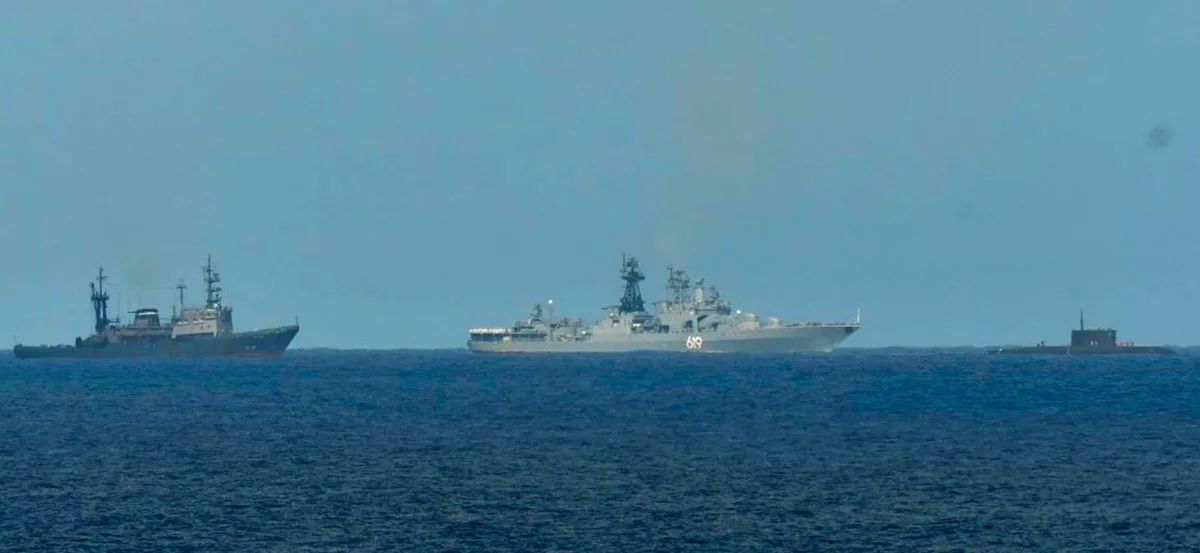

January 27, 2026 – The Italian Navy frigate ITS Virginio Fasan (Carlo Bergamini/FREMM class), part of the Standing NATO Maritime Group Two (SNMG2), is monitoring and “shadowing” (following and surveilling) the Russian submarine Kilo-Class/Project 636.3 Krasnodar in the central Mediterranean. The update was released by the NATO Maritime Command on January 26, 2026, indicating persistent surveillance activity during the transit of the underwater unit. In practical terms, it is a control and tracking operation aimed at maintaining an updated picture of the situation, avoiding ambiguity about the route, behavior, and possible objectives of the observed unit.

What we know about the Russian transit
According to available information, the Krasnodar is crossing the central Mediterranean with escort: among the units mentioned is the Russian destroyer Udaloy-Class Severomorsk, along with other support ships. Some open-source reconstructions place the formation southeast of Sicily, possibly heading towards more eastern areas of the basin.
This type of “shadowing” does not imply engagement: it is an operational practice aimed at maintaining situational awareness, reducing uncertainty, and demonstrating presence. Normally, tracking may involve changes of units “in relay”, so that surveillance remains continuous even when the ship follows other operational priorities.

Why it matters (NATO, deterrence, and the Mediterranean)
The episode is indicative of the naval competition in an area where commercial routes, energy interests, and strategic infrastructures converge. The decision to publicly communicate the tracking also has a value of political signaling and deterrence: showing vigilance and the ability to control maritime space, while reassuring allies and regional partners at the same time.
On a technical-operational level, the Krasnodar (Project 636.3) is a platform known for its acoustic discretion and potential use in projection missions, while the Virginio Fasan is a frigate with an anti-submarine warfare (ASW) vocation, thus suitable for surveillance and tracking tasks. In this context, the activities of SNMG2 serve to ensure presence and readiness on the southern flank of the Alliance and to continuously manage maritime surveillance in an increasingly contested Mediterranean. Moreover, the basin is a complex environment: intense traffic, variable seabeds, and numerous coastal areas make the underwater domain more difficult to control, increasing the value of sensors, training, and multinational coordination.



Comments
No comments yet. Be the first!