




Kiev's commanders warn Europe: modern warfare moves faster than old armies. While the West still focuses on tanks, at the front FPV drones, artificial intelligence, and unmanned ground vehicles triumph.The war in Ukraine is rewriting the rules of modern conflict. On the battlefield, drones and automated systems are progressively replacing traditional heavy equipment, imposing new military doctrines and radically transforming the way armies fight, defend, and prepare for the future.
The message from Ukrainian officials is as clear as it is unsettling: Europe is not ready. Many Western armies, including the German and Italian, remain anchored to outdated industrial and tactical schemes, while Kiev is already fighting the first war in history led by Artificial Intelligence and robots.
“Tanks are no longer central”: the warning from Berlin
During a recent conference organized in Berlin by the German-Ukrainian Bureau, officers from the 413th Unmanned Systems Regiment “RAID” of the Ukrainian Armed Forces stunned the audience.
“In the last year, I have seen only one tank on the battlefield,” declared Corporal Dmytro Zhluktenko, responsible for analyzing combat lessons learned.
According to Zhluktenko, the Western military mindset is obsolete: “When you talk to German soldiers, they tell you that tanks are needed because they are the most important thing in war. We don't think so. The way of fighting has changed so much since 2022 that old approaches no longer work”.
Drones offer a devastating asymmetric advantage: they can be purchased, modified, and upgraded within a few days, while a heavy vehicle like a tank requires years of production, exorbitant costs, and a massive logistical chain that makes it an easy target.
Germany accelerates, but it's not enough
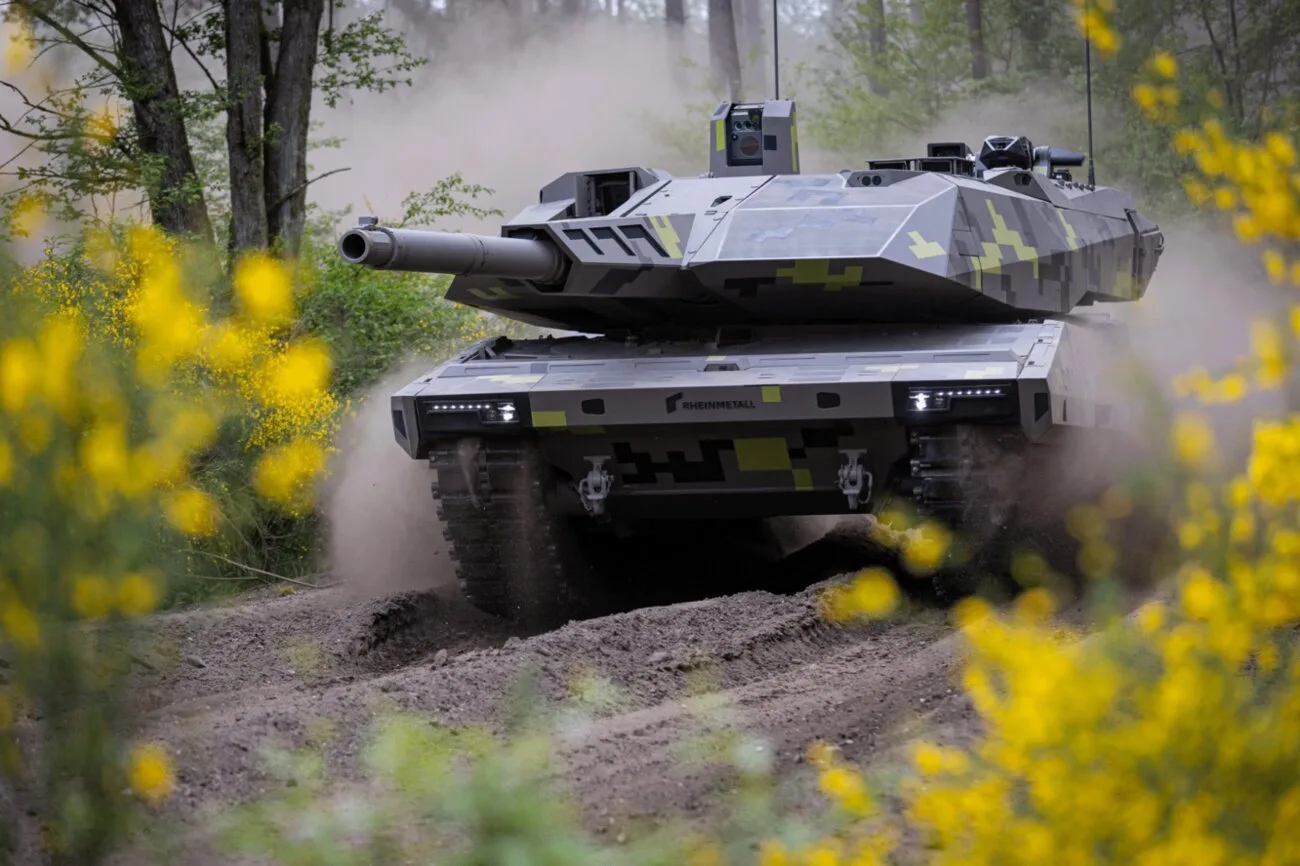
As part of the Zeitenwende (epochal shift), Berlin is deploying the 45th Armored Brigade in Lithuania, which will receive 123 Leopard 2A8 tanks by 2027. For the Ukrainians, however, this is an old response to a new problem.
Captain Oleksandr Voitko, deputy commander of the RAID regiment, highlights that 80% of the Russian infantry is now neutralized by just two variants of drones: FPV kamikaze drones and bomber drones. “Modern armies need as many FPV drones as artillery shells”, warns Voitko.
The human factor: lack of pilot training
The problem is not only industrial but also educational. Deploying thousands of drones is useless without a critical mass of specialized operators.

To bridge this gap, Germany has begun integrating drone use into basic training and has signed a strategic agreement with Kiev: Ukrainian veterans are training Bundeswehr troops, bringing lessons from the front directly into German military schools. A model of cooperation that Italy and other NATO partners must also accelerate if they want to maintain credible deterrence capabilities.
The technological breakthrough: autonomous "Hornet" drones hunt with AI
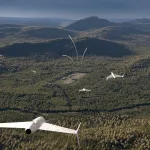
The reliance on drones has pushed Ukrainian engineering to overcome the main obstacle of electronic warfare: signal jamming. Kiev's response is called Destinus Hornet, a medium-range reconnaissance and attack UAV (unmanned aerial vehicle) that is not remotely controlled but hunts autonomously thanks to artificial intelligence.

The specifications of the automatic hunter
- Hivemind Software: An artificial intelligence that acts as a total pilot, capable of reprogramming the mission without human intervention in case of unforeseen events.
- Predictive Targeting: The algorithm analyzes thousands of hours of video to identify, classify, and prioritize enemy targets.
- Vector Vista Block 2 Navigation: Allows the drone to fly, orient, and strike even in the complete absence of GPS or Starlink signals, completely bypassing Russian electronic defenses.
The effectiveness of these systems has been demonstrated in massive raids against the Russian airbase in Taganrog (on the Sea of Azov) and in the depots of Feodosia in Crimea. Led by unit commander Robert Brody (known as "Magyar"), Ukrainian drones operated in total autonomy over the sea, destroying an Iskander missile system and two Tu-142 patrol aircraft.
According to the latest report from the ISW (Institute for the Study of War), thanks to this technological breakthrough Ukraine is experiencing a clear reversal of trends on the ground, managing for the first time since 2023 to reclaim more territory than it loses.
From gaming stations to the trench: the era of ground robots
The early adoption of automation stems from a dramatic manpower crisis in Ukraine, linked to four years of grinding invasion. As documented in a recent CNN report, the entire front line is transforming into a theater managed by digital stations and joysticks, where human blood is spared thanks to the use of tracks and unmanned technology.
The impact of this revolution is evident in real field data: the NC13 unit of the Third Ukrainian Assault Brigade calculated that, to conduct 164 infantry assaults with traditional tactics, it would have needed about 2,300 men, expecting to lose half of them between dead and wounded. Thanks to the use of soldier drones and attack robots, the same operational result was achieved almost completely eliminating human losses, as the assault was managed remotely by teams of specialized operators.
The "Silent Death"
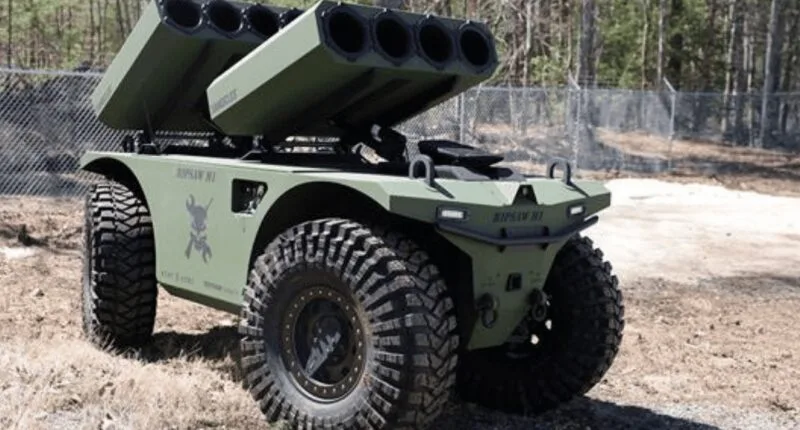
Russian soldiers have nicknamed Ukrainian unmanned ground vehicles (UGVs) "silent death". These are tracked platforms on which heavy Browning machine guns are mounted.
These surface soldier drones can remain hidden in vegetation for days, without the need for food, water, or rest, waiting for the enemy to pass to open fire. The Russians can only hear them when they are less than 10 meters away, that is, when they are already within their deadly range. Furthermore, the same vehicles are used for vital logistical tasks, such as evacuating the wounded and resupplying ammunition on the front line under enemy fire.
Conclusions: a warning for Europe
Today, as admitted by military analysts themselves, there are only two armies in the world truly trained and equipped for the war of the future: the Ukrainian and the Russian.
Europe, stuck in industrial bureaucracies and doctrines of the last century, looks with admiration but too late at Kiev's evolution. The lesson from the front is a geopolitical ultimatum: future conflicts will not be won with the imposing and costly armored columns of the past, but with the mass production of drone swarms, artificial intelligence software, and the ability to adapt civilian technology to trench needs in just a few days. If Europe wants to defend its borders, it must stop buying the past and start producing the future.



Comments
No comments yet. Be the first!