


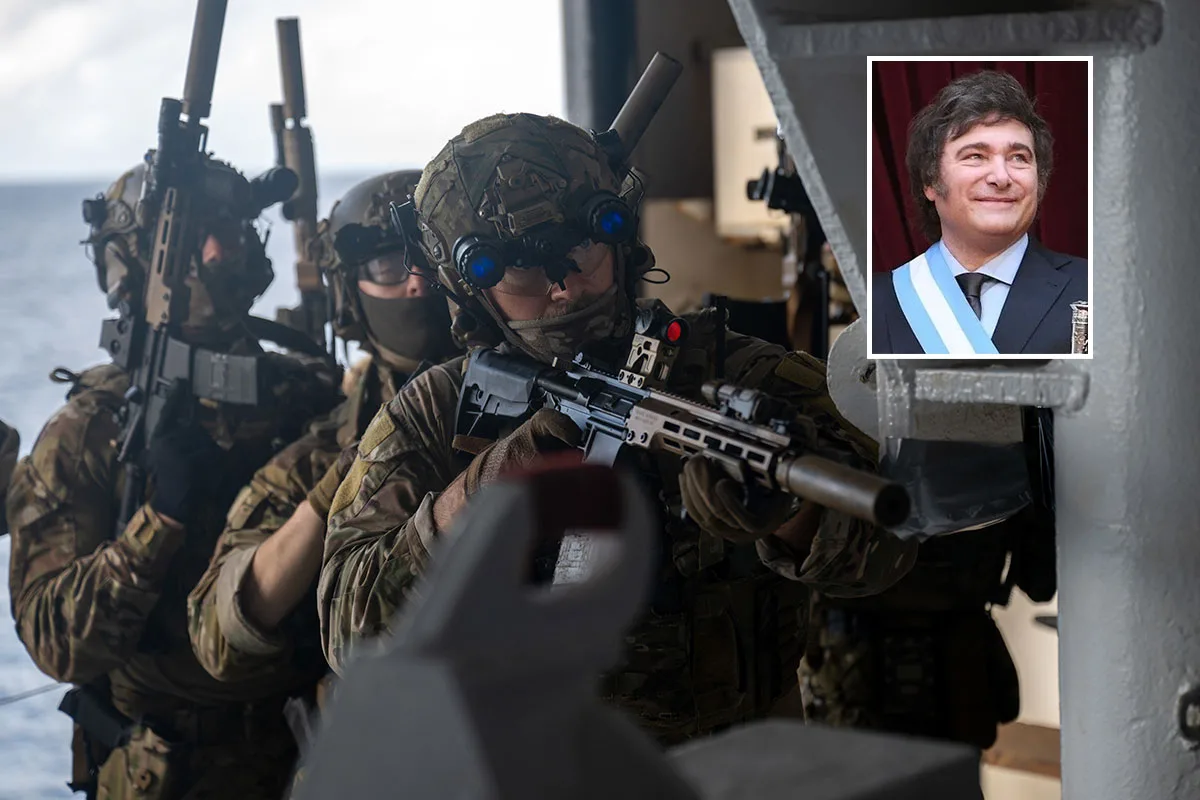

With the Decree of Necessity and Urgency 697/2025, the Argentine president Javier Milei has authorized the entry into Argentina of equipment and personnel from the United States Armed Forces for the joint exercise “Tridente”, bypassing the parliamentary process that the Constitution assigns to Congress.
This is not a technicality: it is a choice that sets a strategic direction for Argentina's defense policy, just as Milei reaps success in yesterday's midterm elections.
The (highly) operational profile of the ex. Tridente
The plan is clear and detailed. “Tridente” is scheduled from October 20 to November 15, 2025 at the naval bases of Mar del Plata, Ushuaia, and Puerto Belgrano, with activities at sea and on land in dedicated training areas. The heart of the operation is naval and special interoperability: together with the Armada Argentina, a core group of up to 30 operators from the US Naval Special Warfare — the division that includes the Navy SEALs — will train to refine amphibious insertions, special reconnaissance, boarding procedures, and combined command-control.
The exposure is highly realistic: austro-Patagonian logistics, severe weather, long stretches of cold coast, scenarios that require combining planning, readiness, and careful use of sensors and platforms.

The constitutional issue: why a Decree of Necessity and Urgency
The government claims that the project to authorize the entry of foreign troops had been “promptly” submitted to Congress, but not yet addressed. Hence the choice of the exceptional instrument of the DNU, justified by the “extraordinary nature” of the situation. On the opposite front, jurists and opposition denounce the bypassing of parliamentary control in a sensitive matter such as foreign military presence, reigniting an institutional dispute that goes far beyond the exercise.
On the military level, “Tridente” matters for three reasons.
First: rapid capability building. For the Argentine units (Amphibious Commandos and Tactical Divers), working with NSW means common standards, shared TTPs, risk management, and combined capability in complex maritime scenarios.
Second: posture signal. Deploying US units for training at three key Armada hubs indicates a willingness for operational alignment with Washington, projecting from the River Plate to the southern quadrants.
Third: political-strategic continuity. The DNU comes amid a bilateral rapprochement culminating in the visit to the White House in mid-October, a diplomatic piece that frames the exercise and places it within a more structured security relationship.

Training peak or structural shift?
The issue of costs and public perception remains. Figures reported by local outlets speak of a burden on Argentina (order of magnitude: tens of millions of pesos), while the government narrative highlights the “return” in terms of know-how, combined planning, and force readiness, including dual utility for humanitarian operations. The discussion, predictably, polarizes: “necessary cooperation without ceding sovereignty” for the Casa Rosada; “dangerous precedent” for part of civil society and the opposition.
The political context explains the timing. After the election day on October 26, Milei presents himself today as the winner of the midterms, with a result that expands his maneuvering capacity in Parliament.
In practice, this means more room to consolidate the Atlantic course of defense and to normalize — also at the regulatory level — exercises and operational cooperation with the United States. “Tridente”, therefore, is not an isolated episode: it is the first test of a season of military integration that will bring tangible benefits only if accompanied by coherent processes, budgets, maintenance, and training cycles.
Otherwise, it will remain a training peak without doctrinal sedimentation.

The language of the military, the bill of politics
Ultimately, the novelty is not that Argentina trains with the USA — it has been happening for decades — but how and when it does so today: by presidential decree, on three critical Armada bases, with some of the most experienced units in the global SOF landscape, and on the day a “freshly victorious” president claims a stronger mandate to rewrite the country's posture.
It is a choice that speaks the language of the military (interoperability, readiness, TTP), but whose impact will be measured in politics: in the halls of Congress, in defense budgets, and in upcoming exercises with joint flags.


Comments
No comments yet. Be the first!