


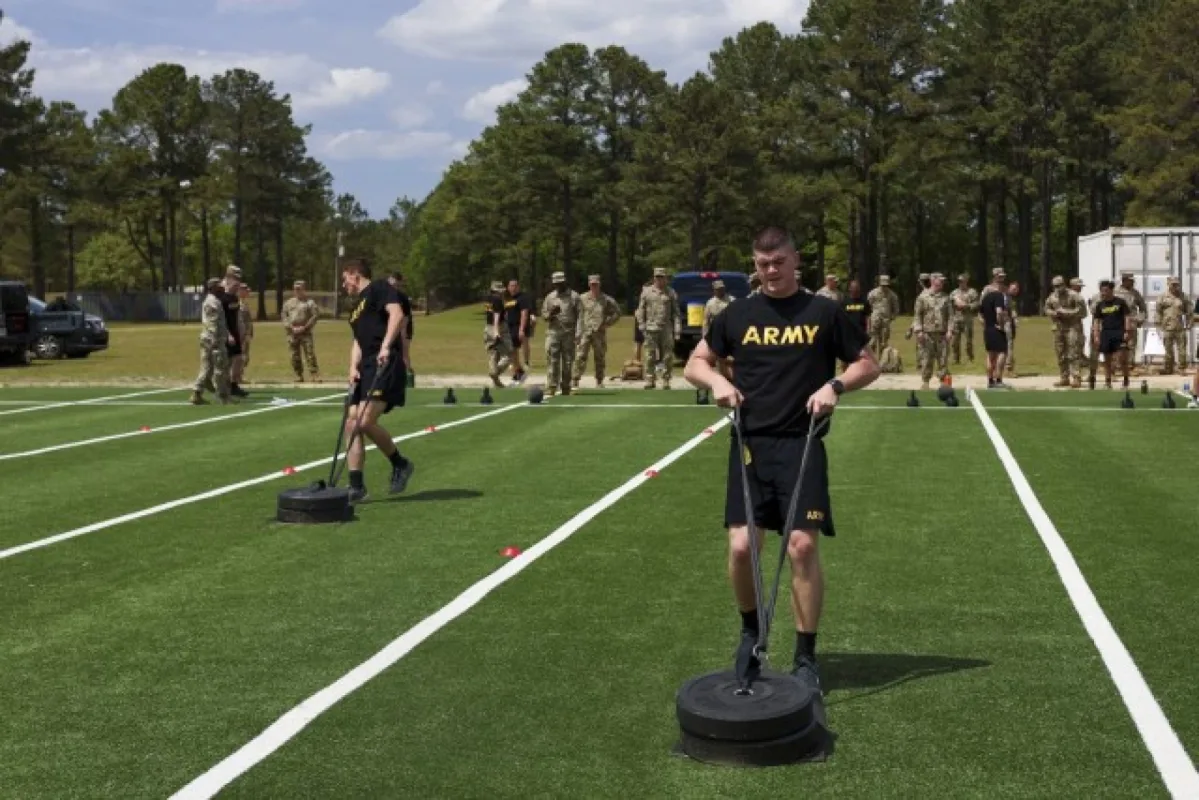

In the United States, the debate rages after the intervention of Secretary of War Pete Hegseth before the top military leaders. His words – described by some as “inappropriate” or “offensive” – have instead found praise from many veterans and lower-ranking military personnel. The explosive yet concrete topic concerns the standards of physical fitness and operational readiness of military cadres.
Defending the Secretary's position was Bob Krumm, a retired officer and military analyst, who in an article published on October 16 reminded of a truth often unspoken: war remains a young man's game.

Data from Iraq: The Weight of Poor Physical Fitness
During his missions in Iraq, Krumm was tasked with validating operational data on significant incidents (“SigActs”). Analyzing the reports, he discovered a disturbing fact: when combat losses decreased thanks to the “Surge” of 2007-2008, non-combat deaths began to surpass them.
Deaths from non-operational causes – heart attacks, strokes, and suicides – mainly affected officers and non-commissioned officers between 40 and 50 years old, often overweight and poorly trained. “The war in Iraq was not like World War II,” explains Krumm. “But even on bases, far from enemy fire, life in the operational zone remains tough, physically and mentally.”

Commanding a Reserve battalion, Krumm decided not to deploy any soldier unable to pass the Army Physical Fitness Test (APFT). “Better a reduced roster than an unprepared soldier dying under my command,” he states.
Many of his colleagues preferred to turn a blind eye rather than reduce the numbers in the roster. He, on the contrary, dismissed more soldiers for failing physical tests than the entire Army Reserve had expelled the previous year.
From the Old APFT to the ACFT: The Battle of Standards
In 2020, the Army introduced the Army Combat Fitness Test (ACFT), six tests inspired by real combat needs: sprint running, casualty drag, ammunition transport, throws, and lifts.
The test was created with a single minimum threshold, independent of age and gender, because – as Krumm observed – “bullets don’t discriminate”.

But criticism was not long in coming. Political groups and part of the military leadership argued that the single standard would penalize women and older military personnel. Today, the top leaders of the U.S. Armed Forces often exceed sixty years of age: an age that, in the times of Eisenhower and Bradley, was that of retirees, not field commanders.
Krumm recalls that in 1939 General George C. Marshall, who became Chief of Staff of the Army, initiated a “silent purge” of generals who were too old or physically unfit. When the war broke out, figures like Patton, Clark, or Bradley were under 50 years old.
Marshall knew that even for those who command, war requires mental readiness and physical vigor.
A Problem of Selectivity, Not Representation
For the author, the objection that the Armed Forces should reflect civilian demographics is flawed: the Army, by its nature, is a selective institution, not a representative one. Citizens with severe disabilities, convictions, or low IQ are already excluded.
“Selection is a necessity, not discrimination,” writes Krumm. “Minimum standards must be based on what is needed to survive on the battlefield, not to include more categories.”
To a general friend who warned him that he couldn’t say certain things in public, Krumm replied: “War is a young man’s game, and if you’re not young or not a man, it’s even tougher.”
A statement that is politically uncomfortable today, but which – according to him – remains a biological and military fact.
In his intervention, Secretary Hegseth seems to have relaunched precisely this idea: that the armed force cannot bend to political correctness when survival depends on endurance, speed, and physical readiness.
“War – concludes Krumm – is truly a young man’s game. And if you’re not young, or not a man, it’s even tougher. But it’s right that someone says it out loud.”
The Parallel with the Italian Army
The American debate also finds an echo in Italy. Despite different contexts, the Italian Army has always maintained a very high focus on the physical and mental preparation of personnel, especially in elite units.
In the paratroopers of the “Folgore” Brigade, in the “Serenissima” Lagunari, in the Alpini Paratroopers or in the raider units of the 9th Col Moschin, physical fitness is not a formality but a survival criterion. The training – from weighted marches to tactical jumps, from combat courses to psychophysical endurance tests – leaves no room for leniency.

Even for commanders, physical example remains part of leadership: being the first to run, jump, endure is an ethical duty before being operational.
In recent years, with the introduction of operational efficiency tests (TEO) and the emphasis on “combat readiness”, the Army has confirmed that there is no effective command without a trained body.
Not surprisingly, Italian leaders have also expressed concern about the average age of personnel. Defense Minister Guido Crosetto has emphasized that “the service we will create in the coming years can no longer afford an average age of 49 years for non-commissioned officers or 47 for graduates,” reminding that physical readiness is an integral part of operational efficiency.
In the same vein, the Chief of Staff of the Army, General Carmine Masiello, stated during the 163rd anniversary of the Armed Force: “Our Army can no longer afford an average age of 49 years or 47 for non-commissioned officers. Being a soldier is different from any other job.”

The words of Crosetto and Masiello, along with the appeals of General Luciano Portolano for a gradual but decisive generational change, reaffirm a concept already clear to operational units: physical strength and mental readiness are not an administrative detail, but the very essence of the military profession.
As Krumm warned, and as Italian leaders confirm today, war remains a young man’s game — and the Army must prepare to win it with ready, strong, and fully efficient soldiers.




Comments
No comments yet. Be the first!