


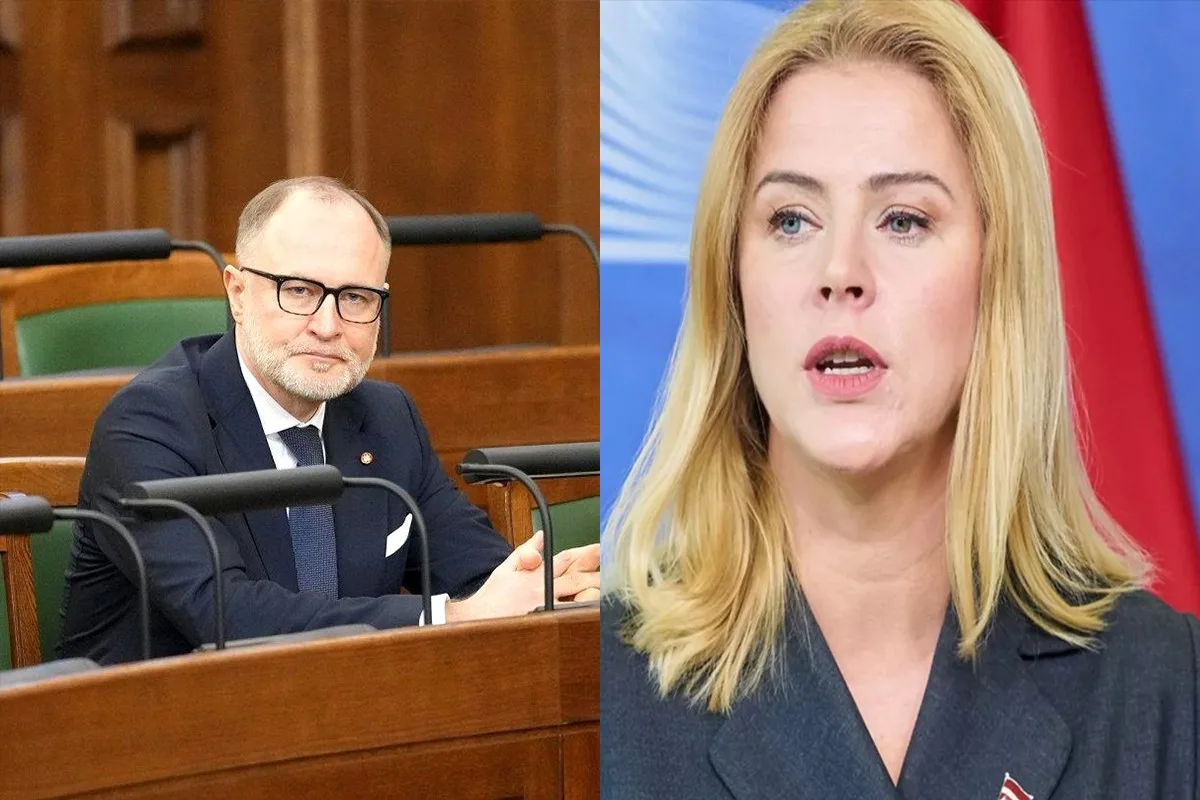

The resignation of Latvian Defense Minister Andris Sprūds turns a drone incident into a political and strategic case. Riga sends a clear message to citizens, NATO, and adversaries: the security of the skies is non-negotiable. The meaning is simple and powerful: those who make mistakes pay.
The Drone Incident and Political Crisis
The resignation of Latvian Defense Minister Andris Sprūds is not just the conclusion of a crisis related to drone incidents in national airspace. It is also a strong political signal: in a NATO country bordering Russia and Belarus, the protection of airspace is a direct responsibility of the government.

Sprūds announced his resignation after receiving criticism for handling incidents involving foreign drones in Latvia. Prime Minister Evika Siliņa had asked him to step down, arguing that what happened demonstrated the political leadership's inability to ensure “safe skies” over the country.
The case had a strong internal impact because it concerns not only military security but also the public perception of the state's ability to protect infrastructure, borders, and citizens. At a time when drones have become one of the main tools of modern warfare, every airspace violation takes on immediate political significance.
Sprūds' Stance: Defending the Army from Political Campaigns
In his public message, Sprūds explained that he chose to resign to prevent the Latvian Armed Forces from being dragged into a political campaign. The minister acknowledged that drone incidents in Latvia and other countries represent a real threat, emphasizing that “foreign drones should not threaten the security of our people”.
Sprūds claimed the work done by the Ministry of Defense to strengthen the country's capabilities, particularly in the field of air defense. He recalled that Latvia has already improved its military capabilities, while admitting that there is still much work to be done.
At the same time, the former minister denounced the risk that the affair could be used not only to attack him or his party but also to question the readiness of the ministry, the Armed Forces, and Latvian soldiers. This is the most delicate issue: distinguishing political responsibility from attacks on the credibility of the military apparatus.

The STRATCOM Message: Those Who Make Mistakes Pay
The affair takes on a textbook value of strategic communication, or STRATCOM. Riga sends a message to three different recipients.
To Latvian citizens, it says that the state recognizes the seriousness of the incidents and identifies political responsibility. To NATO allies it communicates that Latvia takes the protection of its airspace seriously and demands concrete results from those leading Defense. To hostile actors, starting with Moscow, it signals that democracies can be vulnerable, but they do not remain idle in the face of mistakes.
The central point is that, in a context of hybrid warfare, drones, provocations, and threats to the eastern borders of the Alliance, security is not just a technical issue. It is also a matter of trust, credibility, and deterrence.
Prime Minister Siliņa recalled that Defense has been allocated the highest funding in Latvian history, amounting to nearly 5 percent of GDP. Precisely for this reason, according to the government's line, exceptional resources must correspond to visible results.
The final message is clear: it is not enough to increase military budgets, announce new capabilities, or promise future reinforcements. In a phase of permanent threat, rapid responses, efficient decision-making chains, and clear responsibilities are needed.
Sprūds' resignation thus sets a political precedent: in the face of a perceived failure to protect national skies, responsibility reaches the top. For Riga, the Stratcom message is unequivocal: those who make mistakes pay.




Comments
No comments yet. Be the first!