




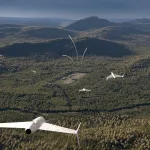
These trials are just a first step towards validating a system that could revolutionize air combat methods, reducing risk for pilots and enhancing the offensive capability of the armed forces. The YFQ-44A, in particular, is set to fly this summer, while the YFQ-42A by GA-ASI is undergoing tests to prepare for flight in 2025. This program aims to reduce risks for pilots and operate in high-threat scenarios where the presence of semi-autonomous drones alongside manned aircraft can ensure a crucial tactical advantage.
The Operational Strategy and Implications of the CCA
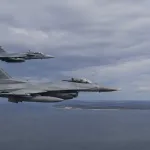
The main objective of the CCA is to enhance manned aircraft like the F-22 Raptor, the F-35 Lightning II, and, in the future, the Next Generation Air Dominance (NGAD), by combining manned and unmanned aircraft in a system called Manned-Unmanned Teaming (MUM-T). These autonomous aircraft will not only support existing fighters but also offer range extensions, improved survivability in high-threat scenarios, and the ability to fight with greater mass but at lower costs. Furthermore, the integration of these drones into operations will have a fundamental impact on defense economics, allowing for greater deployment without the need to proportionally increase the number of manned aircraft.

The program has also garnered significant interest due to the innovative approach adopted by the Air Force: the use of open architectures and commercial technologies to facilitate rapid integration and regular system updates. This approach allows the aircraft to be adaptable to future challenges, while ensuring competitive scalability to address constantly evolving threats. As stated by General David W. Allvin, Chief of Staff of the USAF, “The pace of innovation must outpace that of the threat.” The ability to quickly integrate and evolve in response to new needs is thus a key element of this initiative.
The Next Steps and the Future of the CCA
Awaiting the flight tests scheduled for 2025, the US Air Force has selected Beale Air Force Base in California as the preferred site for the creation of the first CCA Aircraft Readiness Unit (ARU). This unit will be responsible for maintaining the aircraft in operational condition with the minimum number of daily operations. Since the drones will be semi-autonomous, the personnel required to manage them will be significantly lower compared to traditional manned aircraft squadrons, thus optimizing operational efficiency.

The CCA program is expected to accelerate in 2026, with the goal of making a production decision for the first phase (Increment 1) and planning a second phase (Increment 2) that will lead to an even more advanced version of the aircraft. In addition to the prototypes already being tested, the USAF aims to continue developing innovative solutions for in-flight refueling and other specialized missions, as well as optimizing the command and control of UAV aircraft. The deployment of autonomous platforms is no longer a distant prospect, but an element becoming an integral part of modern military strategies, not only in the United States but also in Europe, where similar capabilities are being developed.
In conclusion, the Air Force's CCA program represents one of the most promising initiatives for the future of air forces. The combination of manned and unmanned aircraft is redefining operational paradigms in a strategic context that sees a growing technological and geopolitical threat. With tests proceeding as planned and the approval of innovative solutions, the USAF is ready to deploy a new generation of air fighters, which, although unmanned, could play a crucial role in future wars.


Comments
No comments yet. Be the first!