


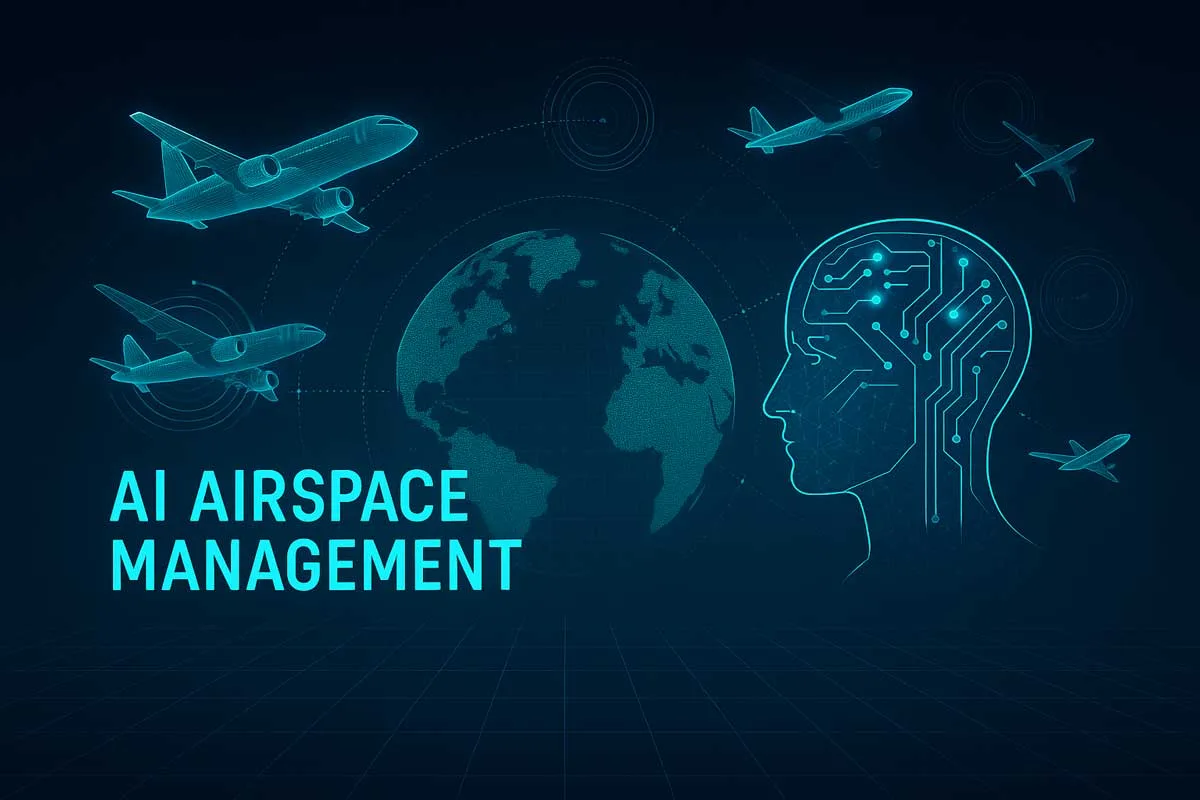

The United States Army is accelerating the integration of artificial intelligence (AI) and machine learning (ML) to tackle one of the most complex challenges of the modern battlefield: managing an increasingly crowded and complex airspace. This is according to a Request for Information (RFI) published by the Program Executive Office of Intelligence, Electronic Warfare and Sensors (PEO IEW&S), as part of the Next Generation Command and Control (NGC2) program.
Too many aircraft, too many variables: AI steps in
The increasing proliferation of unmanned aerial systems (UAS), kamikaze drones (loitering munitions), helicopters, and conventional aircraft has put pressure on traditional airspace management systems. “The pace, scale, and complexity of today's operations require smarter solutions,” reads the RFI.
The program's goal is twofold:
- Short term: to have immediately usable capabilities (“fight tonight”) based on existing technologies;
- Long term: to develop a scalable and adaptive vision for dynamic airspace management, supporting the entire NGC2 ecosystem.
Required solutions: from real-time detection to predictive optimization
Among the AI/ML capabilities the US Army intends to experiment with:
- Real-time conflict detection and resolution
- Automated integration of UAS and loitering munitions
- Predictive analysis for optimal airspace allocation
- Anti-jamming and electronic management systems
- Low environmental impact solutions
All these functionalities aim to reduce the cognitive load on commanders, improve situational awareness, and enable rapid and accurate decisions in dynamic environments.
MVP by November: exercise with the 25th Division
Interested companies must respond to the notice by August 29 and present minimum viable products (MVP) ready to be field-tested by November 2025, during the Joint Pacific Multinational Readiness Center exercise with the 25th Infantry Division.
The 25th ID thus joins the 4th Infantry Division, already identified as the main experimental unit of the NGC2 program, which aims to unify intelligence, command and control, and weapon systems into a single integrated ecosystem.
A “team of teams” for the NGC2
The US Army has already started the project by awarding the first OTA (Other Transaction Authority) to Team Anduril, which includes leading companies such as:
- Anduril
- Palantir
- Striveworks
- Govini
- Microsoft
- Research Innovations Inc.
- Instant Connect Enterprise
However, there will not be a single main contractor. The project will be developed through a “team of teams” structure, as confirmed by Mark Kitz, former head of PEO C3N, now at Anduril.
Reflections for Italy and Europe
The NGC2 initiative and the integration of artificial intelligence in air command and control anticipate trends that will inevitably involve NATO partners as well. Italy, already engaged in the development of C4ISR capabilities and international strategic cooperation, can draw valuable insights from US advancements to accelerate the evolution of its integrated defense systems.
In 2021, the Ministry of Defense allocated approximately 190 million euros for the development of AI technologies in the military field, with a time horizon until 2035. Artificial intelligence is conceived as a multiplier of operational effectiveness, thanks to the use of advanced sensors, automation, data fusion, and decision support, while keeping the human factor at the center of the process (“human in the loop”).
In this context, the Italian Army has adopted SitaWare Headquarters, a next-generation C4ISR platform that enables a common operational picture shared among various command levels. The system is fully interoperable with NATO architectures and allows digital management of orders, operational planning, and field surveillance activities.
Sources:
https://breakingdefense.com/2025/07/army-seeks-ai-ml-tools-to-tame-crowded-airspace-under-ngc2-push



Comments
No comments yet. Be the first!