


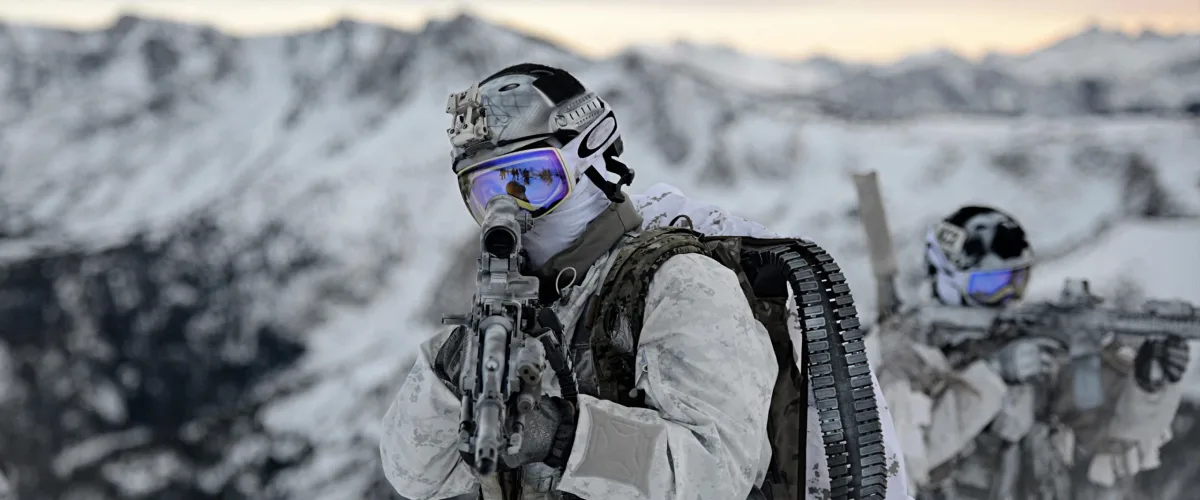

The Special Operations Forces (SOF) have been the most flexible weapon available to the United States for decades. Created to operate in high-risk missions, often in hostile or politically sensitive territories, these units combine unique military, linguistic, and cultural capabilities. Since 1986, with the law that established the Special Operations Command (USSOCOM) in Tampa, the SOF have become a central force in American defense. Today they number about 70,000 men and women among military and civilian personnel, with tasks ranging from training allied forces to counterterrorism.
A Complex and Joint Machine
The structure of the American Special Forces is a mosaic of commands and specialized units.
- The Theater Special Operations Commands (TSOC) are present in every strategic area of the planet, from Europe to the Pacific, and provide support to regional commands.
- The Joint Special Operations Command (JSOC), based in North Carolina, leads the most confidential missions.
- The four major joint commands embody the essence of the SOF: the Green Berets and the Rangers of the Army, the special aviation of the AFSOC, the famous Navy SEALs, and the Marine Raiders.
The SOF are not just about spectacular actions. Alongside direct operations – targeted raids, hostage rescues, reconnaissance in sensitive areas – there is a whole less visible world. This ranges from training foreign security forces (Foreign Internal Defense) to unconventional warfare, from information operations (MISO) to countering weapons of mass destruction. Even humanitarian interventions in crisis contexts fall within their mandate. A versatility that makes them an indispensable asset for American foreign and defense policy.

The Tug of War Over Cuts
Despite this central role, the Army has announced its intention to reduce the Special Forces personnel by about 3,000 units. The reason? The recruitment crisis and the need to rebalance the overall force to face challenges like China and Russia.
However, Congress has opposed this. In 2024, it included a clause in the defense budget law (NDAA) that blocks the cuts at least until 2026. According to several representatives, downsizing the SOF while operational demands are increasing would be a strategic mistake. The Department of Defense, on the other hand, insists on the need for greater flexibility.
Also on the table is the future of the Davis-Monthan (Arizona) base, intended to host a new Power Projection Wing of the Air Force. The idea is to transform the 492nd Special Operations Wing into a unit capable of handling all typical SOF air missions: strike, mobility, intelligence, and integrated ground support.
The plan, revised in 2025, includes the arrival of OA-1K Armed Overwatch aircraft, CV-22 Osprey tiltrotors, and a new intelligence unit. An ambitious but costly transformation that Congress will closely monitor to assess timing, environmental impacts, and infrastructure expenses.
A Look to the Future
The American Special Forces are at a crossroads: on one hand, the need to maintain an operational advantage in increasingly complex global scenarios, on the other, budget pressures and the recruitment crisis. Congress will have to decide how to balance these priorities, aware that much of the United States' military and diplomatic credibility passes through the SOF.


Comments
No comments yet. Be the first!