


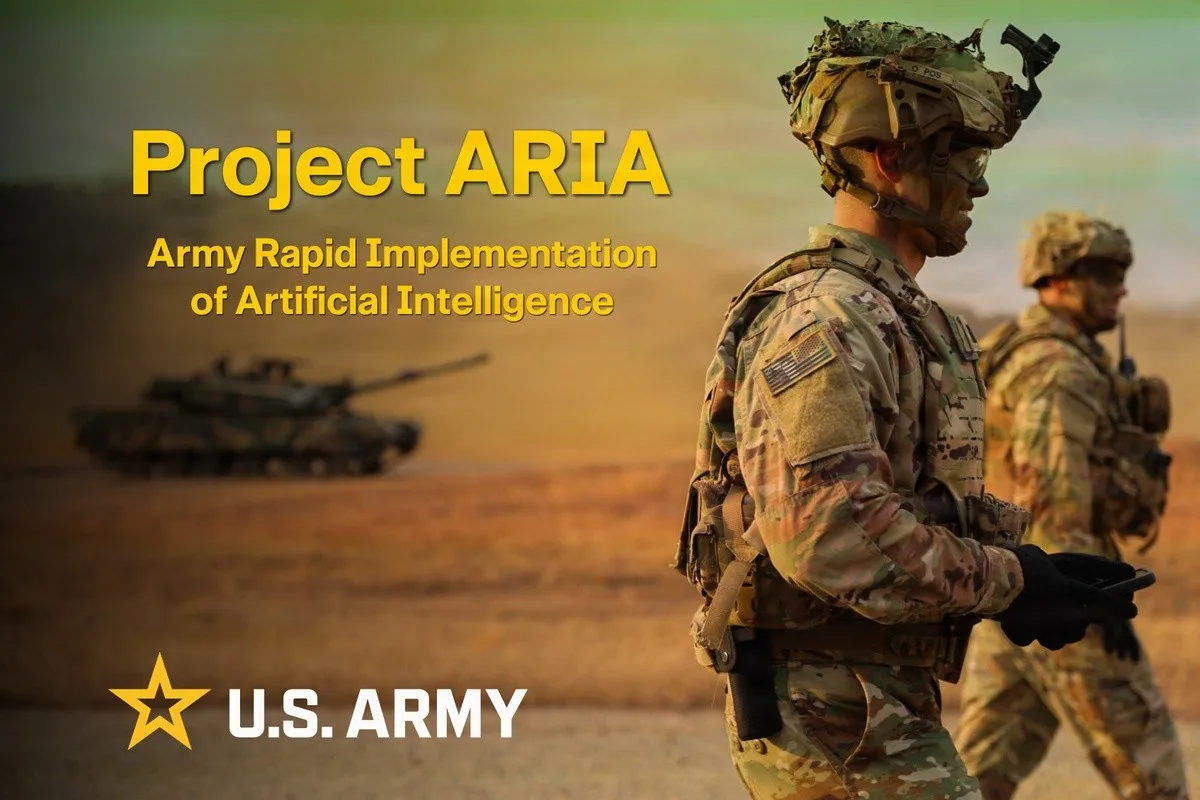

WASHINGTON – In a decisive step towards military and administrative modernization, the U.S. Army announced on March 5, 2026, the launch of the Project ARIA (Army Rapid Implementation of Artificial Intelligence). The initiative aims to integrate artificial intelligence into daily operations, radically transforming the way soldiers operate, plan, and manage resources.
According to the Deputy Under Secretary of the Army, David R. Fitzgerald, ARIA is not just an experiment, but the cornerstone of a new era:
"With Project ARIA, we are building the army of tomorrow, today. By collaborating with the brightest minds in the tech sector, we rapidly implement intelligent tools to optimize operations and ensure operational readiness against any challenge."
Three Teams for Three Strategic Solutions
The project was born from the results of a simulated tactical exercise (wargame) held on September 16, 2025, initiated by the Secretary of the Army Daniel P. Driscoll. From that meeting between military leaders and AI experts, three specialized task forces emerged, each focused on a critical pillar:
1. Team Gray: Bureaucratic Automation
The focus is on PPBE (Planning, Programming, Budgeting, and Execution) processes. Often slowed down by complex bureaucracy, these processes will be automated by AI tools that allow military leaders to make real-time data-driven decisions, freeing soldiers and civilians from administrative burdens to return them to their primary operational functions.
2. Team Black: The Commanders' Decision Arsenal
The "Model Arsenal" is conceived as a decision support system operating from large data centers to the front tactical line. Through on-demand queries, soldiers can obtain personalized and ready-to-use AI functions, optimized even for hostile environments where connectivity is limited.
3. Team Yellowstone: Predictive Logistics
Initially operating at the Anniston Army Depot, this team uses AI agents to revolutionize supply chain management. The system can predict necessary maintenance even before a failure occurs, ensuring constant availability of spare parts and drastically reducing vehicle downtime.
A Paradigm Shift: Months, Not Years
Project ARIA marks a definitive break with the long traditional defense development cycles. The underlying philosophy is agility: thanks to direct partnerships with leading tech companies, the army aims to deliver concrete solutions in months instead of years.
| Objective | Impact of Project ARIA |
| Operational Efficiency | Automation of repetitive and complex processes. |
| Readiness | Predictive maintenance for always ready-to-use vehicles. |
| Quality of Life | Reduction of bureaucratic burden for personnel. |
| Innovation | Agile collaboration with the private industry. |
Conclusions
Beyond tactical advantages, Project ARIA sends a clear signal to the tech industry: the U.S. Army is ready to collaborate and adopt the best civilian practices to maintain its competitive edge.
"We are breaking down barriers," concluded Fitzgerald. "Together, we are building a smarter, faster, and more capable army than ever, putting the best possible tools in the hands of those who must accomplish the mission."




Comments (1)