


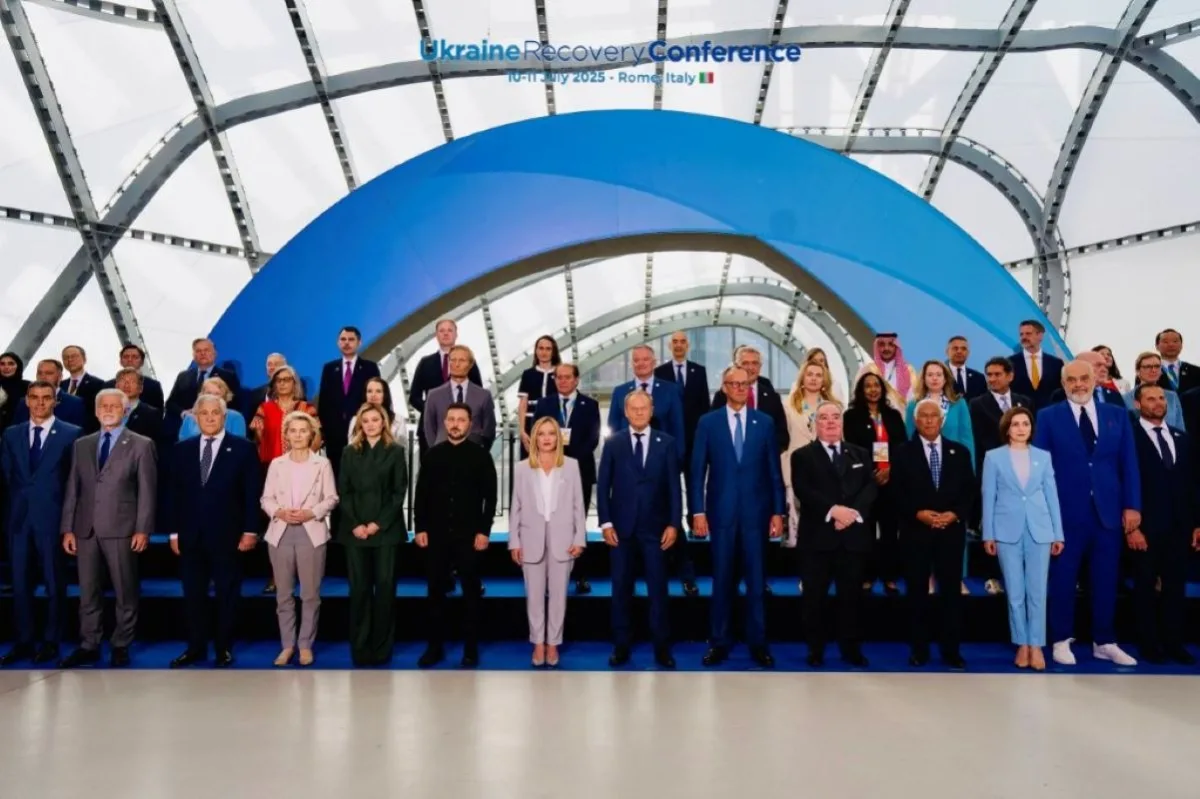

The Ukraine Recovery Conference (URC 2025), held in Rome on July 10 and 11, confirmed Italy's growing role in the multilateral process of rebuilding Ukraine. The fourth meeting after Lugano (2022), London (2023), and Berlin (2024), the Roman conference consolidated the European commitment on four fundamental directions: attraction of private investments, reintegration of displaced citizens, involvement of local authorities, and structural reforms for Kiev's EU membership.
In Rome, 100 delegations, 15 Heads of State and Government, 40 international organizations, 40 ministers, and over 8,300 accredited participants gathered, with a parallel Recovery Forum that allowed businesses and financial institutions to directly engage with the Ukrainian government. Italy emerged as the absolute protagonist, signing 40 agreements worth over 10 billion euros, many of which are linked to the reconstruction of Odessa, a symbolic city of the Black Sea.
Odessa was officially entrusted to Italy as part of the “international patronage” mechanism, with projects aimed at rebuilding cultural heritage, including the Cathedral of the Transfiguration, the Philharmonic, and the Fine Arts Museum. But Italy's commitment is not limited to culture. A strategic agreement was signed between Deputy Minister Rixi and the Ukrainian counterpart Alona Shkrum for the modernization and infrastructure development of Ukrainian ports, particularly in Odessa, a key hub for energy, telecommunications, and trade.
Defense, security, and Italian companies: technology and cooperation for Ukrainian resilience
The crucial role of the Defense and Security sector was also at the center of the conference. Enzo Benigni, president of Elt Group and deputy vice president of AIAD, clarified that the goal is not to “sell” but to build structured collaborations in the long term, highlighting a previously unthinkable European political will. Industrial cooperation between Europe and Ukraine, he stated, is a geopolitical necessity that must be supported by a removal of regulatory obstacles and an acceleration in the supply of strategic goods.
At the forefront is Leonardo, which, together with ENAV and UkSATSE, signed a Memorandum of Cooperation for the restoration of the Ukrainian air traffic control network. CEO Roberto Cingolani announced the donation of 5 civilian radars and reiterated that the plan will continue in coordination with European partners. Leonardo has also initiated a collaboration with the Turkish Baykar for the production of drones in Italy, but categorically denied the possibility of a factory in Ukraine.
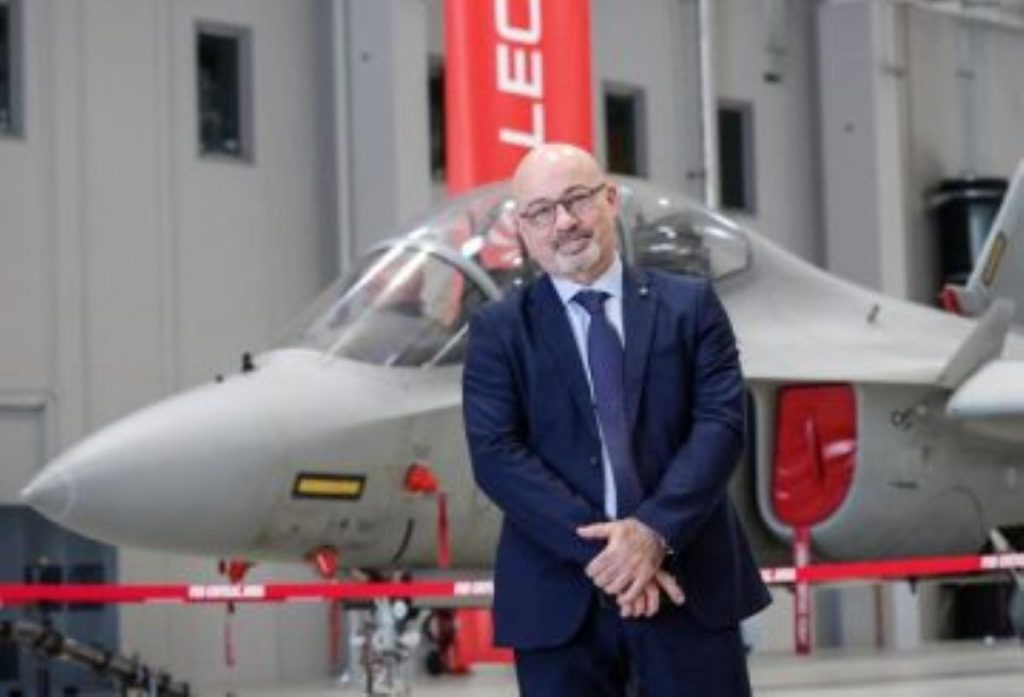
Leonardo also offers contributions in the field of cybersecurity, satellite observation, and AI applied to critical infrastructure control. Cingolani also opened to collaboration with Rheinmetall on tanks, in a coordinated framework of military support to Ukraine.
Also Fincantieri, represented by CEO Pierroberto Folgiero, has advanced an innovative vision of maritime security: underwater drones, sonar, and radars integrated into a modular system to be tested right in Odessa, to protect energy and port infrastructures. The goal is to create a “security bubble” of 25 km, symbolizing Italy's ability to combine technology, strategic vision, and industrial responsibility.
Humanitarian reconstruction: health, children, and veterans
Completing the picture of Italy's commitment is the action on the humanitarian and health front, with the Defense Industries Agency (AID) at the forefront. As explained by director Fiammetta Salmoni, Italy, through the Florence Chemical Pharmaceutical Plant, will provide incubators, diagnostic equipment, neonatal intensive care devices, and medical training, in collaboration with the Ministry of Foreign Affairs and the Agency for Development Cooperation.
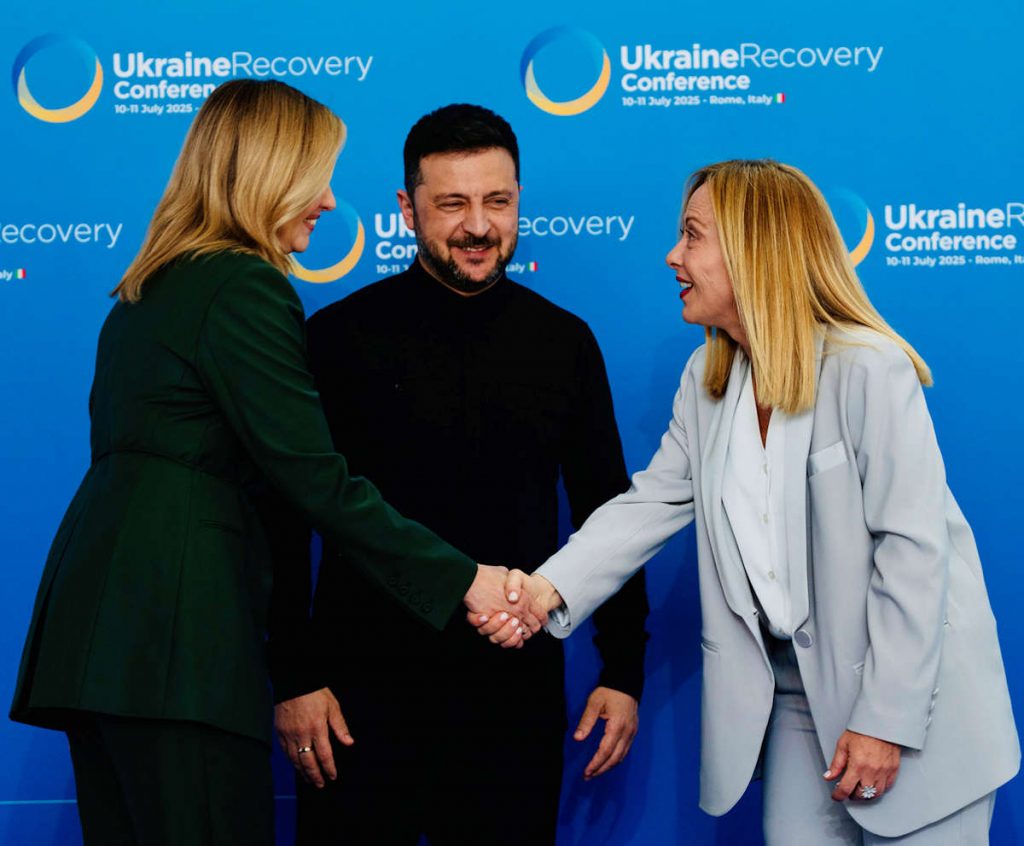
These interventions will have a direct impact on over 400,000 children and adolescents, including 50,000 displaced minors, in the Odessa oblast, contributing to the reconstruction of the social fabric. The conference also launched a path of wider medical cooperation, including the supply of orphan drugs for rare diseases and psychological support for children and war veterans, in synergy with the Lisova Polyana center.
In the context of an ongoing war and with damages estimated at over 200 billion dollars, Italy has taken a leading role, affirming the principle that security also involves health, education, and culture. The World Bank estimates a need of over 500 billion for reconstruction, requiring a coordinated multilateral effort, in which Italy proposes itself as a stable and credible partner.
The Rome Conference confirmed that rebuilding Ukraine does not only mean repairing what has been destroyed, but designing a shared European future, based on security, sustainable development, and social cohesion. Italy, with its defense industry, entrepreneurial system, and human capital, has shown it is ready to face this challenge, building a strategic bridge between the West and Ukraine, between solidarity and opportunity.



Comments
No comments yet. Be the first!