


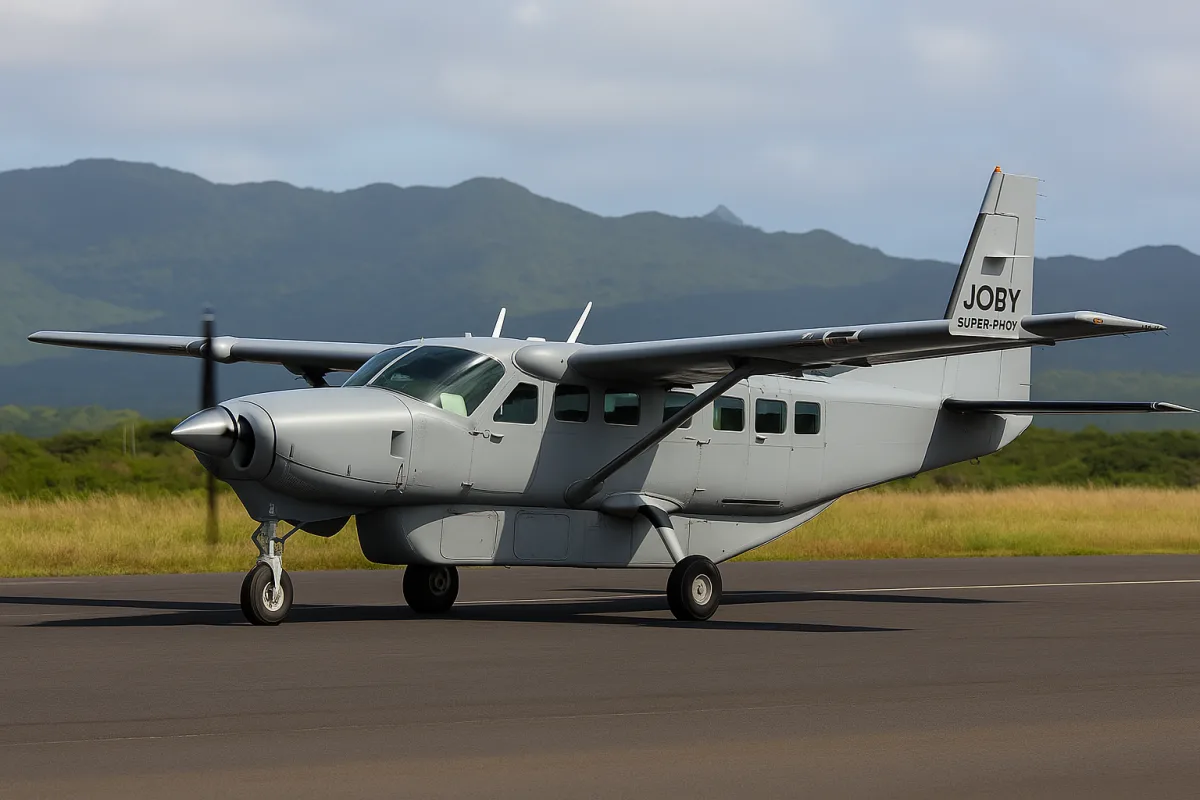

The United States Air Force has taken a decisive step towards the future of military logistics with the introduction of the first unmanned cargo flights in the Pacific. During the impressive exercise Resolute Force Pacific (REFORPAC), held this summer between Hawaii, Guam, Japan, and other strategic locations, the Air Force tested autonomous cargo aircraft for the first time in a complex operational context, simulating realistic conflict scenarios with China.
The Experimental Flights
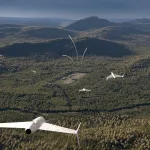
The protagonist of the experimentation was a Cessna 208B Grand Caravan equipped with the Superpilot software developed by Joby Aviation. The aircraft made connections between various Hawaiian islands, while remote control was managed from Guam, nearly 4,000 miles away. Although a safety pilot was on board, no manual intervention was necessary: the system operated fully autonomously.
This represents the first application of the technology in the Indo-Pacific theater, where the flights were subjected to real challenges such as long distances, dynamic routes, variable weather conditions, and interaction with allied forces.

A New Logistic Paradigm
The core of the initiative fits into the concept of Agile Combat Employment (ACE), aimed at ensuring mobility, resilience, and survivability of air forces in contested scenarios. In particular, small autonomous aircraft can ease the load on large transport planes like the C-17 and C-130, used for long-range strategic missions.
Creating a network of autonomous cargo planes would mean establishing a distributed, resilient, and less predictable logistics, capable of supplying austere bases and forward positions more rapidly, while simultaneously reducing risks for pilots and freeing up human resources for higher-priority tasks.
Technologies and Future Prospects
The Air Force is already expanding tests with more industrial partners. Last year, it signed a $17.4 million contract with Reliable Robotics to introduce an unmanned C-208 for logistical missions in the Pacific. In parallel, AFWERX, the Air Force's innovation agency, is collaborating with Joby Aviation in developing autonomous and electric systems, and with L3Harris to create hybrid turbine VTOL aircraft, capable of operating both manned and unmanned.
According to Lieutenant Colonel Jonathan Gilbert of AFWERX, REFORPAC represented “a realistic testing ground to assess the potential of new autonomous technologies and gather crucial data for their future development.”
Conclusions
With REFORPAC, the Air Force has demonstrated that the use of autonomous cargo planes is no longer a distant prospect, but a concrete solution to tackle the logistical challenges of the Pacific. The evolution of these capabilities, combined with increasing investments in autonomous systems, promises to radically transform the way the United States and its allies will manage military operations in contested and long-distance scenarios.


Comments
No comments yet. Be the first!