



In the negotiation to stop the war, one of the most delicate points concerns the external security guarantees: who will defend Ukraine if Russia attacks again in the future. In recent weeks in Kyiv, the idea has grown that some Western promises may be less solid than expected. For Ukrainians, it is a sensitive issue also for historical reasons: in 1994, with the Budapest Memorandum, Ukraine gave up the nuclear weapons inherited from the USSR in exchange for political assurances on its own sovereignty, which later proved insufficient. Today, the Ukrainian leadership wants to avoid a new deja-vu: working for stronger Western guarantees, but also building security that does not depend solely on others.
What is the porcupine strategy
Hence the choice to focus on an autonomous conventional deterrence, summarized in the idea of the porcupine strategy. The concept is simple: make Ukraine an indigestible target. It's not about being invincible, but about being too costly to invade. The goal is to deny the adversary a quick victory, imposing losses and logistical problems from the start, and maintaining over time a capacity for resistance and response. In this way, a new aggression would become long, risky, and politically difficult to sustain.

The pillars: reform, technology, deep strikes, industry
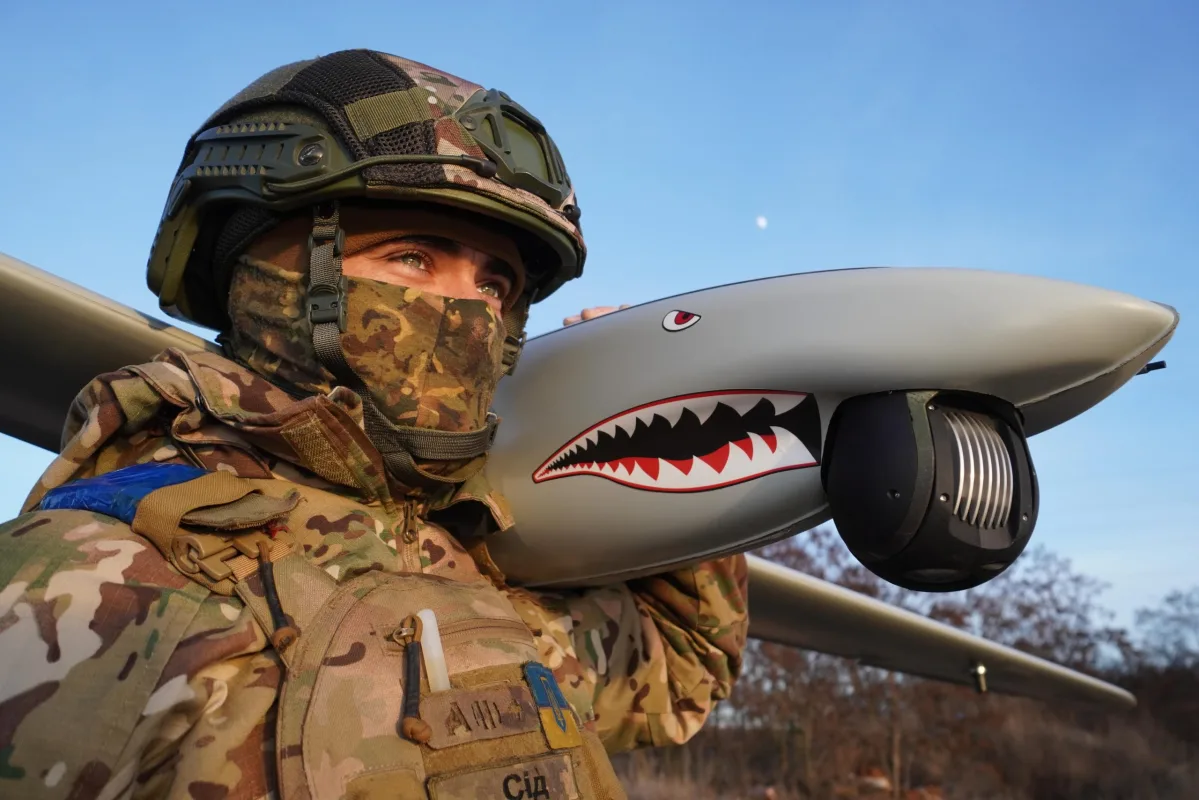
The first pillar is the reform of the military instrument, designed to transform the army into a stable and sustainable force in the post-war period. Kyiv aims not only to maintain large numbers but to reorganize training, command, and management, strengthening non-commissioned officers and junior officers, making decision chains more efficient, and digitizing force management processes. The second pillar is technological modernization, centered on drones, electronic warfare, and digital integration: a national ecosystem of unmanned platforms, connected to sensor networks and distributed command and control systems, capable of striking with precision and disrupting the adversary. The third pillar is the ability to strike in depth, that is, to reach military, logistical, and energy targets far from the front with long-range drones and missiles, thus increasing the immediate costs of any new offensive. Finally, the fourth pillar is the defense industry: a stable, protected, and multi-year funded supply chain, increasingly integrated with European programs, to ensure serial production, continuous supplies, and resilience.
In summary, the Ukrainian “porcupine” stems from the idea that external guarantees, however important, are not enough if they do not rest on a credible internal force. Military reform, technological innovation, long-range response capability, and industrial robustness are the “quills” with which Kyiv tries to deter future aggression and make its own security more solid over time.






Comments
No comments yet. Be the first!