


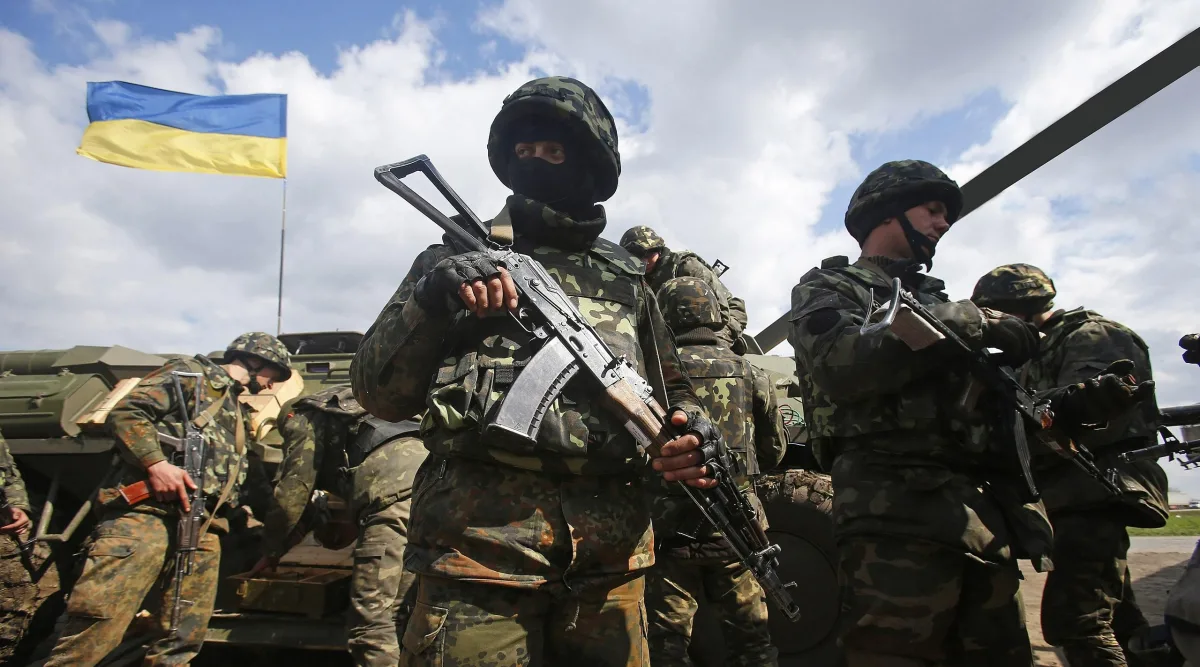

The Ukrainian advances in the Dnipropetrovsk oblast are putting increasing pressure on the Russian forces in the sectors of Oleksandrivka and Hulyaipole, with effects that go beyond the mere territorial data. From the end of January until March 10, 2026, Kyiv's forces are said to have liberated over 400 square kilometers in two separate directions, forcing Moscow to progressively slow down its offensive operations.
In recent days, according to Ukrainian military analyst Kostyantyn Mashovets, Ukrainian troops have made further tactical penetrations: they have entered Sichneve, reached the eastern outskirts of Voskresenska, advanced towards Novoivanivka, entered the southeastern sector of Novomykolaivka, and captured Rybne. The same assessments also indicate the probable liberation of Sichneve and Vorone.
In the sector east of the Vovcha river, elements of the 39th Russian Motorized Rifle Brigade may be forced to retreat towards the Voskresenka-Maliivka line to withstand the impact of the Ukrainian counteroffensives. Another significant element is the Ukrainian approach to the Hulyaipole-Velyka Novosilka road: although they have not yet crossed it, Kyiv is said to have reached about two kilometers from the road axis, making its logistical use more complex for Russian forces.

The Russian Offensive Machine Slows Down and Consumes Reserves
The most important signal that has emerged in recent weeks is the change in the Russian posture in the Oleksandrivka sector. According to Mashovets, Moscow's forces have abandoned the offensive priority to switch to an active defense, with the aim of containing the Ukrainian initiative. This element coincides with the slowdown in the pace of Russian ground operations observed in the area.
Also northwest of Hulyaipole, Ukrainian forces are maintaining pressure. Kyiv's units are said to have reached the eastern outskirts of Hirke, the western outskirts of Staroukrainka, while several assault groups have entered Svyatopetrivka. The units of the 5th Russian Combined Arms Army, engaged in that area, have not been able to fully restore the tactical situation prior to the Ukrainian counteroffensives.
While continuing to maintain a certain level of offensive activity, the Russians are advancing very slowly: the estimated pace has reduced to less than 1.2-1.5 kilometers per week west of Hulyaipole. If the Ukrainian pressure continues, the rear of the Russian forces engaged in the sector could become more vulnerable, forcing the command of the Eastern Forces Group to shift focus from the offensive push to the need to defend the threatened areas.
In parallel, the Ukrainian counteroffensives are pushing Moscow to redeploy men and equipment from other sections of the front and, in all likelihood, also from the operational reserves. Movements of elements of the 40th Naval Infantry Brigade and the 120th Naval Infantry Division towards the sectors of Oleksandrivka and Hulyaipole have been reported. Even more indicative is the possible reappearance of the 656th Motorized Rifle Regiment, a unit that had not been observed in the field since August 2025 and may have been kept in reserve for future offensives.
The operational significance of these signals is clear: the Ukrainian pressure in Dnipropetrovsk risks forcing Russia to choose between defending the threatened areas and allocating resources for new offensive operations elsewhere. In this sense, the Ukrainian counteroffensives could compromise or at least slow down the preparation of the planned Russian offensive in the spring-summer of 2026.

No Diplomatic Opening, While Moscow Stiffens the Internal Front
On the political-diplomatic front, the Kremlin continues to maintain a very rigid line. Foreign Minister Sergej Lavrov reiterated that Moscow is not willing to end the war even if Ukraine accepted the so-called “realities on the ground” and fully ceded the Donbas. Lavrov also described the democratically elected Ukrainian government as one of the “root causes” of the conflict and described potential European peacekeeping contingents in territory controlled by Kyiv as “occupation forces”.
These statements confirm that Russia continues to subordinate any potential agreement to the recognition of the entire package of its maximalist demands: Ukrainian neutrality, structural military limitations, reduction of Kyiv's defensive capacity, and substantial redefinition of the current Ukrainian political setup. In other words, Moscow continues to reject a compromise that does not coincide with a profound strategic subordination of Ukraine.
On the internal front, meanwhile, signs of further stiffening are emerging. According to Russian sources, the Ministry of Defense has ordered the military to no longer use Telegram, threatening transfer to assault units for those who do not comply. A measure that, if confirmed, could have direct repercussions on command, control, and communications, given the widespread use of the platform in operational activities on the front.
In parallel, Russian authorities are also limiting access to Telegram domestically, particularly in large urban areas such as Moscow and Saint Petersburg, where thousands of reports of disruptions have been recorded. The picture suggests that the Kremlin is intensifying its campaign of informational control and internal censorship, in an attempt to strengthen the system's resilience as the war continues to impose increasing costs, both on the field and politically.



Comments
No comments yet. Be the first!