


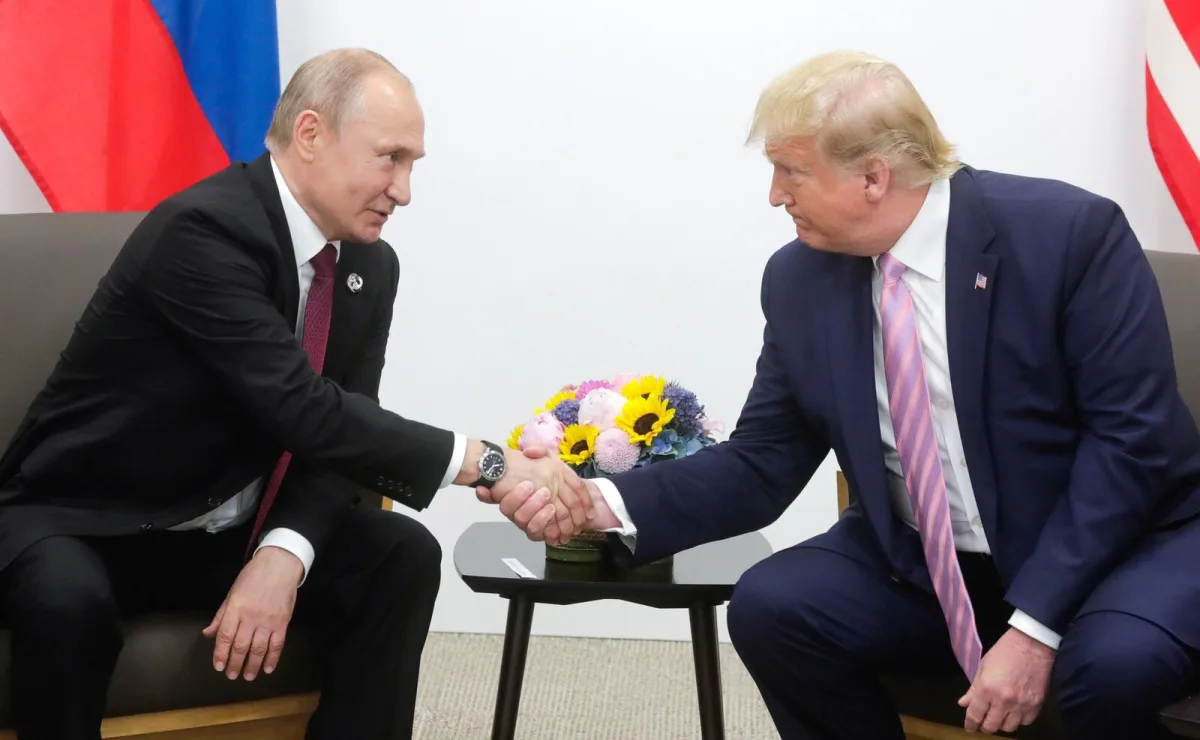

On the eve of the Anchorage meeting between Donald Trump and Vladimir Putin, diplomatic reports have hinted at a possible glimmer of novelty in the complex Ukrainian dossier. At the center of the discussion, as always, is the issue of security guarantees for Kyiv: how to prevent Moscow from returning to attack Ukraine in a few years after a possible truce?
According to rumors, Washington – despite the uncertainties linked to Trump's unpredictable leadership – would have accepted the idea of an international military contingent provided by the so-called “willing countries,” logistically and technically supported by the United States. It would be a force composed of European nations such as the United Kingdom, France, and potentially Germany and Italy, willing to commit to ensuring stability in this crucial corner of the continent. Essentially, a collective defense mechanism that, with the necessary differences, would resemble a reduced format NATO.
Why the Idea of the “Willing” Arises
The proposal arises from an observation: the current NATO struggles to move quickly and effectively. With 32 member countries, divergent national interests, and the constant threat of internal vetoes, the Alliance often risks paralysis. It is not difficult to imagine how, in the face of Russian aggression, countries like Viktor Orban's Hungary or Recep Tayyip Erdogan's Turkey could block Ukraine's immediate entry into the Alliance, nullifying the diplomatic and strategic efforts of other partners.
Hence the hypothesis: create a restricted format of states with converging policies and shared values, ready to act without suffering the delays of a mammoth organization. The idea of a European pillar of NATO, or a “European leg” of the Alliance, fits precisely into this logic. Not surprisingly, Italy had already proposed in recent months a bilateral or multilateral military agreement, with rules and mechanisms similar to those of the Atlantic, to provide Kyiv with a credible security umbrella.
The comparison with the failed Minsk agreements is inevitable: without a military deterrent apparatus, the clauses written on paper remain ineffective. This time, however, the aim is for a concrete and operational guarantee.
A Lesson for Europe
The debate surrounding Ukraine's security reflects a broader problem: that of the governability of large international organizations. The UN is the most evident example: conceived as a driver of world peace, it has turned into an organism often paralyzed by cross-vetoes, unable to react with the necessary speed in the face of sudden crises.
The same could be said for the European Union. With 27 member states, the EU is frequently blocked on crucial decisions, trapped by internal divisions and the rule of unanimity. Hence the suggestion: wouldn't a smaller Europe, composed of the founding countries and those who truly share common values and responsibilities, be more effective? In a world characterized by competition with centralized autocracies that are quick to decide, cohesion and speed of action matter more than mere numerical size.
Conclusion
The hypothesis of a “reduced NATO,” formed by a group of willing countries in close cooperation with Washington, therefore represents much more than a temporary solution for Ukraine: it is a signal of the transformation of global balances.
The ongoing war has made it clear that large alliances, born in an era of more static relations, risk becoming too slow instruments today. The future of European security – and perhaps of the international architecture itself – could pass through narrow but determined coalitions, capable of acting with consistency and speed.
In the end, the lesson is clear: in today's world, being many does not always mean being stronger. Sometimes, true power lies in the compactness of those who truly share values, interests, and political will.



Comments
No comments yet. Be the first!