


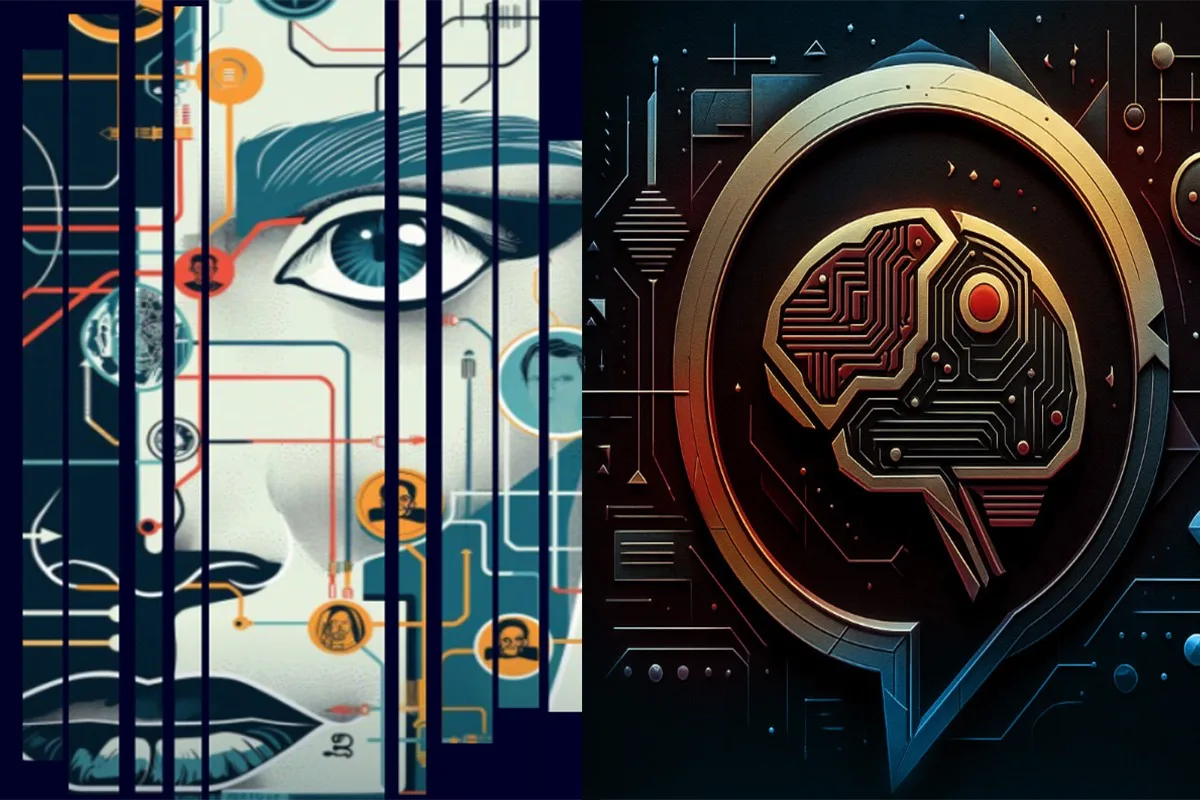

The idea of a stable and linear “peace” is increasingly an illusion. In the contemporary international system, great powers are never truly still: they move along a continuum alternating between competition, crisis, and conflict. In other words, even when no shots are fired, the clash may already be underway—only it takes place below the kinetic threshold, in markets, diplomacy, critical infrastructures, and, above all, in minds.
This reading is now common even in doctrinal and strategic contexts: military and analytical documents describe how adversaries “contest” the United States and allies through diplomatic, informational, military, and economic dimensions across the entire spectrum of “Competition, Crisis, and Conflict”. In parallel, the most recent reflection emphasizes that modern competition is not confined to the material dimension: it extends to the cognitive dimension, becoming an integral part of the “continuum of competition.”
It is precisely here that the greatest vulnerability of Western democracies arises in times of pseudo peace: when we believe we are out of war, we are often already in a confrontation aimed at orienting, dividing, polarizing.
Competition, crisis, conflict: the “normality” of power confrontation
In contemporary strategic language, competition is not an exception: it is the ordinary state. The crisis is the acceleration—the moment when pressure increases and actors test thresholds and reactions. Conflict is the rupture, when coercion surpasses deterrence.
A key element is that, along this continuum, tools change form but not necessarily purpose: to gain advantage, weaken the adversary, limit their options, influence their decisions. Not surprisingly, analyses of the operational context describe how China and Russia aim to “prevail” precisely in competition, crisis, and conflict, contesting the adversary systematically.
In the competition phase, the clash is cognitive
The competition phase is where consensus, trust, and social cohesion are built (or eroded). It is also the phase where Influence Operations become the norm, as they are the most efficient tool for achieving political results without paying the cost of open conflict.
Here, what is described in COGNITIVE COMPETITION becomes central: the human mind is not a “neutral field,” but a complex system with predictable vulnerabilities. Reflection on the cognitive dimension highlights that mental processes—psychological and neurological—are “predictable and manipulable”, and that, outside “fight or flight” situations, the conscious part weighs only a minority share of our decisions and interpretations.
In this space, biases (cognitive shortcuts) are not a rare deviation: they are the normal functioning of the brain. And precisely for this reason, they become the ideal target of adversary actions: if I can latch onto emotions, identities, fears, affiliations, I can move collective behaviors without having to “convince” rationally.
What are Influence Operations (definition and channels)
“Influence Operations” broadly refer to a coordinated set of activities aimed at shaping perceptions, attitudes, and decisions of a target audience.
A very clear operational definition (in a strategic-military context) describes influence operations as the “coordinated, integrated, and synchronized application” of diplomatic, informational, military, economic, and other capabilities (in peace, crisis, and conflict) to favor attitudes or behaviors of a target audience in line with the objectives of the actor conducting them.
In the digital context, the NATO Strategic Communications Centre of Excellence uses the concept of Information Influence Operations (IIO) defining them as an organized attempt to achieve an effect on an audience, often through manipulative and illegitimate behaviors, that exploit the free opinion-forming process by “mimicking” legitimate behaviors to enter the public space and influence it.
The channels: press, media, social, and beyond
In competition, these operations are distributed across multiple levels and channels, often combined:
- Press and traditional media (agenda-setting, framing, selective amplification);
- Social networks and digital platforms (coordinated networks, fake accounts, micro-targeting, trend manipulation);
- “Hybrid” ecosystems: influencers, pseudo-media, messaging channels, online communities, constructed “experts”;
- Support techniques: cyber, leakage, deepfake, reputational sabotage, psychological operations.
The point is not just to “spread falsehoods”: it is to orient the interpretation of true facts, saturate the informational space, build distrust, make everything ambiguous, polarize.
And it is also the reason why—as Admiral Giuseppe Cavo Dragone highlighted when speaking of hybrid threats—it is not enough to suffer and respond late: the Alliance must think about a more proactive approach, “more aggressive or proactive, rather than reactive.”
(Translated on the informational level: you cannot just deny; you must build resilience, prevent, attribute, neutralize.)

Why democracies are more exposed (and Russia/China less vulnerable)
Here emerges the strategic asymmetry: democracies are more exposed because their strength—pluralism, freedom of expression, political competition—is also an attack surface.
A Swedish manual dedicated to countering information influence activities states it bluntly: free debate and freedom of expression are pillars of democracy even if they complicate the defense against these operations.
In an open society:
- the informational space is vast and difficult to “seal”;
- internal political conflict is physiological (therefore easier to exacerbate);
- the media compete for attention (therefore more vulnerable to manipulations and amplifications);
- trust in institutions is a fragile and continuously contested variable.
Conversely, authoritarian systems like the Russian and Chinese can reduce internal exposure with vertical control of the informational space (censorship, repression, controlled platforms, imposed narratives). It is not just a cultural issue: it is also infrastructural. Italian reflection on Cognitive Warfare highlights the dimension of asymmetric “reciprocity”: some competitors can act in global networks and, at the same time, deny the possibility of response through internal sovereign networks (explicitly citing the Chinese network and the Russian attempt at RuNet).
And indeed, independent reports describe extremely degraded online freedom conditions in China, with systematic control and repression.
The result is an imbalance: the West is “permeable” by nature, while adversaries can be permeable outward (to influence) and impermeable inward (to protect themselves).
Reacting without becoming what we fight
The political issue is delicate: how to defend without distorting democratic values? The most solid answer is not “symmetric” censorship, but a multi-level strategy: whole of society, as indicated also in the Italian reflection on Cognitive Warfare, which speaks of the need for widespread awareness and a choral response, not limited to a single ministry.
In practice, it means at least five things:
- Attribute and make transparent: bring out coordinated networks and responsibilities (here the methodical approach to attribution is crucial).
- Strengthen cognitive resilience: media literacy, culture of doubt, understanding of biases (not to “vaccinate” ideologically, but to make manipulation more difficult).
- Credible strategic communication: a “narrative” that is not propagandistic, but coherent, rapid, verifiable, capable of speaking also on the emotional level (because that is where much of the meaning occurs).
- Public-private partnership: platforms, data-sharing, monitoring tools, rapid response (without delegating democratic sovereignty to private entities).
- Defend internal cohesion: because the ultimate goal of influence operations is not to “make us believe a lie,” but to fracture trust and unity, making collective decision-making unmanageable.
Take Away
In times of “pseudo peace,” the most effective threat is not the one that destroys bridges or depots: it is the one that shifts perception, makes it impossible to distinguish the true from the plausible, transforms physiological dissent into structural hatred. Influence Operations are the everyday language of power competition, and the most delicate front—because it passes through what we are: open, free, plural societies.
Precisely for this reason, the response cannot be only technical. It must be political and cultural: defending freedom also means defending the cognitive and informational conditions that make it possible.



Comments
No comments yet. Be the first!