


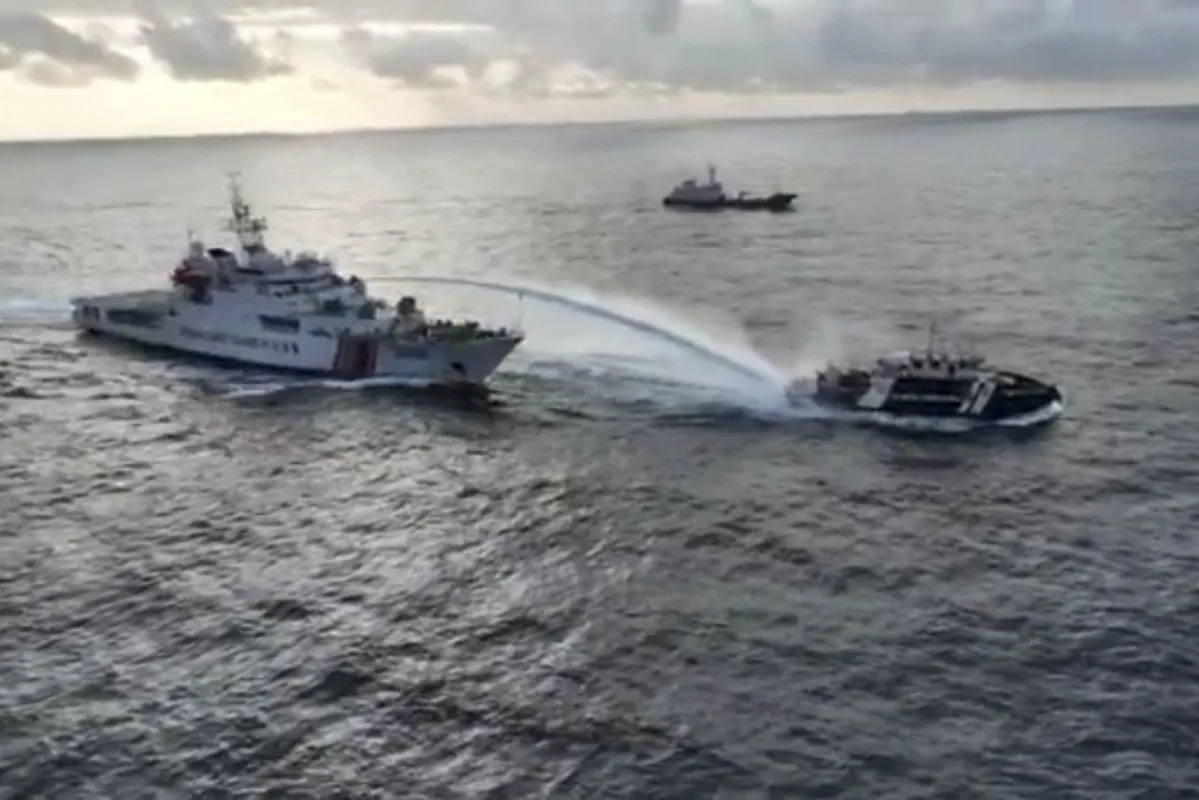

MANILA, Philippines — The United States Secretary of Defense, Pete Hegseth, is scheduled to visit the Philippines, the first stop of his first trip to the Indo-Pacific next week, for talks that will include strengthening deterrence against aggression in the contested South China Sea, a Filipino official said Friday.
Hegseth will be in Manila on March 28-29 to meet with his Filipino counterpart, Gilberto Teodoro, and President Ferdinand Marcos Jr. The talks will address Beijing's increasingly assertive actions in the South China Sea and "more significant support" for the Philippine security forces from the Trump administration, Filipino Ambassador to the US, Jose Manuel Romualdez, told the Associated Press.
Trump's "America First" foreign policy has raised concerns about the scope and depth of US engagement in the region during his new term.
"It's a strong message to China about the solid bilateral relations" between the United States and the Philippines, Romualdez said regarding Hegseth's upcoming visit.
China claims almost the entire South China Sea, a crucial route for global security and trade. The Philippines, Vietnam, Malaysia, Brunei, and Taiwan also have overlapping claims on the resource-rich and heavily trafficked waters, but clashes have particularly intensified over the past two years between Chinese and Philippine coast guard and naval forces.
In his first phone conversation with Teodoro last month, Hegseth "reaffirmed the United States' ironclad commitment to the 1951 Mutual Defense Treaty and its importance in maintaining a secure and prosperous Indo-Pacific," according to an account provided by Pentagon spokesman John Ullyot after the February 5 call.
"The leaders discussed the importance of reestablishing deterrence in the South China Sea, including working with allies and partners," Ullyot said. "They also discussed enhancing the capacity and capabilities of the Armed Forces of the Philippines."
After significant territorial confrontations between Chinese and Philippine forces in the contested waters, the previous Biden administration had repeatedly warned that the United States is obligated to defend the Philippines under the treaty if Philippine forces, ships, and aircraft come under armed attack in the Pacific, including in the South China Sea.
Beijing warned Washington, in response, to stay out of what it calls a purely Asian dispute and to cease actions that endanger regional harmony and stability.



Comments
No comments yet. Be the first!