


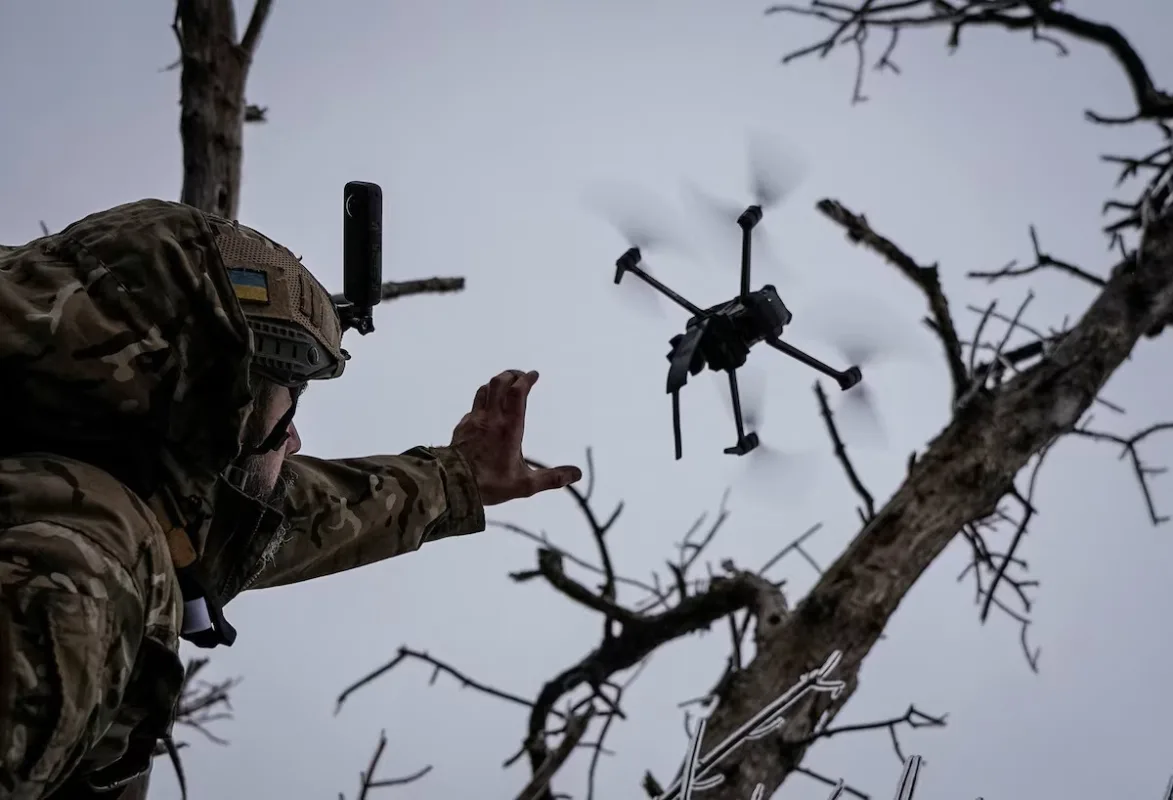

The war in Ukraine has captured the world's attention on the role of drones, transforming the public perception of these aircraft from "killer robots" to crucial tools for conventional combat. As demonstrated by the events of New Year's Eve 2022, when Ukrainian quadcopters bombed Russian positions in Bakhmut and Russian loitering munitions struck Kyiv's infrastructure, drones are no longer a novelty but a consolidated component of modern warfare.
Diversity of Drones in the Field
The war in Ukraine has highlighted the importance of drone diversity, showing how different types of systems adapt to various conflict scenarios. NATO classifies drones into three main categories based on their weight:
- Class I: light drones (less than 150 kg), such as commercial quadcopters.
- Class II: tactical drones (between 150 and 600 kg).
- Class III: heavy drones (over 600 kg), like the Bayraktar TB2.
While large Class III drones are effective in uncontested airspace, smaller Class I drones and loitering munitions have proven essential in Ukraine's dynamic and contested environment.

Class I Light Drones: Eyes in the Sky for Infantry
Light drones, like the DJI Mavic, are easy to obtain and use, often funded through crowdfunding campaigns. Despite their limitations (short range and endurance, vulnerability to electronic countermeasures), they have a significant impact:
- Increased artillery accuracy and pace: they reduce target acquisition time from 30 to 3-5 minutes, making "blind" shelling a thing of the past.
- Situational awareness: they provide soldiers with real-time battlefield views, allowing them to spot enemy positions and protect troops.
- Psychological warfare: beyond reconnaissance, they can be used for propaganda purposes, recording ambush videos or documenting war crimes.
However, these functions are not entirely new; as early as the 1960s, drones performed similar tasks, albeit on a smaller scale and scope. This underscores how current drones represent an evolution, rather than a revolution, in warfare tactics.

Class III Heavy Drones: Vulnerability in a Contested Sky
At the start of the conflict, the Turkish drone Bayraktar TB2 became an icon of Ukrainian resistance. Despite its initial success (such as in the sinking of the Russian cruiser Moskva), its effectiveness was limited by the lack of air superiority. Large and expensive (around 2 million dollars), these drones are easily shot down by modern air defenses, making them unsuitable for large-scale offensive operations in a contested sky. Russia has also struggled to deploy its heavy drones like the Orion, due to international sanctions and the limits of its industrial base.
Loitering Munitions: Disposable Drones
Loitering munitions, or kamikaze drones, are the link between a drone and a missile. They are single-use aircraft that self-destruct upon impact. Although their military effectiveness is limited by the need for intelligence to identify targets, their low cost and mass use make them a weapon of attrition. Iranian Shahed-136 drones, supplied to Russia, cost only 20,000 dollars, compared to 1 million dollars for a cruise missile. Although Ukraine has managed to intercept 80% of them, the remaining 20% destroyed a third of the country's power grid in a week. This shows how the goal is not always maximum military efficiency, but psychological warfare and the depletion of enemy resources.

Emerging Trends and Future Challenges
The war in Ukraine has accelerated three interconnected trends in the world of drones:
- Quantity versus sophistication: in attrition conflicts, the ability to deploy a large number of low-cost drones (even as "false swarms" to confuse the enemy) is more important than their technological sophistication.
- Proliferation and the "aerial littoral": the massive use of cheap drones is congesting low-altitude airspace, turning it into a veritable "aerial minefield." The war has also promoted the drone industry of nations like Turkey and Iran, which are becoming major technology exporters. Many of these systems rely on dual-use commercial components, making export control extremely difficult.
- The challenge of countermeasures: defense against low-cost drones is a critical issue. It is economically unsustainable to use expensive interceptor missiles to shoot down 20,000-dollar drones. Future solutions will require an integrated approach, combining kinetic systems (anti-aircraft guns, lasers) with non-kinetic countermeasures (electromagnetic jammers). Additionally, the innovative use of surface and underwater drones, like those employed in the attack on Sevastopol, is expanding the threat to all operational domains, marking the beginning of a "third era of drones."
In conclusion, although drones alone are not a decisive capability for winning a war, their use in Ukraine has marked a turning point. They are not only changing the pace of combat and public perception but are also pushing the world to reconsider its defense and arms control strategies.



Comments
No comments yet. Be the first!