


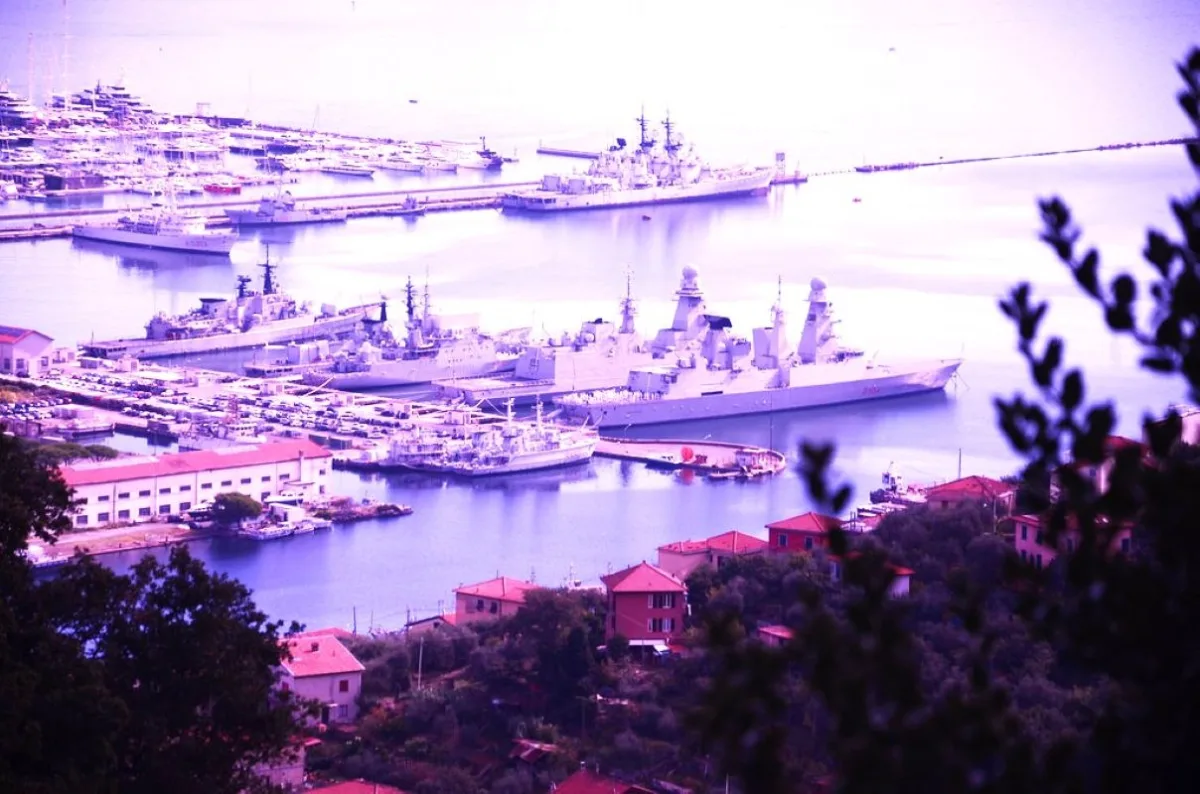

A new production line within the military Arsenal of La Spezia, where the construction of submarines will be allocated to meet the growth in orders and the shortage of space: this is one of the most significant steps of the 2026-2030 industrial plan presented by Fincantieri during the Capital markets day 2026. In the document, it is announced “the use of the areas of the Arsenal of La Spezia for the production of submarines,” a choice that marks a significant strategic shift in how the country can organize its production capacity in the Defense sector.
A paradigm shift: integration between military base and national industry
For the group, already present in the Arsenal for years for refitting activities, this is a substantial evolution: not just maintenance and support, but a true production component inserted within a military infrastructure. In perspective, the operation can become a model of advanced cooperation, capable of increasing synergies between the skills of the military and those of the national industry: operational skills, requirements, and employment doctrine on one side; design, industrialization, production, and supply chain on the other.
This integration – if structured with clear governance and compatible processes – can accelerate the entire realization cycle: from the operational requirement to commissioning, reducing friction, downtime, and redundant steps. In other words: the physical and organizational proximity between those who use the systems and those who produce them can translate into greater speed, quality, and technological adaptability.
More space at Muggiano, more overall capacity
On the industrial level, the advantage is immediate: moving part of the submarine production within the arsenal walls would free up areas at Muggiano, where the new U212 NFS submarines are being built to replace the Sauro class units. The result would be an increase in overall capacity, with the possibility of dedicating Muggiano spaces to other work and new units, reducing bottlenecks related to infrastructure.
In this context, disused warehouses and potentially reactivatable docks become strategic assets: not just recovery of areas, but enhancing a public-military heritage for national security and industrial readiness.
Time objective: ships in 32 months
The choice of La Spezia fits into the broader “capacity boost” program with which Fincantieri aims to increase productivity and capacity in the Defense sector. The 2026-2030 plan includes investments also in Riva Trigoso (including a third launch line) and actions on La Spezia and Muggiano to achieve a particularly challenging target: reducing shipbuilding times to 32 months. Folgiero has indicated technology, digitalization, and asset enhancement as the tools to stabilize this acceleration and consolidate the group's leadership in high-value-added segments.

A replicable best practice: the drone case for the Army
The most interesting point, however, is the method's value: the Arsenal as an integrated production platform can represent a “right path” and a replicable best practice in other Defense domains. A natural example is that of drones and unmanned systems, where the rapid pace of technological evolution requires short cycles, continuous experimentation, and fast industrialization.
In this perspective, the Army could also imagine similar projects: dedicated areas and hubs (in selected military infrastructures) where operational skills and national industry work together on production, assembly, evolutionary maintenance, and rapid drone updates. An “integrated” model would help to:
- shorten the transition from operational need to prototype and then to production;
- standardize maintenance and retrofit more efficiently;
- build stronger national supply chains ready to scale;
- increase strategic autonomy and logistical resilience.

La Spezia as a hub of underwater and new industrial defense
In the overall picture, the use of the Arsenal for the production of submarines strengthens La Spezia's centrality in the underwater domain and solidifies the bond between the Navy and industry, also in light of Fincantieri's desire to be a protagonist in the National Underwater Hub. The direction is clear: increase capacity, speed, and integration, transforming existing infrastructures into strategic levers.
If implemented with vision and effective operational rules, this step can set an important precedent: a Defense that does not “suffer” industrial constraints but governs them together with the country's system — and an industry that accelerates because it works closer, and better, to those who use those systems every day.





Comments
No comments yet. Be the first!