


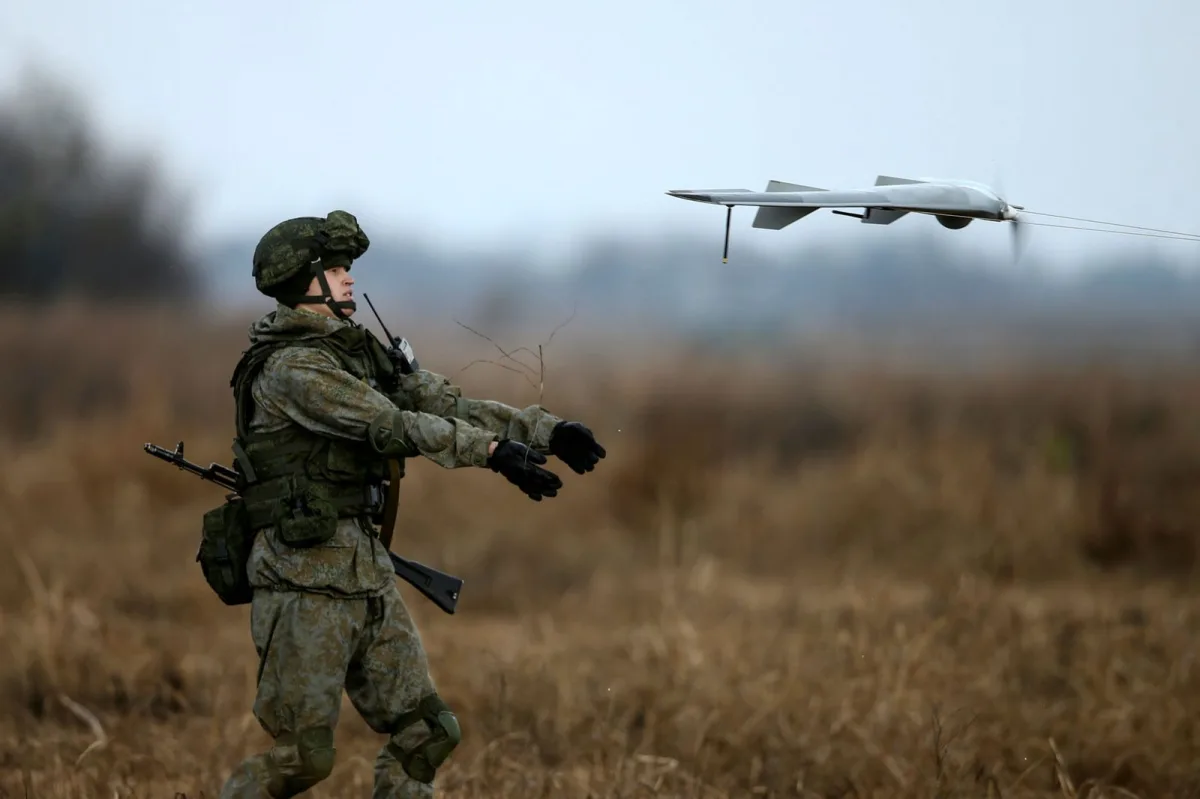

The evolution of drone warfare has radically changed the nature of modern conflicts, expanding the “no man's land” far beyond historical boundaries. In the war in Ukraine, the massive use of drones has led to a death zone extending for tens of kilometers, creating a new dimension in modern battles. This phenomenon represents the extreme expansion of the concept of “no man's land”, which in the past was a narrow and dangerous area between two enemy trenches, now becoming a vast and lethal territory where every movement is risky. Today, the area between enemy forces is no longer just a line of separation, but a wide space dominated by surveillance and continuous attack, where the shadow of drones determines every step on the battlefield.

The Historical Expansion of Lethal Zones: The "No Man's Land" from Past to Future
The term “no man's land” was coined during World War I to describe the deadly area between two enemy trenches, a minefield of dangers where neither side dared to advance for fear of being hit by the enemy. This death zone was often limited to an area about 100 meters wide, a narrow and dangerous boundary marking the limit of open warfare. During World War II, with the introduction of tanks and greater mobility, this zone expanded significantly, reaching about 500 meters.
Today, however, drone warfare has changed everything. In Ukraine, the death area between the front lines now extends up to 10-15 kilometers, with drones constantly surveilling and striking relentlessly. The military uses drones in impressive quantities – thousands every day – to monitor and strike, effectively expanding the "no man's land" to an unimaginable scale for anyone who experienced previous conflicts. The concept of “no man's land” is no longer limited to a physical zone between two trenches, but extends over a wide portion of the battlefield, where every movement is monitored and every opponent is vulnerable.
The risk of exposure to attack has increased dramatically, so much so that military forces of countries like the United States are designing the front lines of defense no longer as areas occupied by soldiers, but as virtual zones dominated by drones and robots. The new “no man's land” now extends to significantly wider distances, where action is dominated by technology and automated aerial warfare.
The Drone War in Ukraine: A New Era of Conflict
In Ukraine, the concept of a “drone line” is redefining warfare. This zone, which extends 10-15 kilometers from the front, is dominated by drones, offering constant surveillance and real-time attack capabilities. Drones act as the eyes and hands of forces on the ground, greatly enhancing the infantry's response capability, which can now rely on continuous air support, capable of identifying and destroying the enemy before it can react.
Drones not only provide real-time intelligence but are also integrated into coordinated attack systems with artillery and infantry, creating a lethal distributed network that makes it difficult for the opponent to disable the entire system. With the use of drone swarms and the creation of autonomous attack chains, Ukrainian forces can respond quickly to any changes on the battlefield, minimizing risks for their soldiers.
This evolution also has a significant impact on how defensive operations are conceived. Enemy forces, in fact, are forced to navigate through highly surveilled zones, where the use of large masses of troops has become almost suicidal due to the drones' detection and immediate strike capability. The effectiveness of drones as force multipliers is such that it not only compensates for the scarcity of ammunition and soldiers but elevates Ukraine in an asymmetric war, where technology allows countering Russian numerical superiority.

The Future Expansion of Lethal Zones: The New Warfare
Looking to the future, drone warfare is set to further expand these lethal zones. Developing technologies promise drones with greater autonomy and range, which could dominate large areas of the battlefield. Enemy forces will find it increasingly difficult to move without being intercepted, while the possibility of long-range attacks will become more realistic.
Swarms of drones powered by artificial intelligence (AI) represent the immediate future of conflict. These drones would not only act autonomously but would be able to adapt to battlefield conditions in real-time, creating a new dimension of warfare. Their ability to coordinate and attack simultaneously from different directions poses an unprecedented challenge to traditional defenses.
The evolution of electronic warfare (EW) technologies to counter drones will make the battlefield even more dynamic and competitive. With a continuous game of technological advances and counter-advances, it is expected that war zones will expand further, creating contested spaces where control of airspace becomes the key to victory.
Conclusion
The “no man's land” has reached new dimensions. The use of drones has expanded lethal zones beyond any prediction, transforming the conflict into a space where every movement is surveilled and vulnerable. Drone warfare is not just a matter of advanced technology, but represents a true revolution in combat methods, where the old front lines are now surpassed. Future warfare will not be fought only between soldiers but between autonomous machines that dominate increasingly vast and lethal spaces.



Comments
No comments yet. Be the first!