



Washington – Berlin – Kyiv, June 2025 – Over the weekend, an FPV (First Person View) drone attack conducted by Ukrainian intelligence services (SBU) annihilated a significant part of the Russian air fleet. A severe blow to Moscow, but also a wake-up call for the entire West.
In the United States, the reaction was twofold: concern over the vulnerability of their own installations and admiration for the efficiency demonstrated by the Ukrainian operation. “It's one of those things that should humble us,” said the Chief of Staff of the American Air Force, Gen. David Allvin, speaking at the AI+ Expo of the Special Competitive Studies Project. “It makes us realize how the idea of impenetrable military sanctuaries is now obsolete.”

Cheap Drones, Devastating Effects
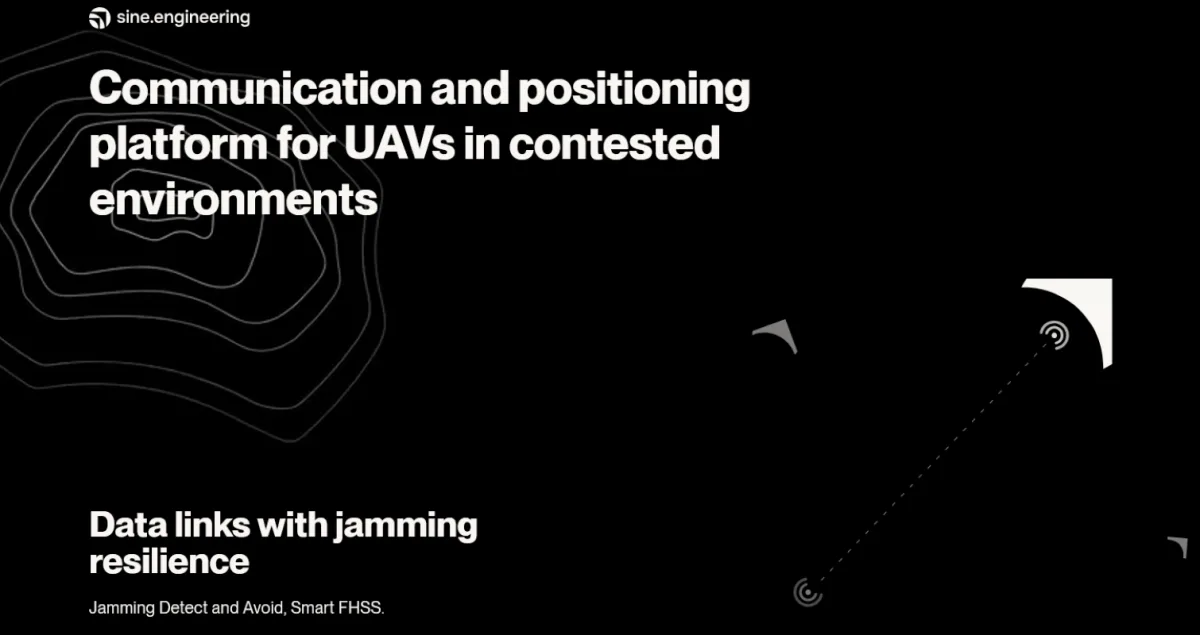
The Ukrainian attack, dubbed Operation Spider Web, not only demonstrated the vulnerability of air bases but also challenged traditional warfare models. Cheap drones, piloted without GPS thanks to technologies developed by companies like Sine.Engineering, evaded Russian countermeasures and hit targets with surgical precision.

These systems are not only resistant to electronic interference but are adapted in real-time thanks to direct feedback from the front. “Every day we receive data from those in the trenches. This way we can evolve faster than the enemy,” explain Andriy Chulyk and Andriy Zvirko, engineers from the Ukrainian company.
The Pentagon's Dilemma: Defend or Imitate?
On one hand, the American Army aims to strengthen the defense of its bases through exercises like Fly Trap and projects like Golden Dome, while on the other, a more strategic reflection emerges: why not adopt the same offensive approach?
“Why not do like the Ukrainians?” Allvin asked. “Not everything has to be sophisticated, expensive, and top-of-the-line. It just needs to create an effect.” A vision shared by the Chief of Staff of the US Army, Gen. Randy George, who emphasized the urgency of diversifying national drone production and reducing dependence on Chinese ones.
But the real issue remains the slowness of the American military procurement system. “Everyone talks about POM cycles and thirty-year programs. It's old thinking,” warned George. “Technology evolves in your pocket, not in the corridors of the Pentagon.”
The Ukrainian Lesson: Software Before Hardware
Ukraine's success is not only in the quantity of drones produced but in the quality of the software that manages them. In an asymmetric warfare context, the value no longer lies in the platform, but in its ability to adapt. It's the principle of Software Defined Defence, now at the center of German strategies.
In Germany, indeed, the Bundeswehr reacted promptly to the Ukrainian case. Inspector General Carsten Breuer called for acceleration in the acquisition of kamikaze drones and loitering munitions. “Mass is a quality,” declared a spokesperson for the Army Development Office, opening up to the use of cheap, modular, and expendable, yet devastating UAVs.
The future, according to the German vision, will be in the combination of updatable software, distributed intelligence, and accessible hardware. “A 100,000 euro drone is not always worth more than a hundred 1,000 euro each,” they reiterate from Sine.Engineering.
Drone War: Europe Catching Up, But Cautiously
Europe is looking with increasing interest at the Ukrainian model, but not without reservations. “Not everything is replicable within NATO,” warns the Bundeswehr. The conditions of the Ukrainian front – conflict intensity, territory structure, type of adversary – are unique. Flexible strategies are therefore needed, adaptable to different contexts.
Moreover, the high technological obsolescence imposes a paradigm shift even in Western military doctrines: no longer perennial platforms, but updatable and scalable systems.
Drones Will Not Replace Soldiers
Despite the growing prominence of drones, no analysts or commanders believe they can replace the human factor. “In wealthy countries, few want to go to war. Drones can cover part of the gap, but not all,” says Chulyk. The courage of the soldier is still needed, his ability to adapt and his judgment in the field.
Allvin himself emphasized: “The problem is not our aviators. They are extraordinary. It's the institution that struggles to adapt to the speed of change.” A new approach is therefore needed, where institutional agility becomes as valuable as firepower.
Conclusion
The Ukrainian attack has rewritten the rules of engagement: a low-cost strike inflicted high losses on a nuclear power. The United States, Germany, and the entire Western bloc face a choice: continue investing in traditional armaments, or rethink war starting from innovation, adaptability, and strategic vision.
In the new technological battlefield, the winner is not the one with the most powerful weapons, but the one who updates them the fastest.



Comments
No comments yet. Be the first!