


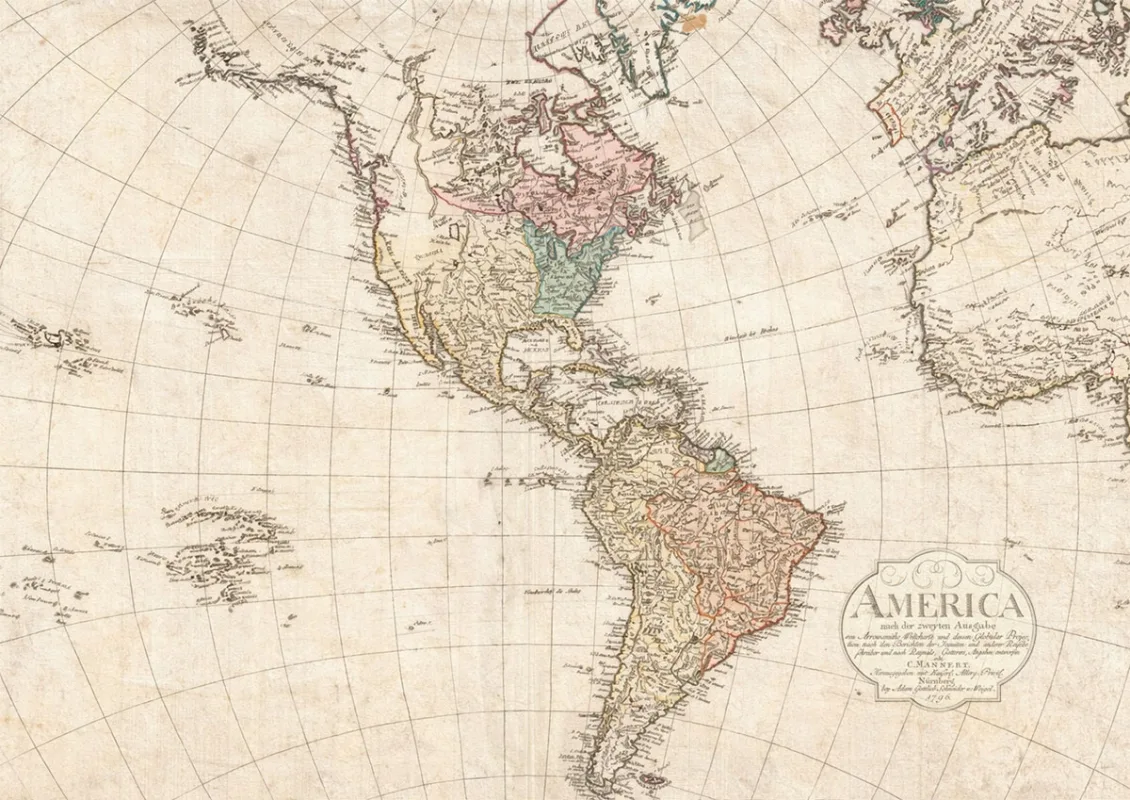

After the events of recent days, Venezuela today represents a concrete test for the strategic credibility of the United States in the Western Hemisphere: energy, Caribbean routes, regional flows, and critical infrastructures converge at a point geographically close to the USA. In this space, the structural presence of extra-hemispheric powers is not a diplomatic detail, but a national security factor that can redefine balances for decades.
In this perspective, the realistic goal is not to “control” Caracas or rebuild the country from the outside, but to prevent Venezuela from becoming a stable platform for hostile projection. This is where the Venezuelan dossier takes on general value: it measures how far Washington is willing (and able) to enforce a red line in the Western Hemisphere without falling into the typical mistake of great powers, that is, turning a strategic interest into an all-encompassing, costly, and delegitimizing intervention.
Hybrid Warfare and the American Weak Point: Managing the “After”
Contemporary competition is increasingly a hybrid war: cyber, disinformation, economic coercion, proxies, below-threshold operations, institutional sabotage. The goal is not necessarily to conquer territories, but to erode states and alliances from within, making instability chronic and the adversary's leadership more costly. If this process is not countered, the loss of control can mature in 30–40 years, without the need for a frontal clash.
The limit that has emerged in recent decades mainly concerns the political phase following the conflict or crisis. Many operations have produced tactical successes but have struggled to generate lasting stability due to deficiencies in governance, legitimacy, and institutional architectures. In a hybrid context, the “after” phase is not a subsequent chapter: it is the decisive part that determines whether military victory converts into order or resentment.
This leads to an operational rule: coercive tools (sanctions, pressures, deterrence) work only if integrated with credible incentives and practicable exits. Without a de-escalation ramp and without economic and institutional alternatives, target actors tend to strengthen ties with rival powers. Stabilization therefore requires a mix: internal security, anti-corruption, administrative reform, investments, and market access, with communication that takes care of perception beyond substance.
Architecture of the Century: Two Poles, Regional Powers, Unknowns Europe and Brazil
The most plausible scenario is an imperfect order based on two global powers (USA and China) and a series of regional powers (India, Russia, Turkey, others) with variable geometry alliances. In this framework, the Western Hemisphere represents the American red line: Chinese growth can be tolerated in various areas, but strategic settlement near U.S. territory becomes hardly acceptable.
In the Indo-Pacific, the containment ring of Chinese expansion rests on key allies and partners: Japan and Australia on the maritime side and India as the land pivot, with a belt of states that, to varying degrees, contribute to limiting expansion and diversifying value chains. With Russia, the dominant logic is downsizing and management: avoiding scale jumps in Europe, maintaining deterrence, and at the same time tolerating a regional dimension as long as it does not overturn the European order.
The most delicate strategic unknowns remain Europe and Brazil. Brazil is the key to South America: the most effective path is not confrontation, but co-optation through a conditioned regional role, in exchange for clear limits to extra-hemispheric strategic penetration. Europe, due to its economic size and industrial-technological capacity, is the only space that could become a systemic competitor if developed unitarily: for Washington, it is essential to have strong European allies but to prevent the birth of an alternative unitary political-military pole. In this transition, perception is decisive: strength without legitimacy fuels reactions.
The concluding thesis is that another century of American dominance is possible and potentially stabilizing, but it requires one condition: transforming military superiority into the ability to end conflicts, manage the “after” and make leadership sustainable through alliances, institutions, and visible results. In an imperfect bipolar system, such an approach reduces the likelihood of world wars that, as things stand, do not benefit either of the two superpowers.




Comments
No comments yet. Be the first!